
A specialty chemical plant is designing a new batch-chlorination line and wants to use inherently safer design principles during early planning to reduce catastrophic release risks and regulatory burden. Which planning strategy most effectively achieves both goals before construction begins?
Select an answer to reveal the explanation.
Short Explanation
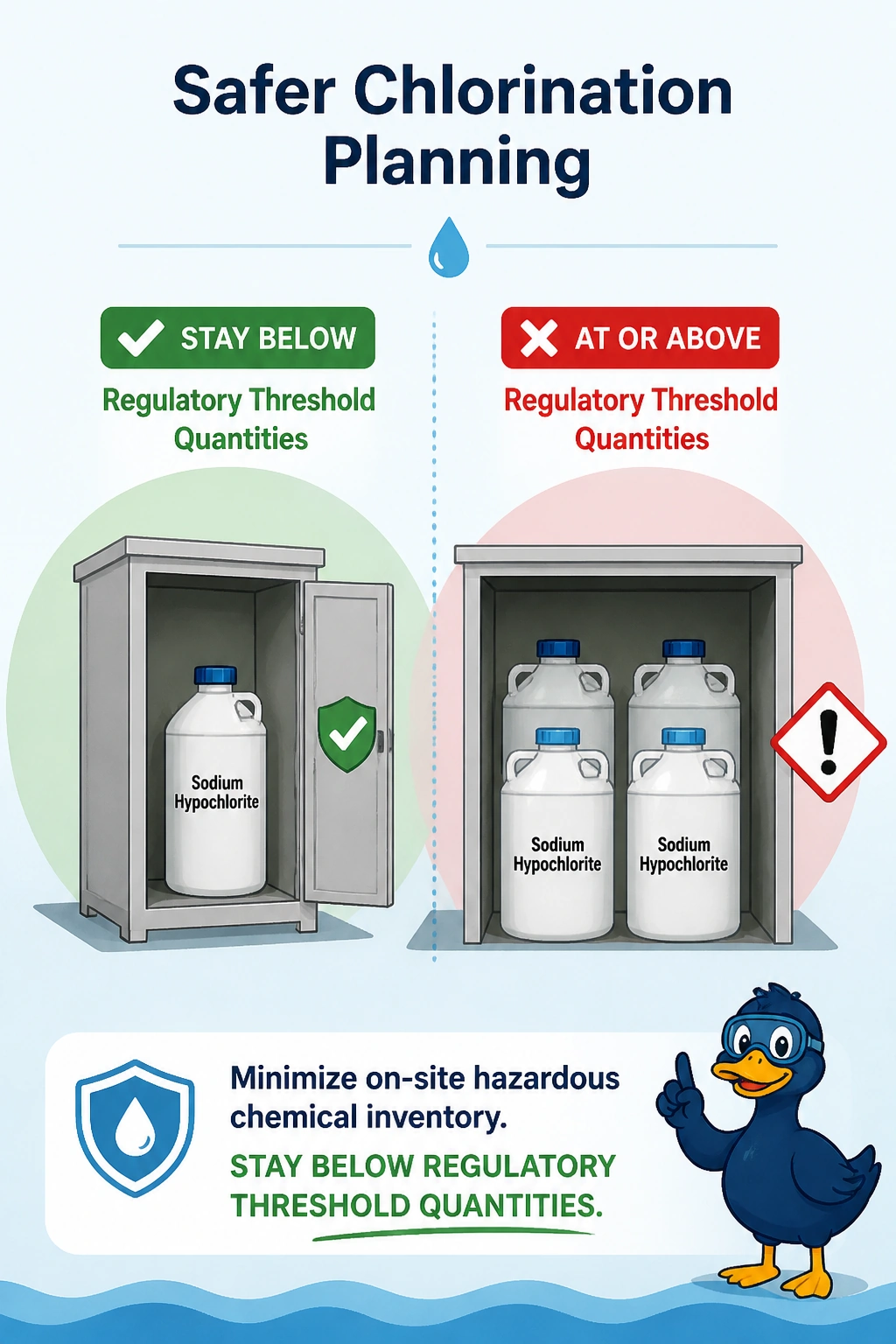
The safest hazardous chemical is the one you never have to store in bulk on your site. During early process planning, minimizing on-site hazardous chemical inventory below regulatory threshold quantities cuts both worst-case release consequences and compliance overhead. The trap is chasing bulk-purchase discounts that push your facility over major hazard thresholds.
Full Explanation
Inherently safer design prioritizes eliminating or reducing hazards at the source rather than adding layers of administrative or protective controls after the fact. Minimizing on-site hazardous chemical inventory to stay below regulatory threshold quantities—such as EPA Risk Management Program (40 CFR Part 68) and OSHA Process Safety Management (29 CFR 1910.119) thresholds—directly shrinks the potential worst-case release mass while keeping the process simpler to manage. Increasing on-site bulk tank capacity to qualify for volume chemical discounts expands stored energy and toxic inventory, potentially triggering major accident-prevention programs and offsite consequence modeling. Deferring hazard reviews until after equipment installation and commissioning wastes capital on redesigns and misses the prime window to engineer out hazards. Relying solely on personal protective equipment to offset high chemical inventory sits at the bottom of the hierarchy of controls and cannot protect surrounding communities from a large-scale release. As a planning caveat, interconnected vessels and nearby storage containers can be aggregated when determining threshold applicability, so check system boundaries carefully. Verify maximum intended inventory calculations against federal threshold tables before locking in tank sizing.
Prefer to study offline? Printable PDF study book + test engine ($7.50, unofficial). These questions stay free here.