
A chemical distribution terminal is designing an unroofed concrete dike around four aboveground diesel and lubricating oil tanks of varying capacities near a navigable river. Under EPA Spill Prevention, Control, and Countermeasure regulations in 40 CFR 112.8(c)(2), how should the engineering team size the dike's containment volume?
Select an answer to reveal the explanation.
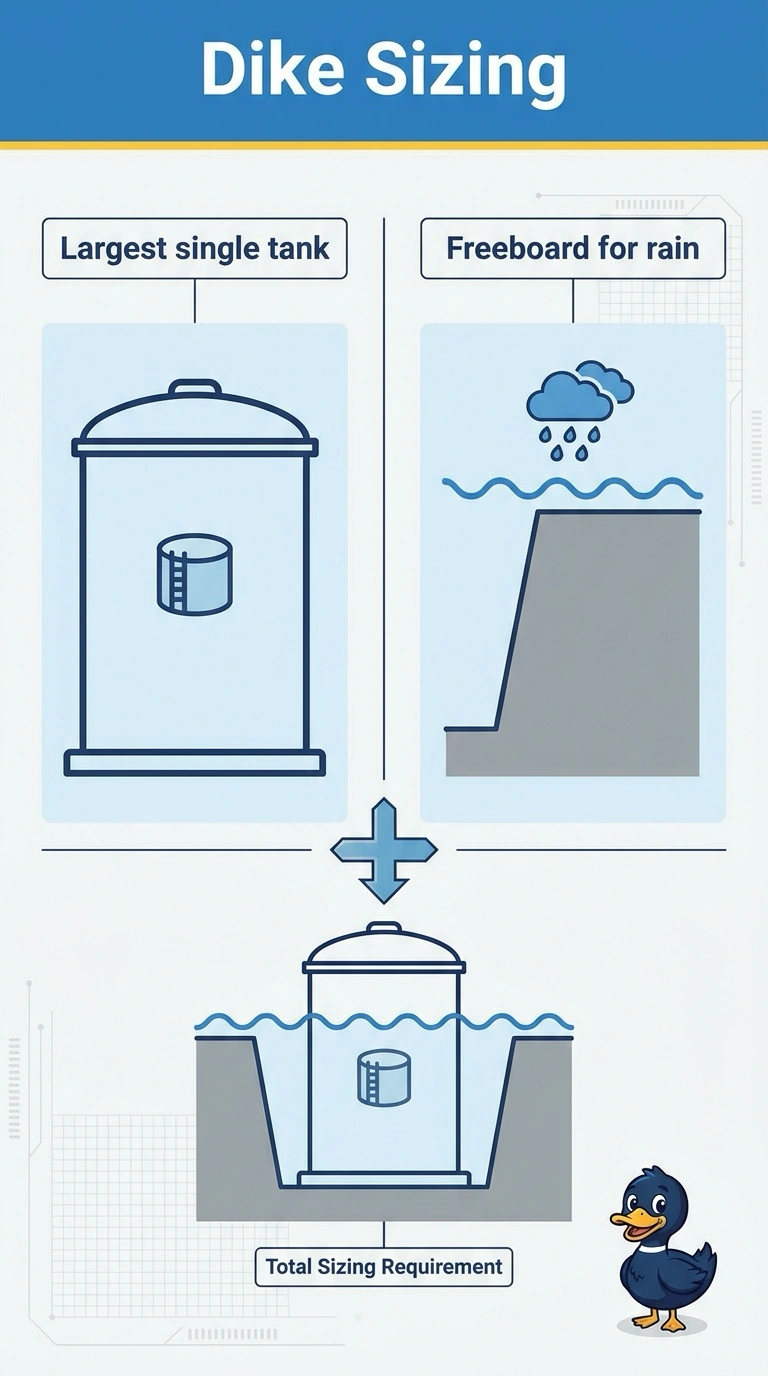
Short Explanation
Think of outdoor tank containment like a bathtub built for the biggest spill, not a swimming pool for every tank at once. Under EPA SPCC rules, you must size an unroofed dike to hold the largest single tank plus room for rain. The classic trap is picking 10 percent of total volume, which is only one part of the RCRA container-containment test in 40 CFR 264.175 (the greater of 10 percent of the volume of containers or the volume of the largest container), not the SPCC tank rule.
Full Explanation
Under 40 CFR 112.8, secondary containment for bulk oil storage tanks must hold the entire capacity of the largest single container plus sufficient freeboard to contain precipitation, which is why engineers must Size the dike for the largest single tank plus sufficient freeboard for precipitation. Because catastrophic failure of multiple tanks simultaneously is not the design basis, sizing for the largest tank plus rainwater prevents overflow during a single-tank rupture in wet weather. Choosing to Size the dike for 10 percent of the total aggregate volume of all tanks misapplies the RCRA hazardous waste container storage rule (40 CFR 264.175) and could leave a large tank's spill uncontained. Choosing to Size the dike to hold the combined volume of every tank in the farm imposes unnecessary capital cost and footprint far beyond what federal SPCC regulations require. Choosing to Size the dike for the smallest tank volume plus a 24-hour storm allowance would guarantee an overflow if the largest tank failed. Note that the tank's own displacement inside the dike does not count toward available containment volume, and an operational check should verify dike wall height and volume calculations against as-built drawings before commissioning.
Prefer to study offline? Printable PDF study book + test engine ($7.50, unofficial). These questions stay free here.