
A specialty chemical blending facility plans to install a new storage tank for an extremely hazardous substance in a quantity well below the EPA Risk Management Program threshold. During pre-construction regulatory planning, which requirement still applies to this installation?
Select an answer to reveal the explanation.
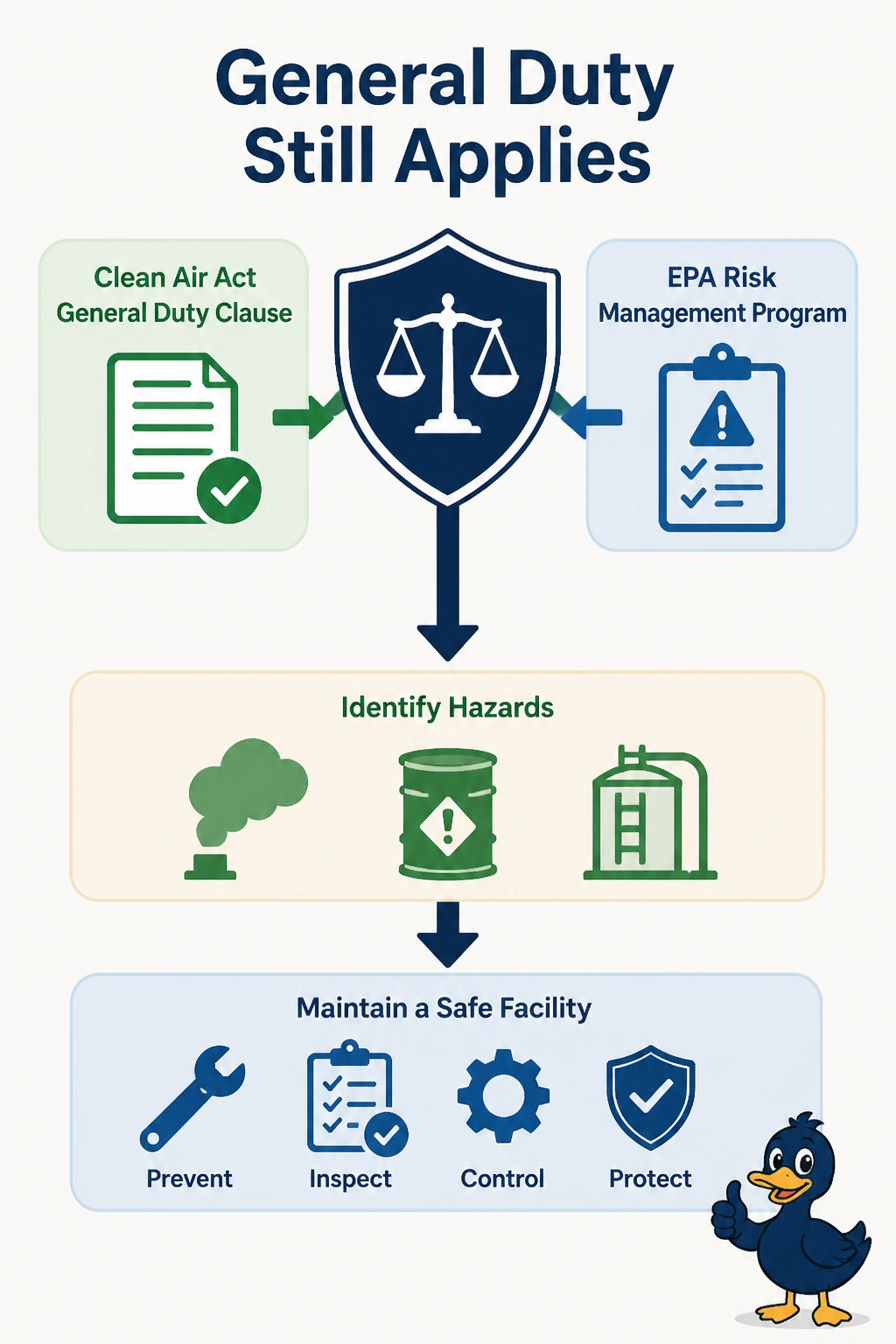
Short Explanation
Staying under a regulatory threshold does not mean your safety obligations vanish at the property line. Under the Clean Air Act, you must still identify hazards, design and maintain a safe facility, and minimize accidental release consequences even when an inventory falls below formal Risk Management Program triggers. The classic trap is assuming that avoiding a written Risk Management Plan filing equals a complete exemption from federal accident-prevention duties.
Full Explanation
During project planning, Identifying hazards and maintaining a safe facility under the Clean Air Act General Duty Clause applies to any stationary source producing, processing, handling, or storing extremely hazardous substances, regardless of inventory size. Clean Air Act Section 112(r) imposes a standing statutory duty to recognize chemical hazards, apply recognized industry design standards, and mitigate potential release impacts. Submitting a full Risk Management Plan with an offsite consequence analysis to the EPA is not required when the maximum intended inventory remains below the 40 CFR Part 68 threshold quantity. Obtaining an exemption from all federal chemical accident prevention and release rules is incorrect because staying below the threshold removes only the formal plan-submission mandate, not the underlying duty of care. Filing a RCRA Part B hazardous waste storage permit application before receiving the raw material fails because RCRA governs hazardous waste treatment, storage, and disposal rather than virgin product storage. As a regulatory caveat, the General Duty Clause also covers other extremely hazardous substances not listed in 40 CFR Part 68 if they pose severe acute hazards. As a concrete operational check, verify during design review that tank relief venting, secondary containment, and hazard analyses meet recognized engineering codes.
Prefer to study offline? Printable PDF study book + test engine ($7.50, unofficial). These questions stay free here.