
A specialty printing facility wants to cut its hazardous waste disposal costs and volatile organic compound air emissions from press-cleaning operations. Before purchasing new control equipment or changing vendors, which planning step should the EHS engineer perform first?
Select an answer to reveal the explanation.
Short Explanation
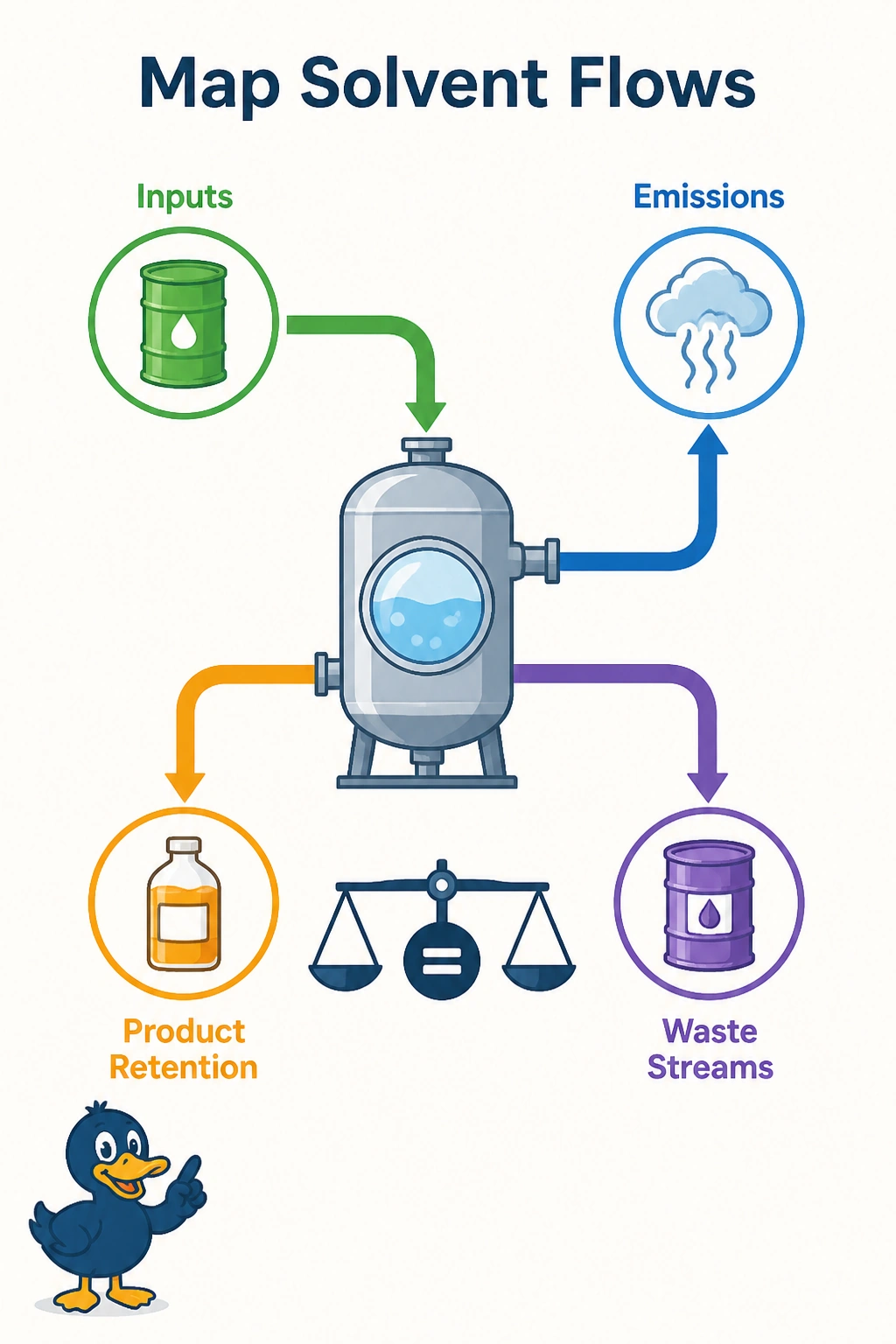
Trying to fix chemical losses without a material balance is like patching a roof leak in the dark—you might spend big money in the wrong spot. Before buying control hardware, you need to track where every gallon of solvent enters, evaporates, or leaves as waste. The trap is jumping straight to expensive end-of-pipe equipment or confusing fewer pickups with less waste.
Full Explanation
Effective pollution prevention planning starts with quantifying material flows so engineering and substitution efforts target the largest actual loss points. The engineer should Perform a process material balance comparing solvent inputs, product retention, emissions, and waste streams to pinpoint whether losses are driven by evaporation, over-application, or bath changeouts. Choosing to Purchase an end-of-pipe thermal oxidizer immediately before measuring where solvent losses occur locks the plant into high capital and fuel costs without evaluating source reduction first. Selecting to Switch from quarterly to annual waste pickups to reduce the number of manifests generated alters shipping frequency without reducing waste volume and can even violate RCRA accumulation time limits. Deciding to Dilute the spent solvent rinse water with municipal supply water before sending it to the drain constitutes impermissible dilution and fails to reduce total pollutant mass. As a caveat, ensure fugitive evaporation and rag retention are estimated alongside metered liquid streams so the balance closes realistically. As an operational check, reconcile purchasing invoices against air-emission estimates and hazardous waste manifest totals during the annual planning review.
Prefer to study offline? Printable PDF study book + test engine ($7.50, unofficial). These questions stay free here.