
A process engineer is planning to introduce a new organic peroxide initiator into a polymer-blending line and needs to identify incompatible materials, conditions to avoid, and potential hazardous decomposition products before finalizing the operating procedure. Which Safety Data Sheet section provides this information?
Select an answer to reveal the explanation.
Short Explanation
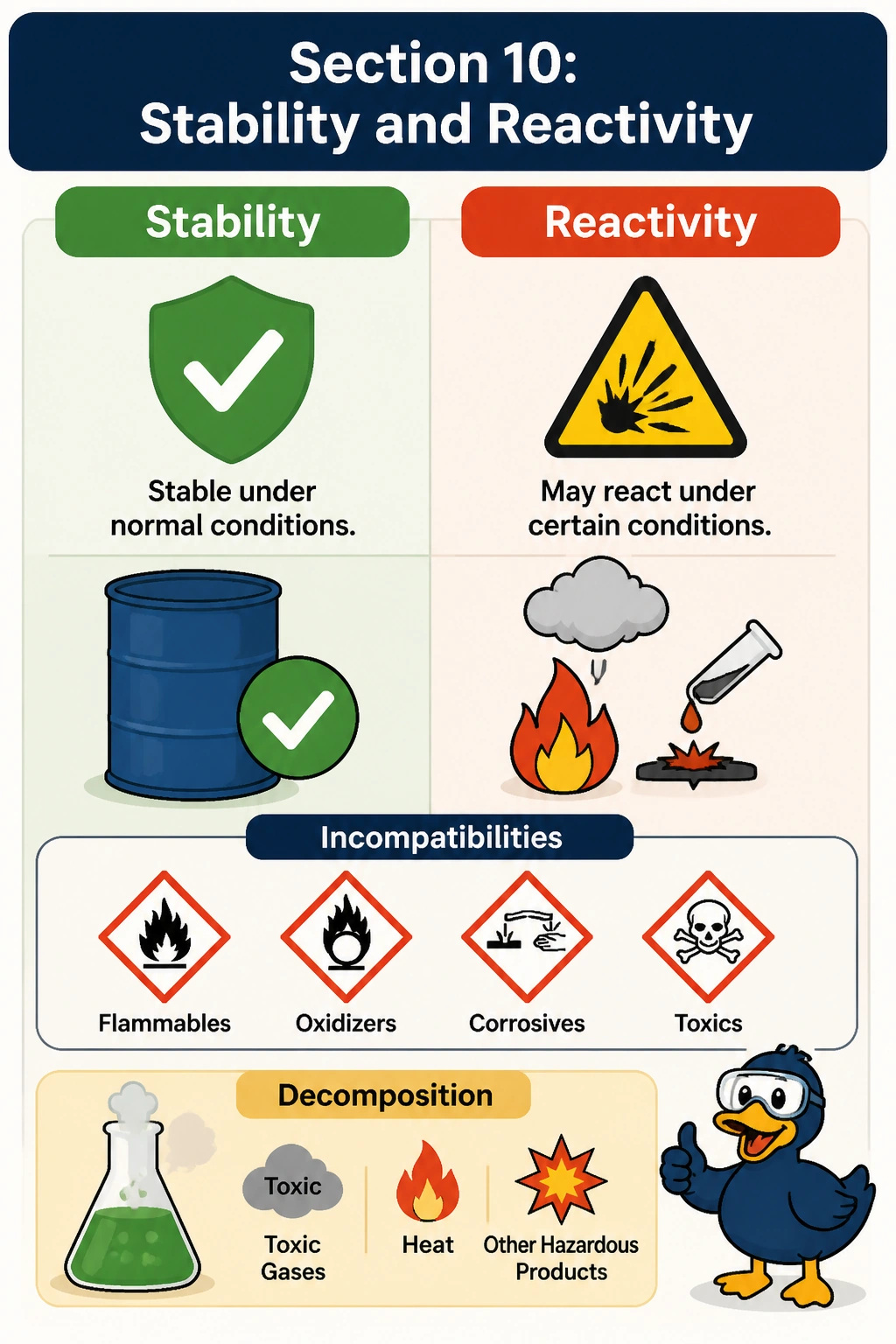
Before you bring a reactive organic peroxide onto a blending line, you need to know what triggers runaway decomposition and which chemicals it hates. Safety Data Sheet Section 10 maps out reactivity hazards, incompatibilities, and conditions to avoid. The trap is stopping at Section 9 physical properties, which will not warn you about incompatible catalysts.
Full Explanation
Under the OSHA Hazard Communication Standard (29 CFR 1910.1200, Appendix D), Safety Data Sheets follow a standardized 16-section format so engineers and responders can quickly locate specific hazard data. Consulting Section 10, Stability and Reactivity, which details incompatibilities and decomposition provides chemical stability under normal temperatures, possibility of hazardous reactions, conditions to avoid such as heat, shock, or contamination, incompatible materials, and hazardous decomposition products. Reviewing Section 12, Ecological Information, which summarizes aquatic toxicity and soil persistence supplies environmental fate and ecotoxicity data rather than process reactivity hazards. Checking Section 9, Physical and Chemical Properties, which lists flash point and vapor pressure gives physical constants such as boiling point and density but omits incompatible reactants. Using Section 14, Transport Information, which specifies UN numbers and packing groups identifies DOT shipping classifications rather than process-line reactivity controls. As a caveat, organic peroxides may also have a Self-Accelerating Decomposition Temperature listed in Section 9 or 10 that dictates maximum safe storage and handling temperatures. For an operational check, cross-reference Section 10 incompatible materials against all existing solvents, metals, and cleaners in the blending room before approving the standard operating procedure.
Prefer to study offline? Printable PDF study book + test engine ($7.50, unofficial). These questions stay free here.