
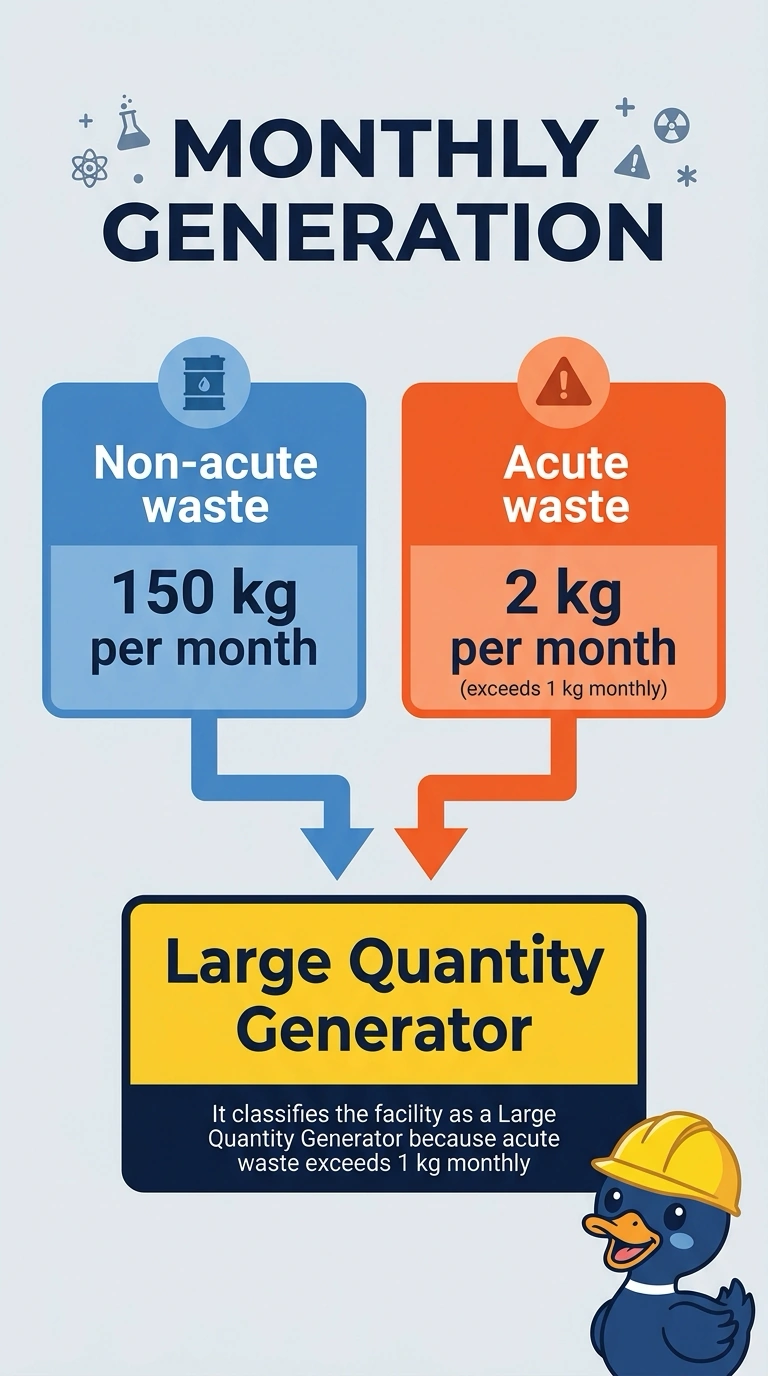
During facility expansion planning, an electronics manufacturer projects generating 150 kilograms of non-acute spent solvent waste and 2 kilograms of P-listed acute hazardous waste per calendar month. Under federal RCRA rules in 40 CFR 262.13, how does this combined monthly generation affect the facility's generator category?
Select an answer to reveal the explanation.
Short Explanation
When it comes to RCRA acute hazardous waste, a tiny amount tips the whole scale in a hurry. The trap is adding up total kilograms to guess your generator tier, because exceeding 1 kilogram of acute waste in a single month automatically pushes you into Large Quantity Generator rules.
Full Explanation
Under 40 CFR 262.13, RCRA generator categories depend on the highest tier triggered by either non-acute or acute hazardous waste in a calendar month. Generating more than 1 kilogram of acute hazardous waste triggers full Large Quantity Generator rules regardless of non-acute volume, so It classifies the facility as a Large Quantity Generator because acute waste exceeds 1 kilogram monthly. It classifies the facility as a Small Quantity Generator based on total combined waste mass is wrong because Small Quantity Generators cannot exceed 1 kilogram of acute waste per month. It allows Very Small Quantity Generator status if the acute waste is stored separately fails because separate storage does not alter monthly generation totals, and Very Small Quantity Generators are capped at 100 kilograms of non-acute waste and 1 kilogram of acute waste. It averages the monthly acute waste generation across a full twelve-month calendar year is incorrect because RCRA evaluates generation on a strict calendar-month basis. As a caveat, reaching Large Quantity Generator status applies 90-day accumulation limits, formal training, and contingency planning across all hazardous wastes on-site. Operationally, weigh P-listed acute waste streams monthly and evaluate raw-material substitutions before expansion.
Prefer to study offline? Printable PDF study book + test engine ($7.50, unofficial). These questions stay free here.