
During pre-startup chemical planning for a new metal-cleaning line, an EHS specialist reviews a supplier's Safety Data Sheet for a proprietary cleaner whose label lists only a brand name. Because chemical synonyms vary across vendors, which identifier in Safety Data Sheet Section 3 provides an unambiguous lookup across EPA and OSHA regulatory lists?
Select an answer to reveal the explanation.
Short Explanation
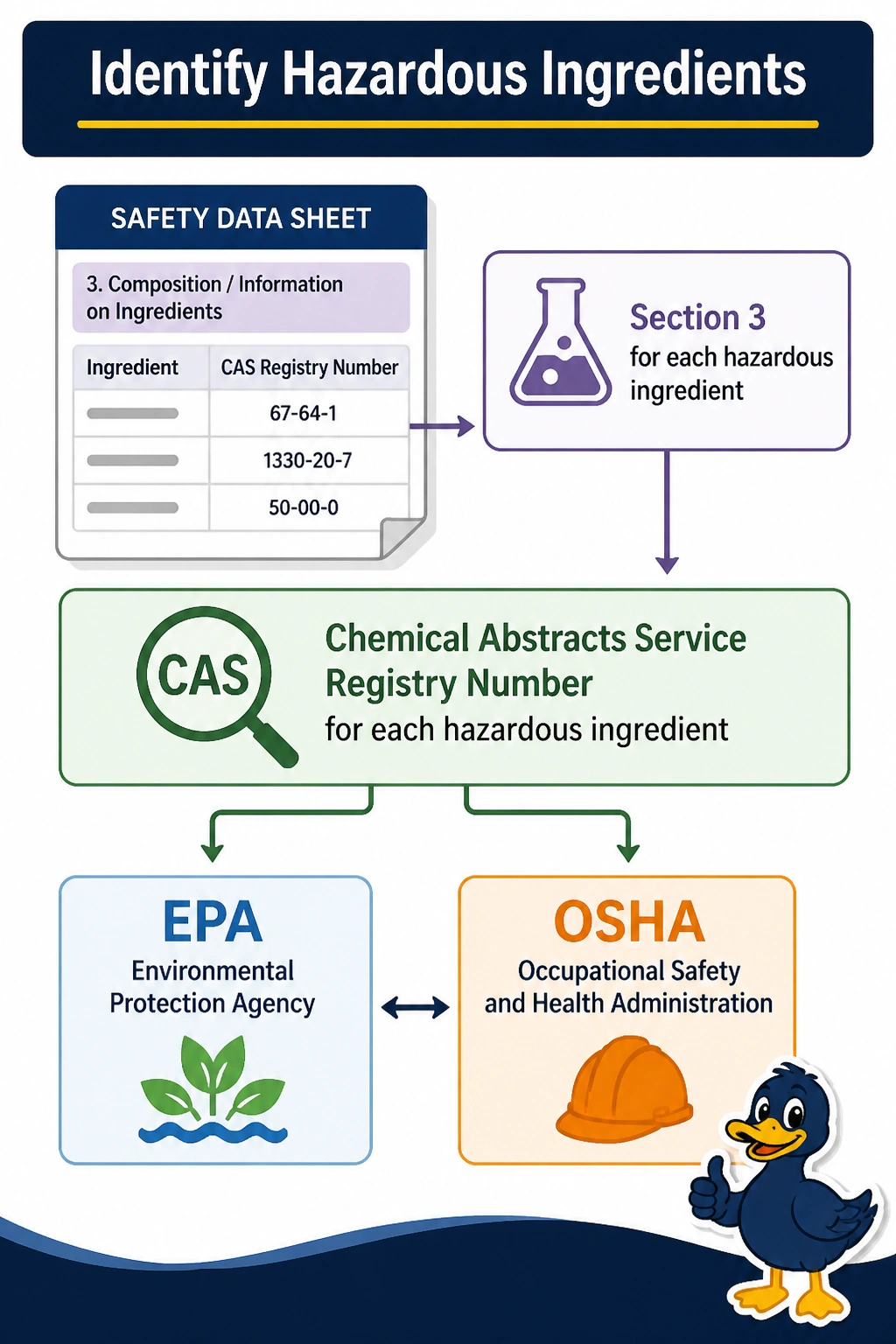
Trade names can hide the exact same chemical under a dozen different labels, so you need a universal fingerprint before checking regulatory lists. The Chemical Abstracts Service Registry Number in Safety Data Sheet Section 3 gives you that exact match across EPA and OSHA programs. The trap is relying on a shipping UN number or a vendor product code, neither of which pinpoints every individual ingredient in a mixture.
Full Explanation
Under OSHA Hazard Communication rules in 29 CFR 1910.1200, Safety Data Sheet Section 3 must disclose "The Chemical Abstracts Service Registry Number for each hazardous ingredient" above applicable cutoffs, providing a unique numeric identifier that links a substance across EPA, OSHA, and DOT regulatory tables regardless of brand name or chemical synonym. Relying on "The supplier's internal product code printed on the shipping label" fails because vendor catalog codes are proprietary and do not map to federal chemical lists such as CERCLA or EPCRA. Using "The four-digit UN identification number from transport records" fails because UN numbers classify shipping hazards and frequently group diverse mixtures under generic entries rather than naming individual constituents. Checking "The North American Industry Classification System code for the plant" fails because a NAICS code classifies the facility's economic sector rather than any chemical substance. As a planning caveat, a supplier may claim a specific chemical identity as a trade secret on a Safety Data Sheet, in which case the hazard classification and exposure limits still apply and the exact identity can be requested under medical or emergency provisions. For an operational check, cross-reference every CAS Registry Number from Section 3 against your facility's chemical inventory and regulatory threshold lists before approving a new product for purchase.
Prefer to study offline? Printable PDF study book + test engine ($7.50, unofficial). These questions stay free here.