
A specialty chemical company plans to synthesize and commercially manufacture a new polymer additive in the United States that does not appear on the EPA Toxic Substances Control Act (TSCA) Chemical Substance Inventory. What regulatory requirement must the company satisfy before beginning non-exempt commercial manufacture?
Select an answer to reveal the explanation.
Short Explanation
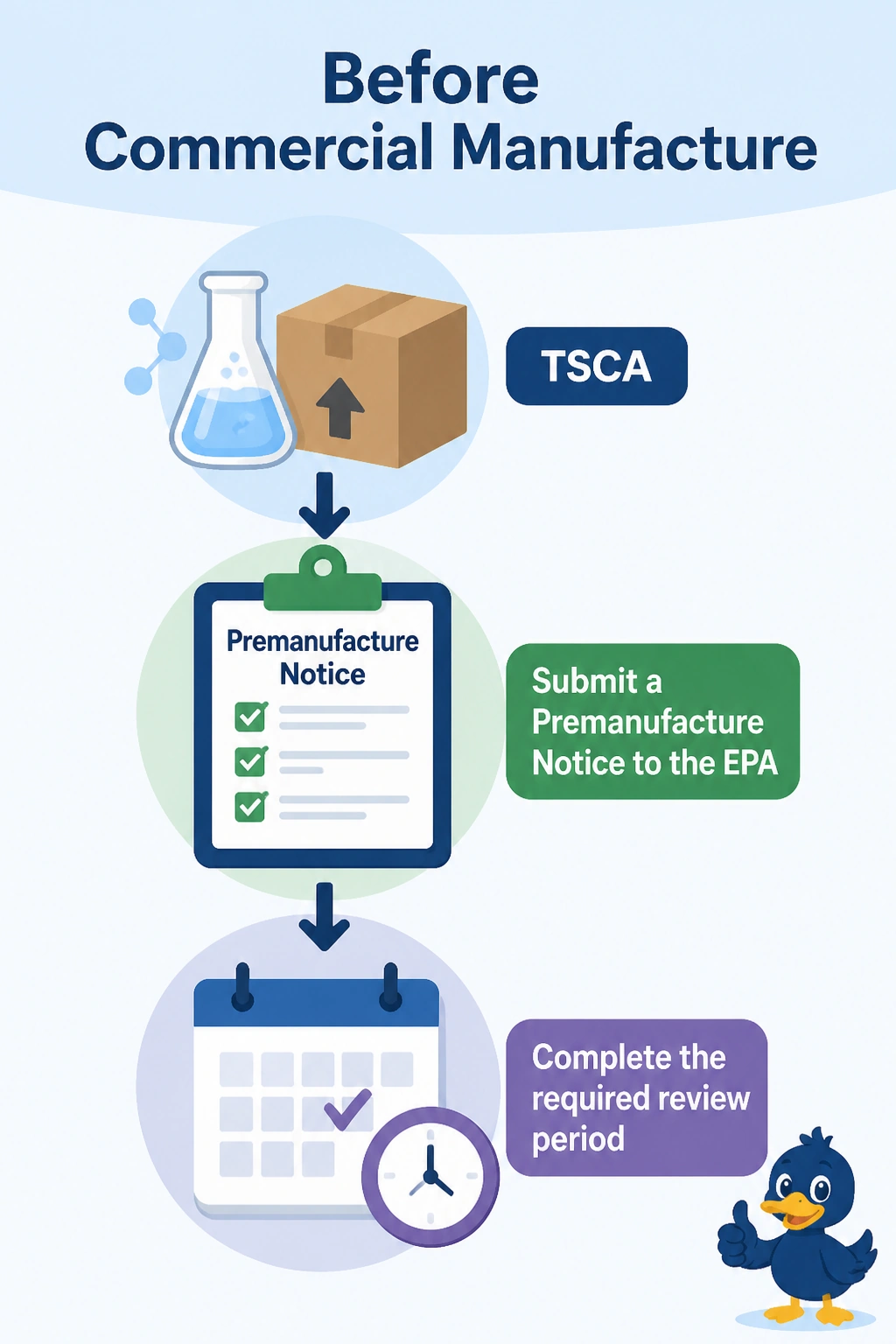
Think of the TSCA Inventory as an approved guest list for commercial chemicals in the United States. You’re right to look beyond end-of-year inventory or release reports when launching a new molecule: before non-exempt commercial manufacture, you must submit a Premanufacture Notice to the EPA and complete the required review period.
Full Explanation
Under TSCA Section 5 and 40 CFR Part 720, a substance absent from the TSCA Chemical Substance Inventory is considered a new chemical substance. Before non-exempt commercial manufacture begins, the company must submit a Premanufacture Notice to the EPA and complete the required review period. This gives the EPA an opportunity to evaluate potential human health and environmental risks and impose testing or use restrictions before the chemical enters commerce. Submitting a Toxics Release Inventory Form R report prior to ordering raw feedstocks misapplies EPCRA Section 313, a retrospective annual reporting program for listed toxic chemicals that exceed activity thresholds. Registering the new polymer additive as a RCRA Universal Waste is inapplicable because those rules cover specific discarded hazardous wastes, such as batteries and lamps, not new commercial products. Filing an EPCRA Tier II hazardous chemical inventory report addresses annual emergency planning for stored hazardous chemicals, not pre-market chemical approval. A caveat: narrow exemptions, including research and development or polymer exemptions, have strict conditions that must be documented if claimed. As a practical check, verify the chemical’s CAS number against the active TSCA Inventory and retain the EPA Notice of Commencement or PMN clearance letter before scaling up production.
Prefer to study offline? Printable PDF study book + test engine ($7.50, unofficial). These questions stay free here.