
A logistics hub plans to install two new aboveground diesel fuel storage tanks that will bring total aggregate aboveground oil storage capacity above the federal 40 CFR Part 112 threshold, on a site with a storm ditch draining to a navigable creek. Before storing oil in the new tanks, what planning action must the facility complete?
Select an answer to reveal the explanation.
Short Explanation
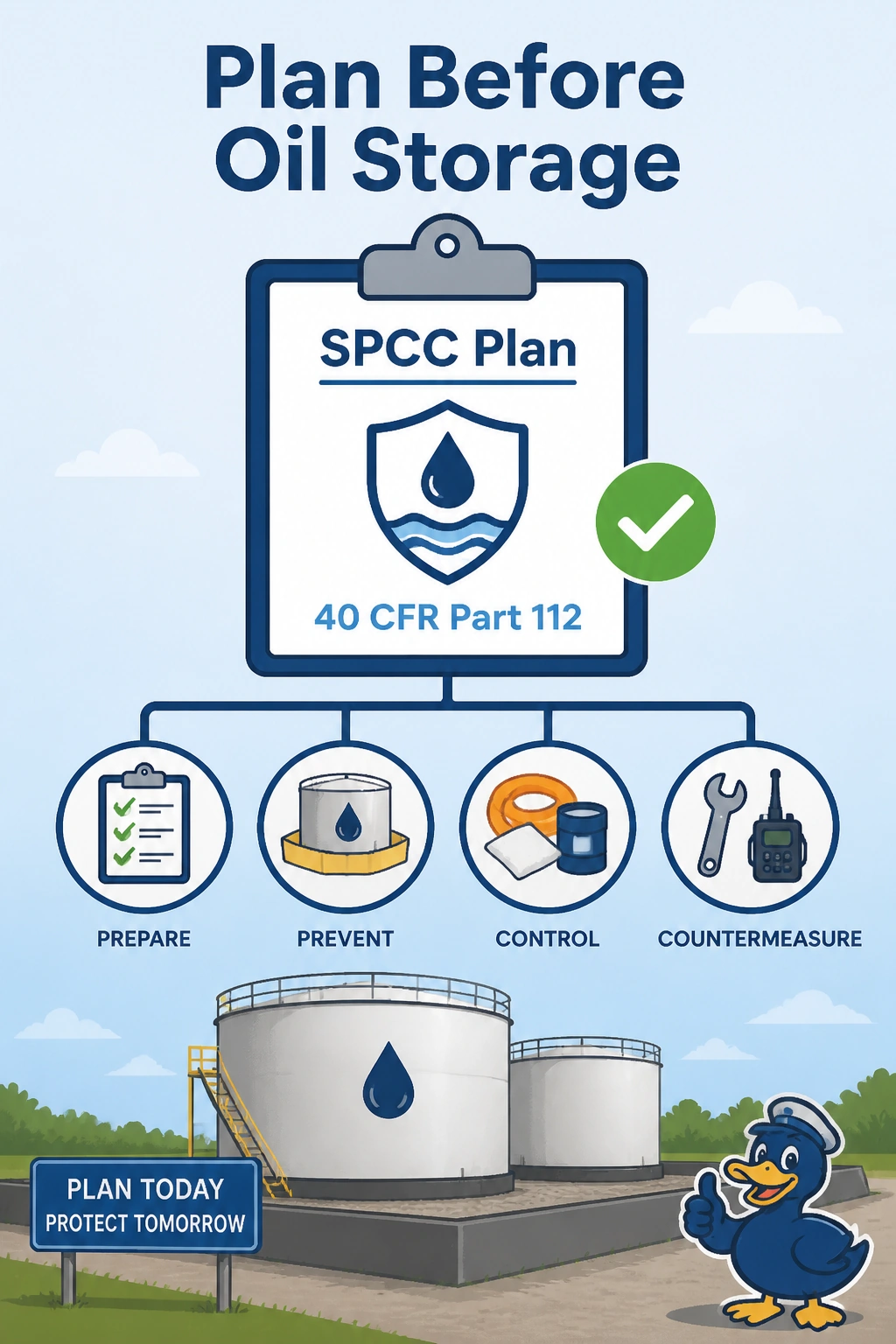
Adding bulk fuel tanks near a storm ditch is a classic moment when you can cross a federal oil-pollution threshold without realizing it. Under EPA 40 CFR Part 112, you must prepare and implement a Spill Prevention, Control, and Countermeasure Plan before storing oil in the new tanks. Don’t treat clean diesel as RCRA hazardous waste or wait until a spill occurs to plan secondary containment.
Full Explanation
Under EPA 40 CFR Part 112, a non-transportation-related facility that could reasonably be expected to discharge oil into navigable waters and exceeds the federal aggregate aboveground oil storage capacity threshold must prepare and implement a Spill Prevention, Control, and Countermeasure Plan. Preparing and implementing a site-specific SPCC Plan is correct because it establishes secondary containment, inspection schedules, and discharge-prevention measures before oil is stored. Registering the new aboveground tanks under RCRA Subtitle C rules is not appropriate because virgin diesel stored for use is a product, not hazardous waste; RCRA tank standards apply to hazardous-waste accumulation. Submitting an annual Toxics Release Inventory Form R for diesel fuel is not the required planning action: EPCRA Section 313 addresses annual chemical releases and waste-management thresholds, not pre-operational oil containment. Filing a CERCLA continuous release report with the state agency is also not the answer because CERCLA reporting addresses active hazardous-substance releases, and petroleum is generally excluded from CERCLA hazardous substances. As an exam caveat, SPCC plans generally require Professional Engineer certification unless the facility meets specific qualified-facility criteria. As a practical check, inventory all oil-filled containers of 55 gallons or more, verify secondary-containment sizing, and review drainage pathways to surface waters.
Prefer to study offline? Printable PDF study book + test engine ($7.50, unofficial). These questions stay free here.