
A packaging plant plans to install a new rotogravure printing press that will use volatile organic solvent inks in a nonattainment airshed. During project planning, what step must the EHS manager complete before construction begins?
Select an answer to reveal the explanation.
Short Explanation
Air permitting works like a building permit: you get approval before pouring the concrete, not after the roof is up. The trap is thinking you can install new solvent equipment first and sort out Clean Air Act paperwork during next year's emissions inventory.
Full Explanation
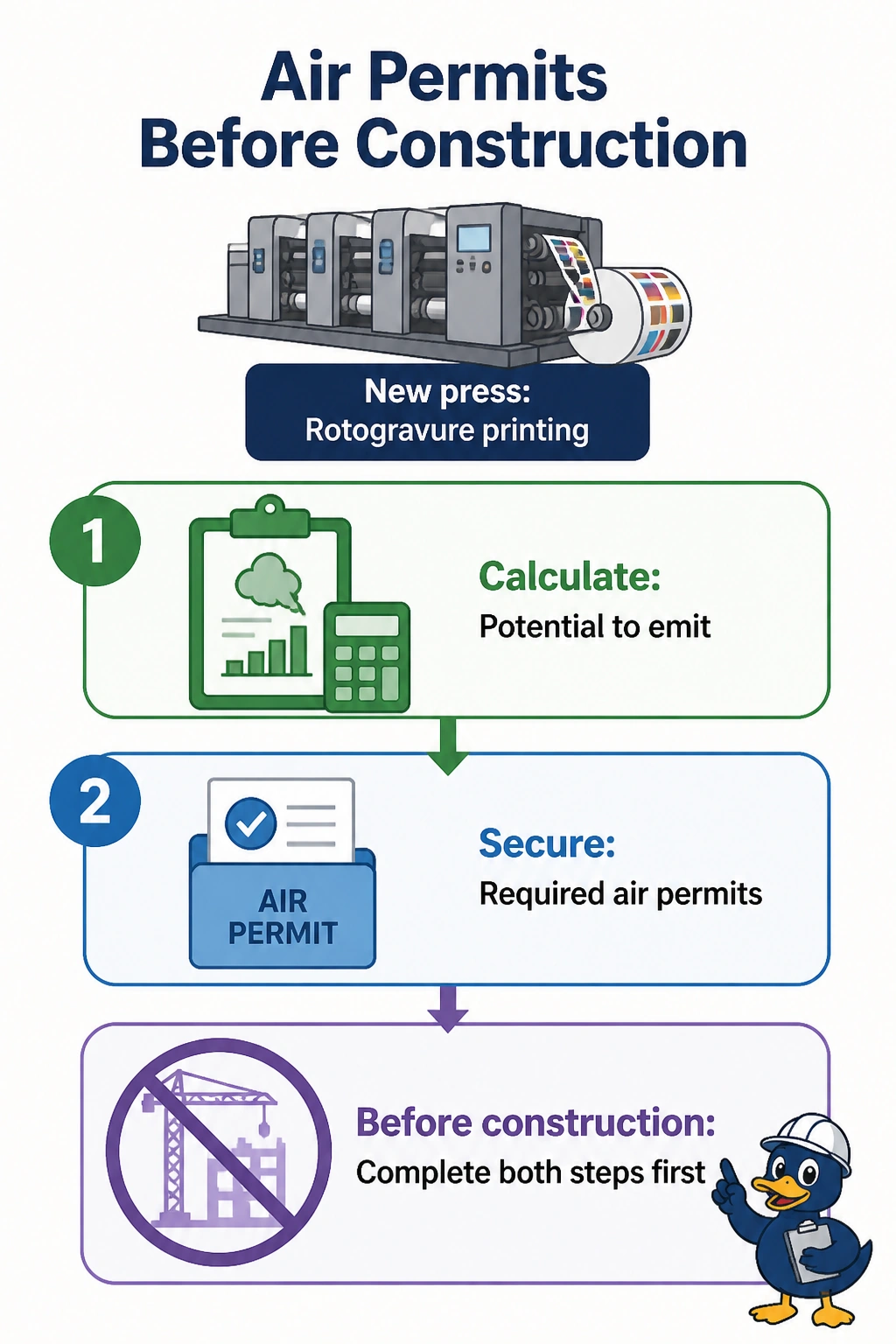
Under the Clean Air Act, new or modified stationary sources that emit regulated pollutants such as volatile organic compounds must Calculate potential-to-emit and secure required air permits before construction. Potential-to-emit evaluates the maximum capacity of the press to emit pollutants under its physical and operational design, determining whether New Source Review, state construction permitting, or Title V applicability is triggered. Choosing to Order and install the coating line first, then report actual emissions next year violates preconstruction permitting rules and can trigger enforcement penalties or forced shutdowns. Attempting to Exempt the line from air permitting because the solvent has no odor threshold confuses human sensory detection with legal pollutant definitions, since odorless compounds can still be regulated volatile organic compounds or hazardous air pollutants. Deciding to Substitute a higher-volatility solvent to disperse vapors faster outdoors increases evaporative losses and worsens ground-level ozone formation rather than reducing total emissions. Keep in mind the caveat that enforceable operational limits, such as capture and control efficiency or ink usage caps, must be written into the permit to legally restrict potential-to-emit. For an operational check, document ink formulation VOC content and maximum press throughput calculations in the preconstruction permit file.
Prefer to study offline? Printable PDF study book + test engine ($7.50, unofficial). These questions stay free here.