
A food-processing facility plans to install a new industrial refrigeration system that will hold a regulated toxic substance in a single interconnected process above the federal threshold quantity established under Clean Air Act Section 112(r). During pre-installation planning, which federal regulatory program requirement must the EHS manager address before bringing the regulated substance on site?
Select an answer to reveal the explanation.
Short Explanation
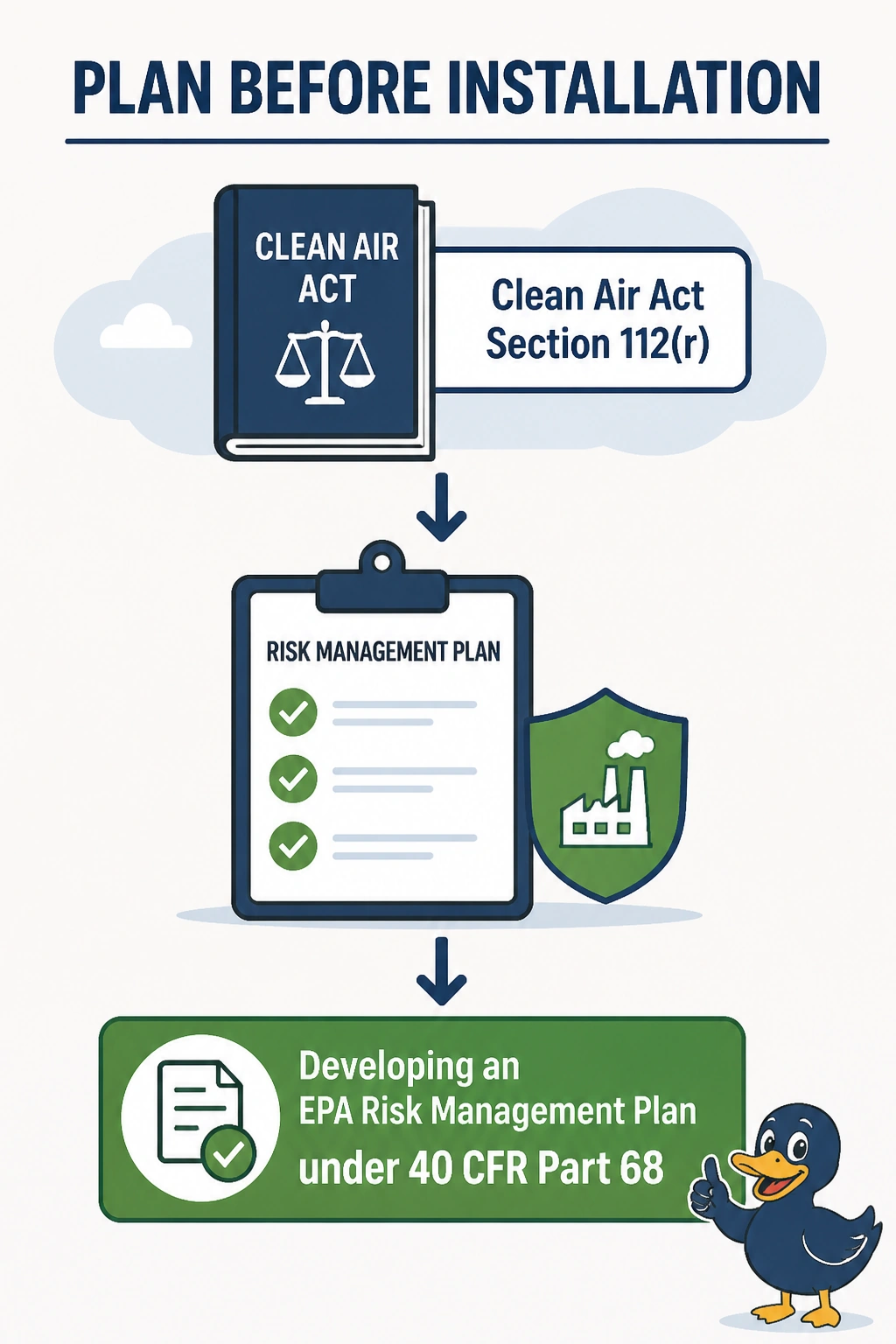
When your interconnected process exceeds the Clean Air Act Section 112(r) threshold, you need to plan for accidental-release prevention before the regulated substance arrives. Address Developing an EPA Risk Management Plan under 40 CFR Part 68 to help prevent and mitigate catastrophic releases. RCRA waste reporting, EPCRA annual release reporting, and DOT carrier registration serve different purposes.
Full Explanation
When a stationary source holds more than a threshold quantity of a regulated substance in a process under Clean Air Act Section 112(r), Developing an EPA Risk Management Plan under 40 CFR Part 68 is mandatory before the material is introduced into the process. The Risk Management Program requires hazard assessments, a prevention program, an emergency response program, and submission of the Risk Management Plan to EPA to protect the surrounding community and environment. Preparing a RCRA Biennial Hazardous Waste Report for off-site shipments applies to Large Quantity Generators reporting hazardous waste generation and management, not virgin process refrigerants. Filing an EPCRA Section 313 Form R for annual routine chemical releases tracks yearly toxic chemical releases and waste management quantities rather than pre-startup accidental-release planning. Obtaining a DOT Hazardous Materials Certificate of Registration applies to shippers and carriers transporting certain placarded or bulk hazardous materials in commerce, not stationary refrigeration use. Caveat: facilities meeting OSHA Process Safety Management thresholds must also coordinate overlapping prevention elements. As an operational check, verify the maximum intended inventory in the interconnected system against current 40 CFR 68.130 threshold tables.
Prefer to study offline? Printable PDF study book + test engine ($7.50, unofficial). These questions stay free here.