
A medical-device manufacturer plans to install a new polymer-coating line that would use methylene chloride, a solvent regulated as a Hazardous Air Pollutant under the Clean Air Act. During early process planning, the EHS manager recommends reformulating the coating to use a non-hazardous aqueous dispersion instead of installing thermal oxidizers. Which pollution-prevention principle does this recommendation demonstrate?
Select an answer to reveal the explanation.
Short Explanation
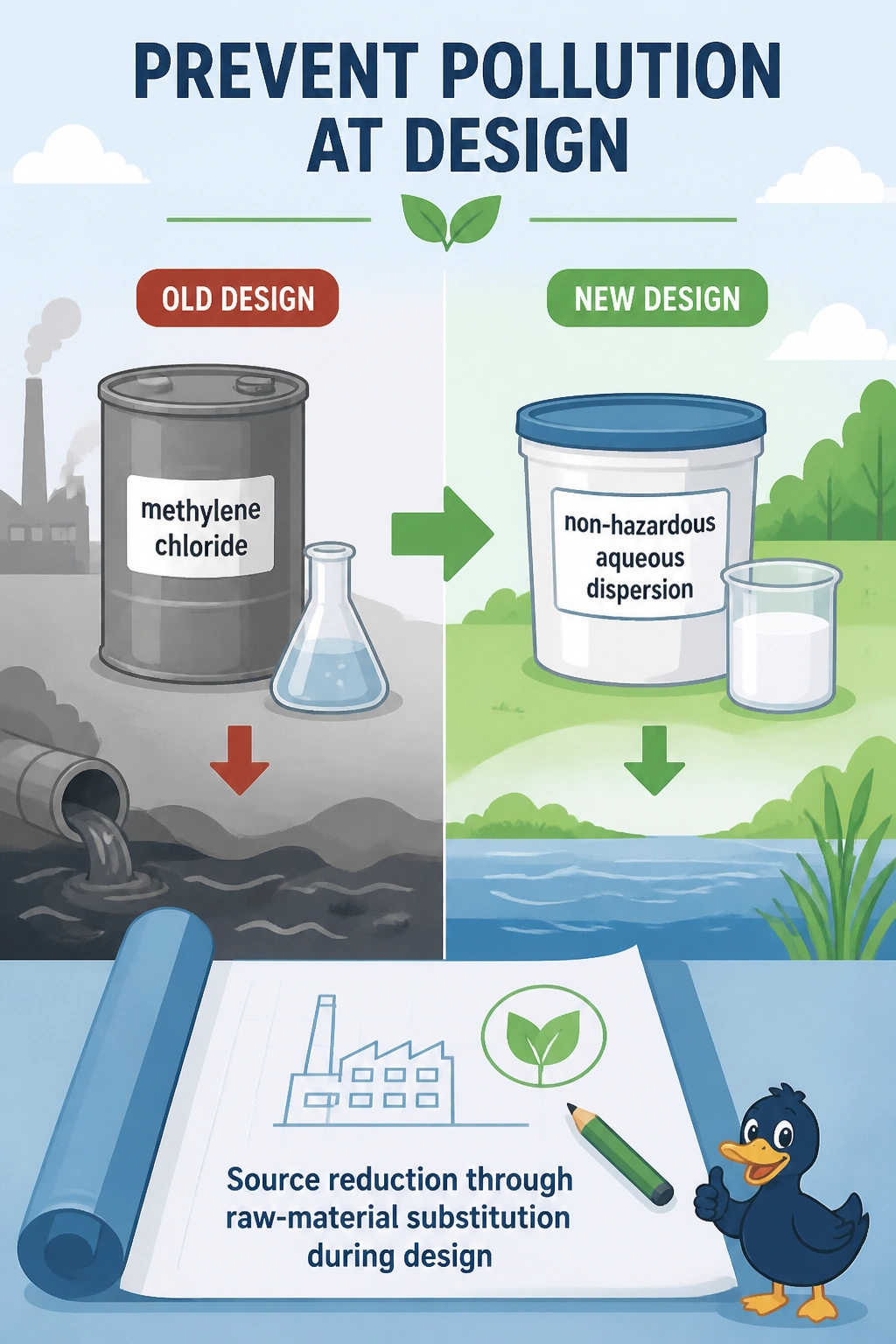
You’re making the cleaner choice by replacing the toxic solvent before the coating line is installed. Source reduction prevents the pollutant from entering the process, rather than capturing or burning it after it is generated.
Full Explanation
Under the federal Pollution Prevention Act framework, source reduction through raw-material substitution during design ranks at the top of the management hierarchy because it eliminates the regulated Hazardous Air Pollutant at its origin rather than managing emissions downstream. Replacing methylene chloride with a non-hazardous aqueous dispersion removes worker inhalation risks, avoids Clean Air Act major-source permitting burdens, and eliminates spent-solvent waste streams. End-of-pipe air pollution control using add-on destruction equipment, such as thermal oxidation or scrubbing, treats pollutants only after they are generated and consumes fuel or water. Off-site energy recovery of spent solvent streams at a cement kiln takes place after waste generation and ranks below source reduction. Post-generation waste stabilization prior to permitted land disposal represents treatment and final disposal, the least preferred tier for managing hazardous residuals. One caveat: substitution still requires engineering validation to ensure the aqueous coating meets medical-device quality specifications and does not create an unpermitted wastewater discharge. As a practical check, run a pilot batch with the reformulated dispersion and review the new Safety Data Sheet for volatile organic compound content and local sewer limits before finalizing equipment procurement.
Prefer to study offline? Printable PDF study book + test engine ($7.50, unofficial). These questions stay free here.