
A municipal water treatment utility plans to install a new bulk chlorine gas feed system that will store chlorine at a quantity exceeding its federal Threshold Planning Quantity under EPCRA Section 302 (40 CFR Part 355). Which planning notification must the facility submit to its State Emergency Response Commission and Local Emergency Planning Committee?
Select an answer to reveal the explanation.
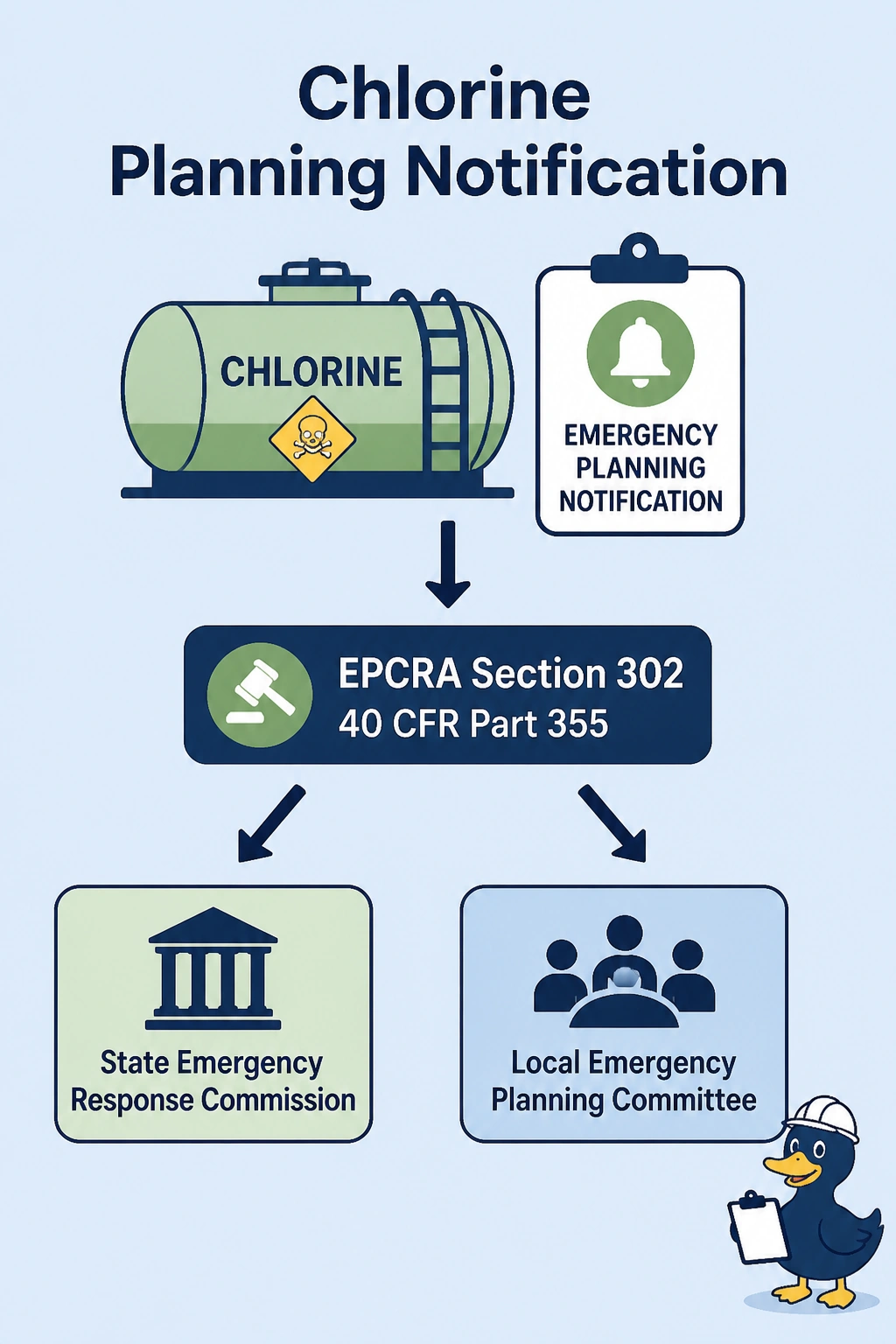
Short Explanation
Bringing an Extremely Hazardous Substance onto a site puts you on the radar of local emergency planners before a single valve ever opens. Under EPCRA Section 302, you must notify your state commission and local planning committee when inventory reaches the Threshold Planning Quantity. Do not confuse community emergency planning with waste generation or water discharge reports.
Full Explanation
Under EPCRA Section 302 and 40 CFR Part 355, any facility that has an Extremely Hazardous Substance present at or above its Threshold Planning Quantity must notify its State Emergency Response Commission and Local Emergency Planning Committee and designate a facility emergency coordinator. Selecting An EPCRA Section 302 emergency planning notification is correct because chlorine is a listed Extremely Hazardous Substance, and early notification enables local responders to integrate chemical hazards into community emergency plans. Choosing A RCRA Biennial Hazardous Waste Generator Report for new storage fails because virgin chlorine gas for water treatment is a commercial product rather than a hazardous waste. Choosing A CERCLA National Priorities List hazardous site nomination form fails because the National Priorities List identifies contaminated Superfund remediation sites rather than active chemical facilities. Choosing A Clean Water Act NPDES effluent discharge monitoring report fails because NPDES reports track permitted wastewater discharges rather than chemical storage emergency planning. As a caveat, facilities must also submit timely updates if relevant facility changes occur or new EHS thresholds are crossed. As an operational check, compare planned maximum chemical inventories against the 40 CFR Part 355 Appendices before delivery and confirm the designated emergency coordinator's contact details with the LEPC.
Prefer to study offline? Printable PDF study book + test engine ($7.50, unofficial). These questions stay free here.