
Operators at a batch chemical plant charge toluene into a closed 2,000-gallon stainless-steel reactor that previously contained warm air, creating an ignitable vapor atmosphere inside the vessel. Which engineering control prevents a vapor-space fire or deflagration during charging?
Select an answer to reveal the explanation.
Short Explanation
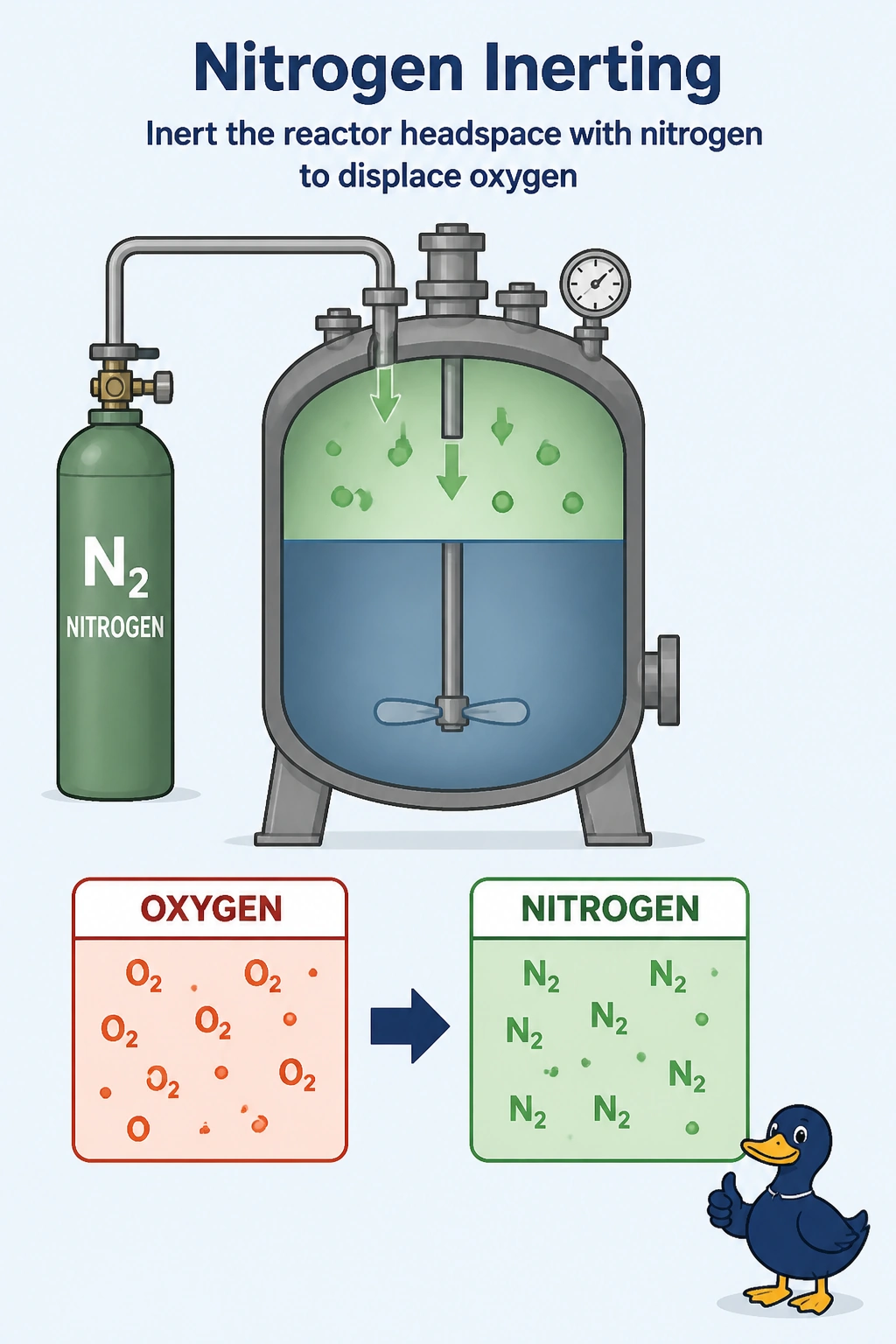
Fires need fuel, heat, and oxygen, so removing oxygen from a reactor headspace breaks the triangle before a spark ever forms. You control this hazard by inerting the vessel with nitrogen during flammable solvent charging. The trap is purging with plant air or switching to plastic hoses, which either feeds oxygen or builds static charge.
Full Explanation
Combustion inside a closed process vessel requires fuel vapor, an oxidant, and an ignition source, so the most reliable engineering control is to Inert the reactor headspace with nitrogen to displace oxygen. Maintaining nitrogen blanketing keeps oxygen below the limiting oxygen concentration so even a static discharge cannot ignite toluene vapors. Choosing to Purge the reactor headspace with compressed plant air to dilute solvent vapors introduces fresh oxygen and can drive a fuel-rich atmosphere straight through the flammable range. Choosing to Increase the agitator speed so liquid splashes cool the vapor space during charging actually generates mist and static electricity through free-falling liquid agitation. Choosing to Switch from steel dip pipes to non-conductive plastic hoses to avoid sparks worsens the hazard because insulating plastics accumulate dangerous electrostatic charges that cannot bleed to ground. Note that nitrogen inerting creates an immediate asphyxiation hazard if anyone opens or enters the vessel, so an operational check should verify continuous oxygen-analyzer readings in the headspace before charging begins and enforce lockout and confined-space isolation before any maintenance opening.
Prefer to study offline? Printable PDF study book + test engine ($7.50, unofficial). These questions stay free here.