
A maintenance crew at a chemical plant must enter a 16-foot-deep vertical process tank through a top manway to inspect an internal agitator under a confined space permit. To enable non-entry rescue without sending an attendant into the tank, what equipment does OSHA 29 CFR 1910.146(k)(3) require?
Select an answer to reveal the explanation.
Short Explanation
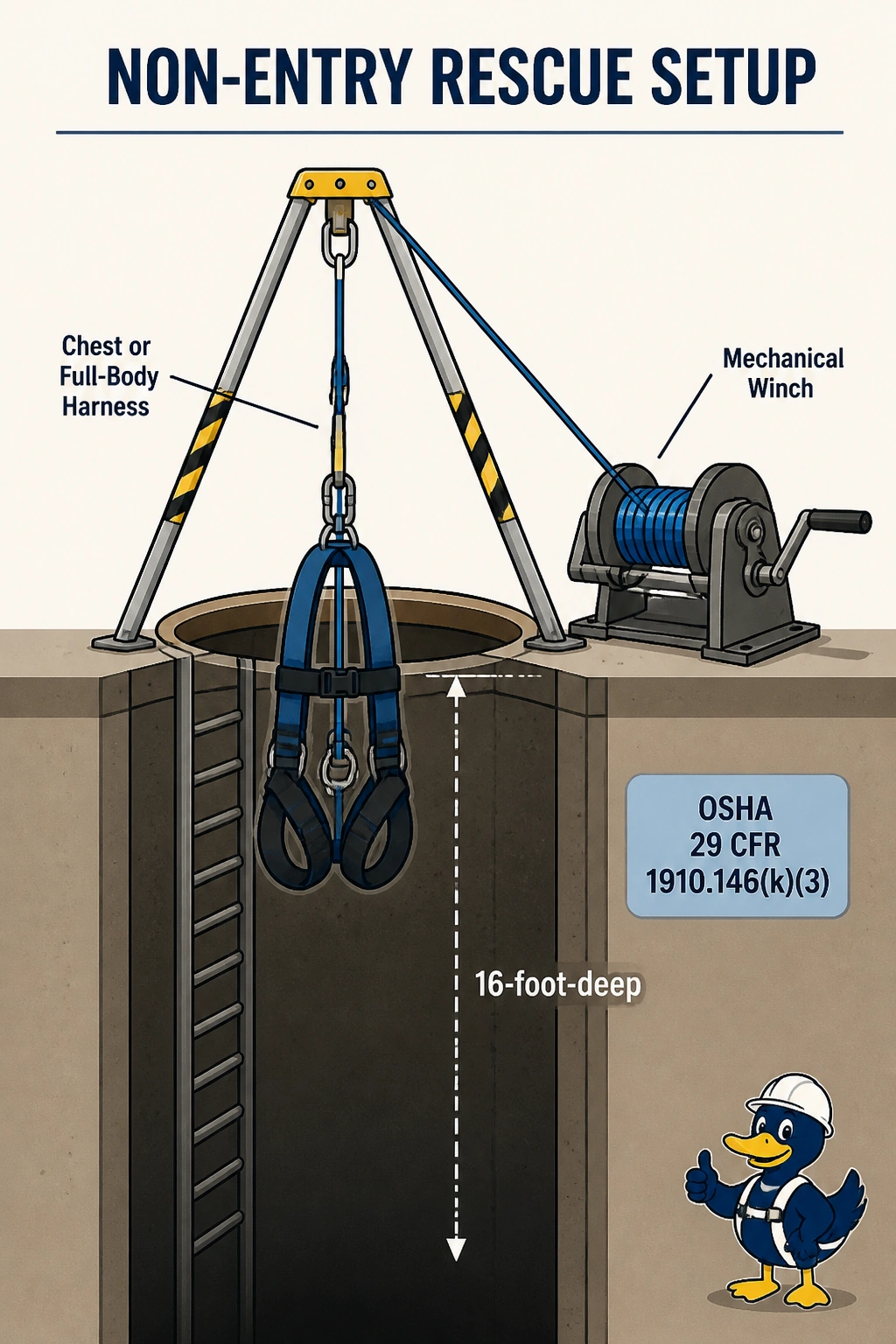
You can protect the entrant without exposing another worker by using non-entry retrieval: a chest or full-body harness connected to a mechanical winch. Sending a coworker into the tank, having the attendant climb down, or waiting for firefighters can put more lives at risk or delay rescue.
Full Explanation
Under OSHA 29 CFR 1910.146(k)(3), non-entry rescue is the primary rescue method for permit-required confined spaces unless retrieval equipment would increase the overall risk of entry or would not contribute to the rescue. For a vertical entry greater than five feet deep, use a chest or full-body harness with a retrieval line attached to a mechanical winch outside the space, allowing the entrant to be extracted without exposing a rescuer to the same atmospheric or physical hazard. Stationing a second maintenance technician inside the tank entrance with an air-purifying mask needlessly exposes another worker; an air-purifying respirator cannot protect against oxygen-deficient or unknown atmospheres. Having the outside attendant climb down the ladder if the entrant stops talking violates attendant duties and risks multiple fatalities. Relying on the municipal fire department to arrive before retrieval equipment is staged can cause fatal delays when oxygen deficiency or toxic gas strikes. As an exam caveat, wristlets may substitute for a harness only if a harness is infeasible or creates a greater hazard. Before authorizing entry, inspect the winch brake and harness D-ring connection, and verify clear headroom above the manway.
Prefer to study offline? Printable PDF study book + test engine ($7.50, unofficial). These questions stay free here.