
A chemical plant is installing a new transfer skid to pump concentrated sodium hydroxide (caustic soda) from a bulk storage tank into a batch reactor. Which equipment specification check is most critical during facility operations planning to prevent rapid corrosion and flammable hydrogen gas generation?
Select an answer to reveal the explanation.
Short Explanation
You can prevent a routine caustic transfer from becoming a corrosion and hydrogen hazard by checking that every wetted component is compatible with concentrated sodium hydroxide. Compatibility matters because aluminum piping can react with strong alkali, while higher pressure or a hidden leak does not solve a material problem.
Full Explanation
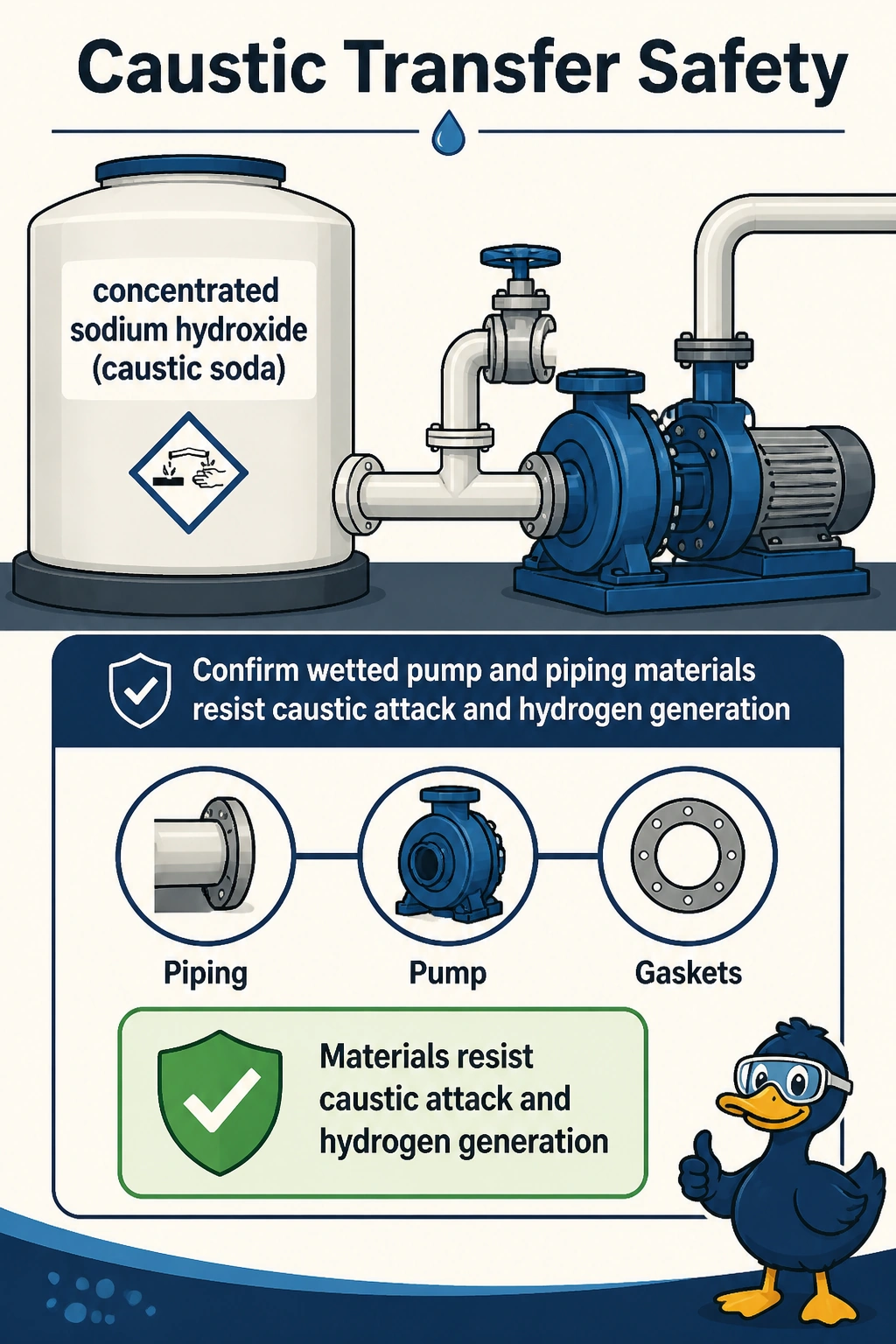
Concentrated sodium hydroxide can rapidly attack amphoteric metals such as aluminum, thinning the pipe wall while releasing flammable hydrogen gas inside closed piping. Confirming that wetted pump and piping materials resist caustic attack and hydrogen generation helps ensure compatible materials, such as carbon steel, stainless steel, or fluoropolymers, are used throughout the transfer system. Selecting lightweight aluminum piping to reduce stress on the storage-tank nozzle is chemically incompatible: caustic attack can damage the line and create an explosion hazard. Increasing discharge pressure to shorten drum filling raises line stress, splash risk, and the potential for seal failure without preventing corrosion. Routing the line through an unvented enclosed trench without leak detection can conceal a leak and trap released hydrogen in a confined space. As an operational caveat, elastomer gaskets and shaft seals must also be rated for the caustic concentration and operating temperature. Before commissioning, audit the skid’s bill of materials and compare every wetted component with the compatibility guidance in Section 10 of the Safety Data Sheet.
Prefer to study offline? Printable PDF study book + test engine ($7.50, unofficial). These questions stay free here.