
A chemical plant receives bulk deliveries of concentrated sodium hydroxide by tank truck into an outdoor 10,000-gallon vertical storage tank. During a safety review, engineers note that operators currently rely solely on a faded sight glass to judge tank level during unloading. Which engineering control best prevents tank overfills?
Select an answer to reveal the explanation.
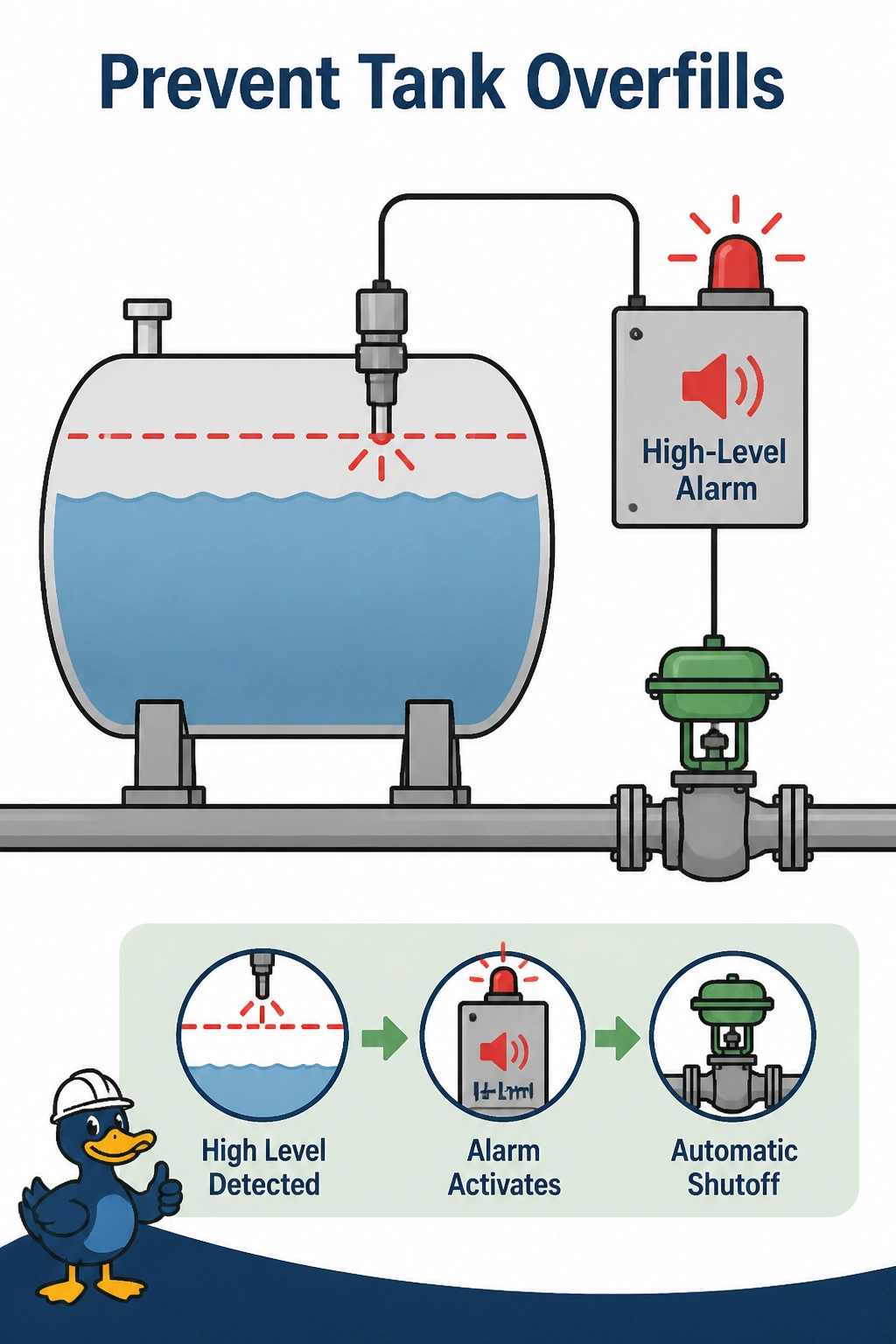
Short Explanation
Relying on a faded sight glass during a pressurized bulk transfer is an overfill waiting to happen, so you want hardware that stops the flow even if an operator blinks. The trap is settling for signs or PPE when an engineered interlock can physically prevent the spill.
Full Explanation
To prevent bulk tank overfills during chemical unloading, the most effective engineering control is Installing an independent high-level alarm and automatic shutoff interlock. An independent level sensor tied to an audible alarm and an automated valve or pump shutoff removes human error from the critical cut-off moment and stops transfer before liquid reaches the tank roof vent. Choosing Posting a reminder sign at the unloading manifold is an administrative control that warns workers without physically stopping flow if a gauge is misread. Choosing Issuing chemical splash goggles to the truck driver is personal protective equipment that shields the worker's eyes after a release occurs rather than preventing the tank from overflowing. Choosing Painting hash marks on the exterior tank wall does not measure internal liquid level inside an opaque steel or fiberglass vessel and cannot halt pumping operations. As a caveat, the high-level shutoff switch should be independent of the primary level transmitter so a single instrument failure does not blind both indication and protection. As an operational check, test the high-level alarm and automatic valve closure on a scheduled preventive-maintenance interval and verify pre-unloading tank ullage calculations before connecting the transfer hose.
Prefer to study offline? Printable PDF study book + test engine ($7.50, unofficial). These questions stay free here.