
A chemical plant covered by OSHA Process Safety Management (29 CFR 1910.119) hires an outside mechanical contractor to replace relief valves on a covered anhydrous ammonia unit. Before the contractor begins work, what must the host employer verify and communicate under 29 CFR 1910.119(h)?
Select an answer to reveal the explanation.
Short Explanation
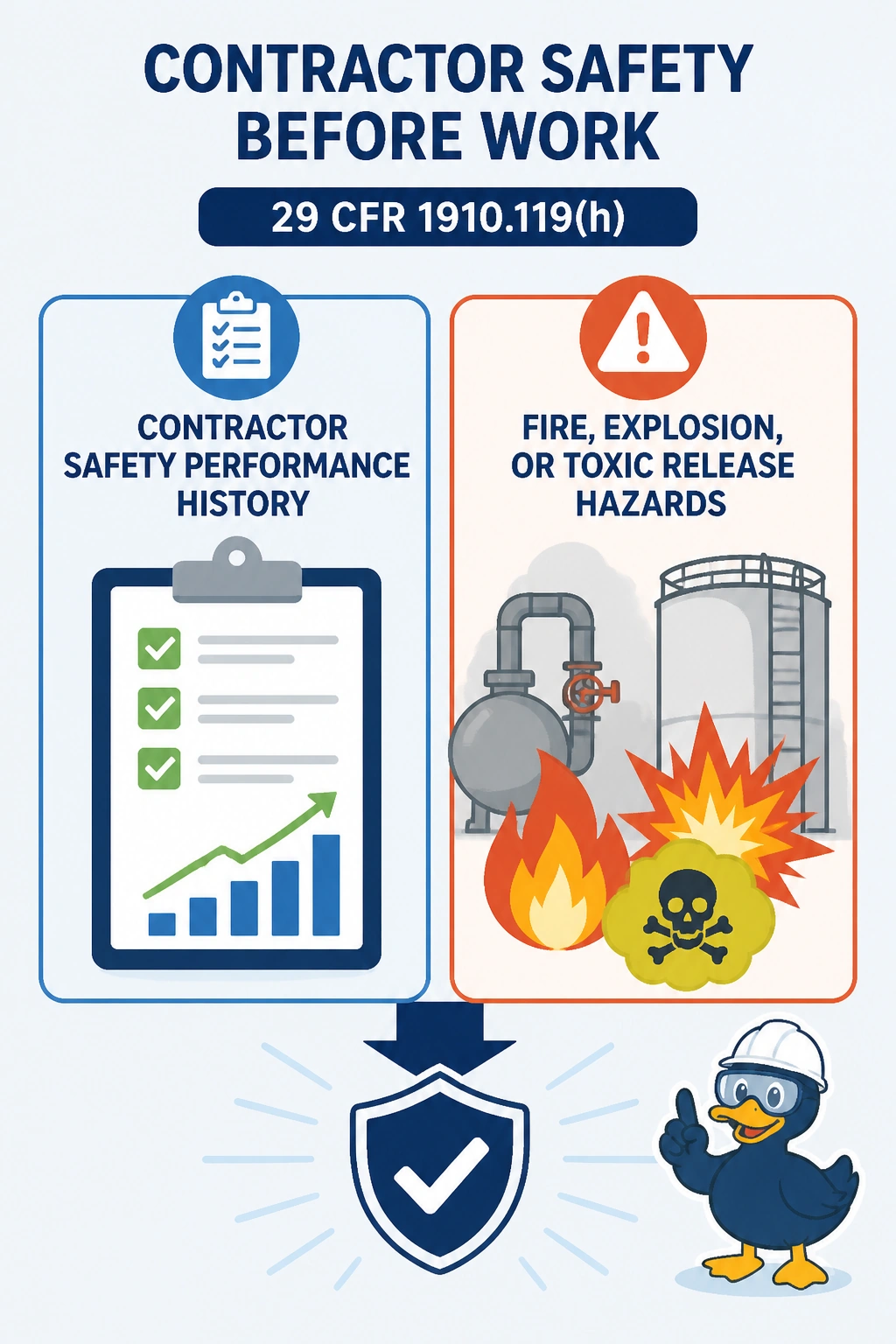
Before outside mechanics begin work on a covered unit, you need to check their safety history and brief them on the process hazards they may face. Under OSHA PSM, that includes fire, explosion, and toxic release risks; never assume visiting crews already know your unit.
Full Explanation
Under OSHA Process Safety Management in 29 CFR 1910.119(h), before outside contractors begin maintenance or repair work on or near a covered process, you must evaluate their safety performance and inform them of known fire, explosion, and toxic release hazards. You must also communicate applicable emergency action plan provisions so the contractor can protect its workers. A federal hazardous waste transporter permit for off-site hauling is unrelated to replacing relief valves on site; that permit applies to regulated waste carriers. Requiring every contractor employee to complete 40-hour uncontrolled-site HAZWOPER training confuses Superfund remediation requirements with PSM facility maintenance, which calls for task-specific process hazard training instead. An annual EPCRA Toxics Release Inventory Form R report is an unrelated chemical-release reporting obligation for covered manufacturing sites, not visiting mechanical contractors. One exam caveat: the host employer must also maintain a contract employee injury and illness log and control contractor entrance, presence, and exit in covered process areas. As a practical check, compare contractor sign-in logs and pre-job hazard briefings with your PSM contractor-qualification file.
Prefer to study offline? Printable PDF study book + test engine ($7.50, unofficial). These questions stay free here.