
A maintenance technician is preparing to test the atmosphere inside a vertical 20-foot chemical storage tank prior to permit-required confined space entry. Because vapors inside the tank may have different vapor densities than air, how should the technician sample the atmosphere?
Select an answer to reveal the explanation.
Short Explanation
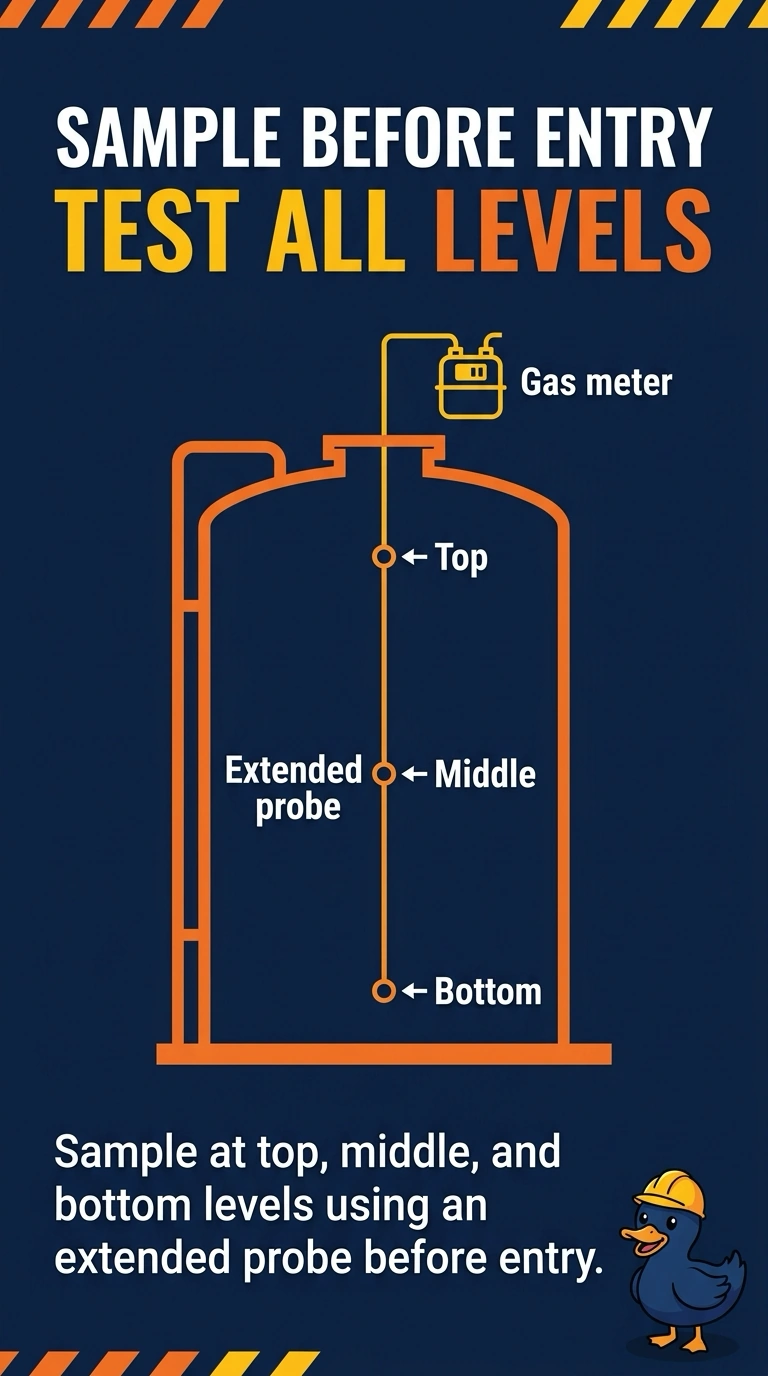
Atmospheres inside a tall tank layer like oil and vinegar, so one quick sniff at the hatch will fool your meter. The trap is assuming all hazardous gases either sink to the floor or rise to the top. Before you authorize entry, sample top, middle, and bottom elevations with an extended probe so stratified pockets are never missed.
Full Explanation
Under OSHA 29 CFR 1910.146 and Appendix B, atmospheric testing inside a permit-required confined space must account for gas stratification caused by differences in vapor density and temperature. Choosing to Sample at top, middle, and bottom levels using an extended probe before entry ensures that lighter-than-air gases near the roof, neutrally buoyant gases like carbon monoxide in the middle, and heavier-than-air solvent vapors near the floor are all detected before any entrant crosses the plane. Conversely, choosing to Sample only at the bottom floor where dense solvent vapors settle misses lighter gases such as methane or hydrogen that accumulate overhead. Likewise, choosing to Sample only at the upper manway where lighter gases tend to rise overlooks dense organic vapors or oxygen displacement pooling at the bottom. Choosing to Take a single reading at chest height from outside the top hatch leaves the majority of the vertical column untested and creates a false sense of safety. As an important caveat, pump-drawn sample tubing introduces transit lag, so technicians must wait the manufacturer-specified response time at each depth. For an operational check, verify bump-test calibration and record separate readings for all three elevations on the entry permit.
Prefer to study offline? Printable PDF study book + test engine ($7.50, unofficial). These questions stay free here.