
A metal-plating shop connects a municipal potable water supply line directly to a heated chromic acid makeup tank to replace evaporative losses, separated only by a manual ball valve. If municipal water pressure drops, backsiphonage could draw chromic acid into the drinking-water system. Which engineering control should the facility install to prevent this cross-connection hazard?
Select an answer to reveal the explanation.
Short Explanation
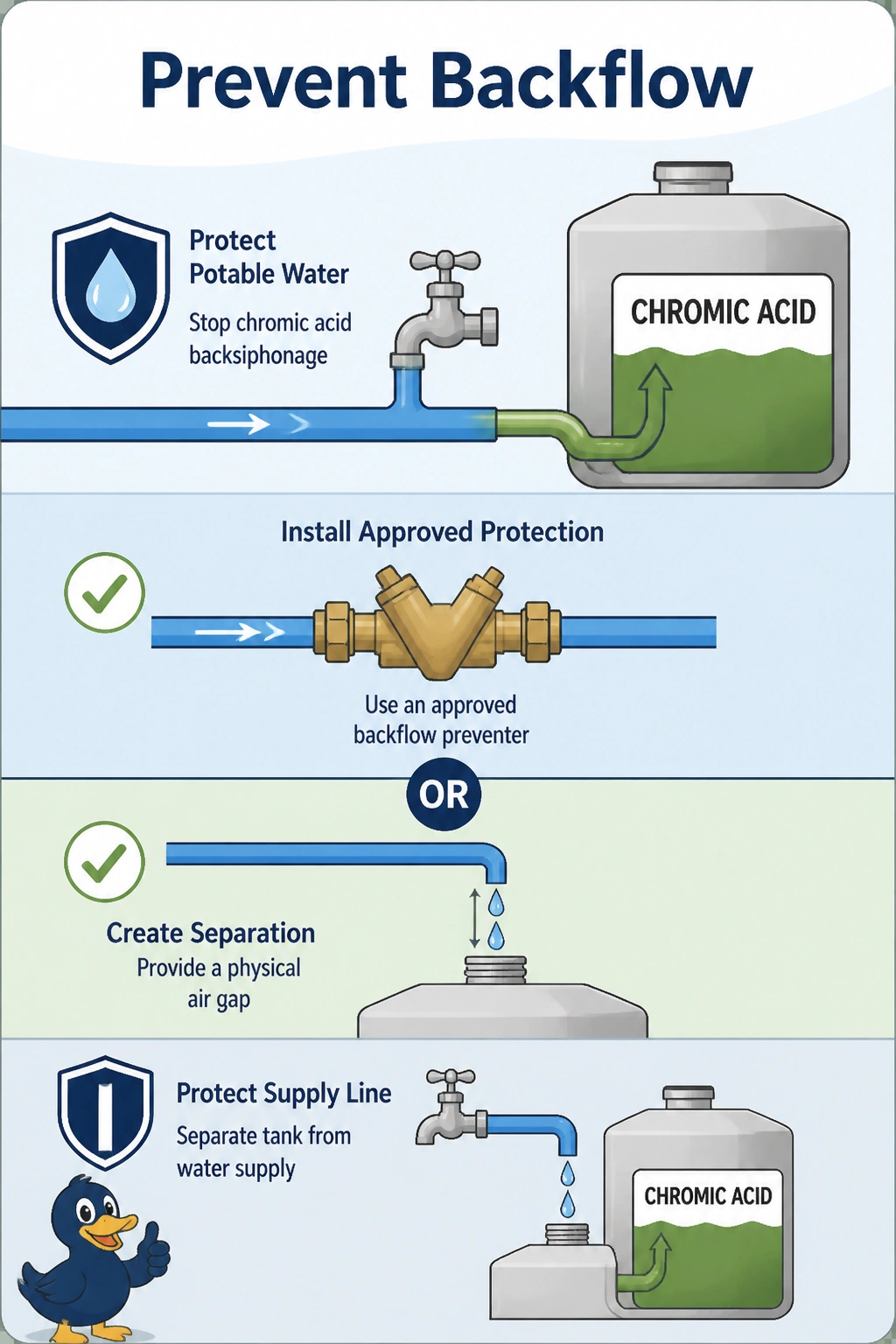
Think of a drinking-water line connected to an acid tank like a straw waiting for a pressure drop to pull chemicals backward. You need an approved backflow preventer or a physical air gap on the supply line to break that path. The trap is trusting a single check valve, which can foul or stick and never protects high-hazard chemical lines.
Full Explanation
Connecting a potable water supply directly to a chemical process tank creates a cross-connection hazard where backsiphonage or backpressure can draw hazardous chemicals into the drinking-water system. Installing An approved backflow preventer or physical air gap on the supply line provides positive hydraulic separation; an air gap physically breaks the fluid path, while an approved reduced-pressure zone assembly uses dual independent checks and a differential relief valve to discharge water if pressure reverses. Relying on A check valve installed downstream of the manual ball valve fails because single check valves can foul, stick, or leak under low differential pressure and are not approved for high-hazard chemical cross-connections. A pressure-relief valve rated for the tank operating pressure protects vessels from overpressurization rather than preventing reverse flow into the potable supply. A basket strainer located ahead of the tank inlet flange only traps suspended solids and debris and offers no protection against backsiphonage. As a caveat, mechanical backflow assemblies require periodic testing by a certified tester because internal seals degrade over time, whereas a properly sized air gap has no moving parts. For an operational check, inspect the water makeup connection for a visible vertical air gap above the tank flood rim or verify a current annual test tag on the backflow assembly.
Prefer to study offline? Printable PDF study book + test engine ($7.50, unofficial). These questions stay free here.