
Technicians at a coatings plant regularly open and pump toluene from 55-gallon drums inside a small enclosed dispensing room where ignitable vapor concentrations can exist during normal operations. Which equipment specification should the facility require inside this room to prevent electrical ignition?
Select an answer to reveal the explanation.
Short Explanation
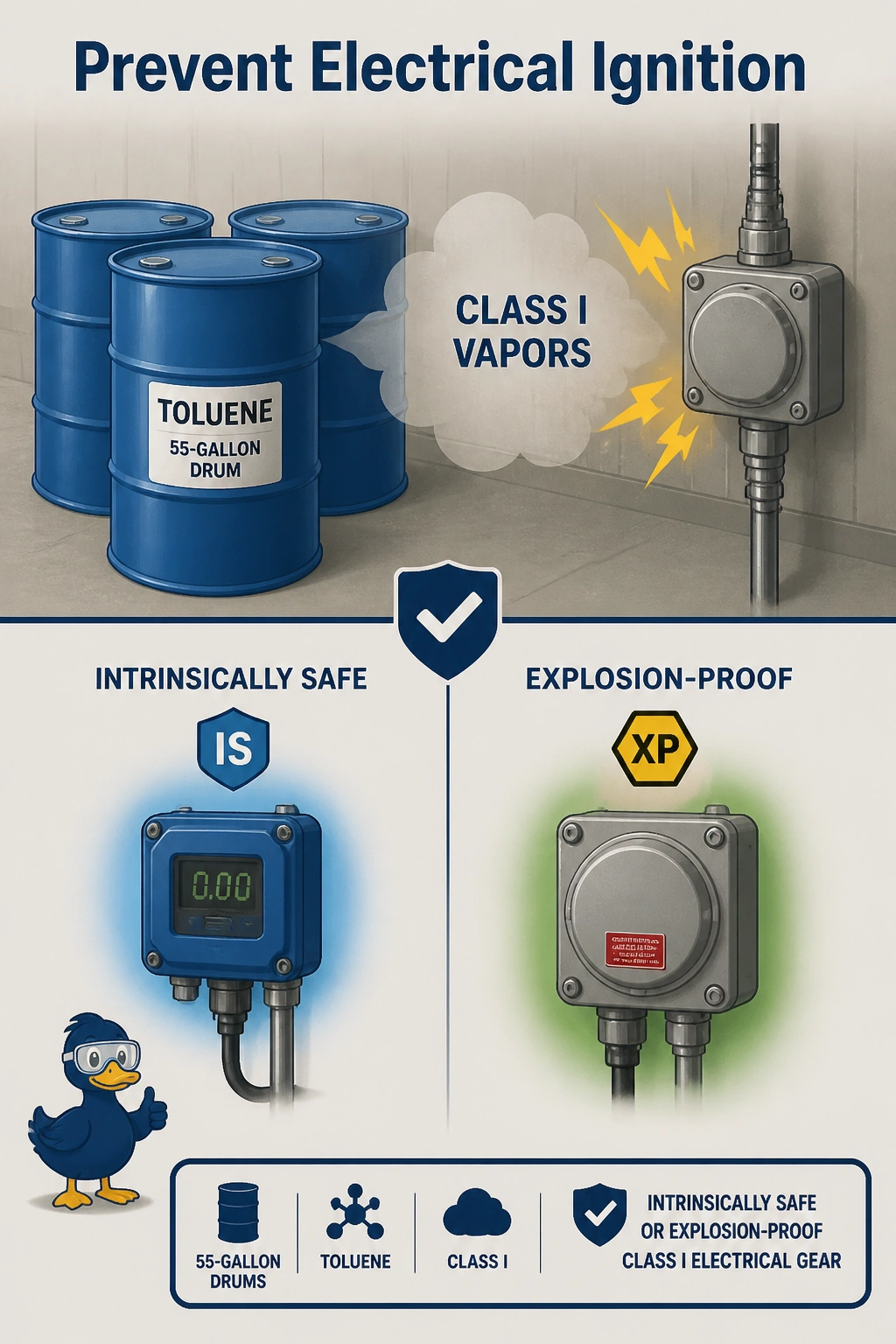
When flammable vapors share a room with switches and motors, a tiny arc can turn routine pumping into a flash fire. You need hazardous-location electrical equipment designed to prevent ignition in vapor atmospheres, rather than mistaking standard ground-fault or washdown enclosures for explosion protection.
Full Explanation
In an enclosed dispensing room where ignitable toluene vapors can be present during normal operations, OSHA hazardous-location electrical rules under 29 CFR 1910.307 require Intrinsically safe or explosion-proof Class I electrical gear. Explosion-proof enclosures are built to contain an internal ignition without allowing flames or hot gases to escape into the surrounding atmosphere, while intrinsically safe circuits limit electrical and thermal energy below the level needed to ignite the vapor. Standard general-purpose motors with ground-fault interrupters protect personnel from electric shock but still produce arcs and hot surfaces that can ignite solvent vapors. Weatherproof outdoor enclosures rated for wet washdown service keep water and dust out of housings, yet they are not engineered to contain vapor explosions or prevent gas ingress. Double-insulated portable cords plugged into wall receptacles reduce shock hazards for hand tools, but ordinary plugs and switches generate sparks when energized or disconnected. Remember that hazardous-location ratings must match the specific Class, Division, and Group of the chemical vapor present. As an operational check, inspect motor nameplates, lighting fixtures, and switches in the dispensing room to confirm Class I certification labels are intact.
Prefer to study offline? Printable PDF study book + test engine ($7.50, unofficial). These questions stay free here.