
A battery-charging and acid-dilution room handles concentrated sulfuric acid. During an internal walk-through, the EHS specialist finds pallets of maintenance parts stacked in front of the combination eyewash and safety shower, while the nearest unobstructed unit sits behind a locked badge-access door in an adjacent hallway. What corrective action is required under OSHA 29 CFR 1910.151(c)?
Select an answer to reveal the explanation.
Short Explanation
When corrosive acid splashes into an eye, seconds matter far more than any policy binder on a shelf. Under OSHA 29 CFR 1910.151, you must keep suitable drenching and flushing facilities immediately accessible in the work area without locked doors or blocked paths. The classic trap is relying on PPE or small squeeze bottles as substitutes instead of clearing the path to a continuous-flow unit.
Full Explanation
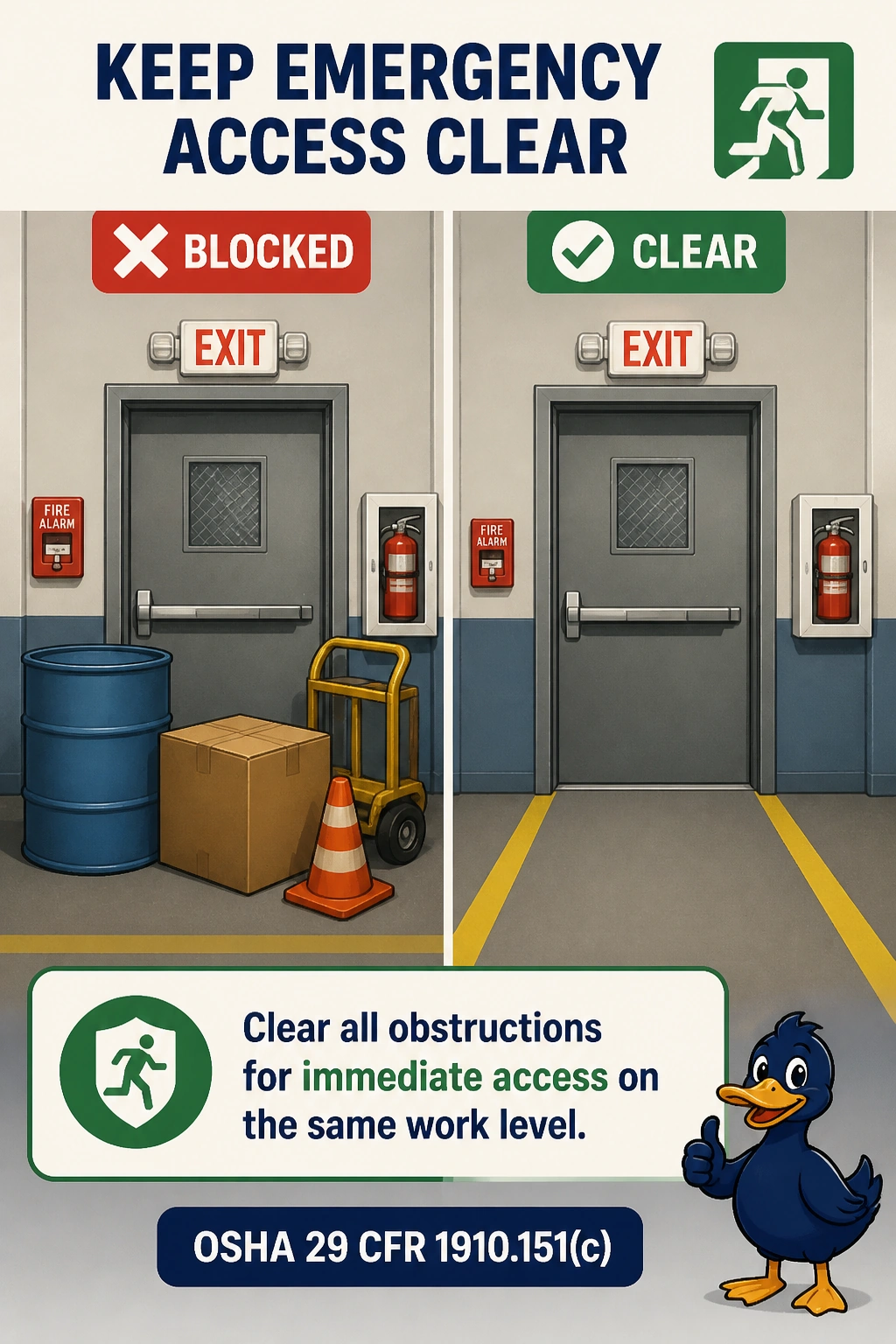
OSHA 29 CFR 1910.151 requires suitable facilities for quick drenching or flushing of the eyes and body within the work area for immediate emergency use wherever employees may be exposed to injurious corrosive materials. Choosing to Clear all obstructions for immediate access on the same work level restores compliance because an injured worker with impaired vision cannot safely navigate locked doors or climb around stored pallets. Selecting Issue chemical splash goggles and face shields to replace the eyewash fails because PPE prevents initial contact rather than providing emergency decontamination after a failure or splash, so both controls are required. Choosing Provide bottled sterile saline eyewash squeeze bottles at the bench fails because small personal bottles cannot sustain continuous, high-volume flushing needed to dilute concentrated acid. Choosing Relocate the corrosive acid dilution task to the outdoor loading dock fails because moving the work away from fixed engineering and flushing stations creates new weather, traffic, and spill-control hazards without fixing access. As a regulatory caveat, OSHA relies on consensus standards such as ANSI/ISEA Z358.1 for installation and flow details even when 29 CFR 1910.151 states the general duty. As an operational check, physically walk the path from the acid station with your eyes closed and verify unobstructed access, clear floor markings, and routine activation logs.
Prefer to study offline? Printable PDF study book + test engine ($7.50, unofficial). These questions stay free here.