
Laboratory technicians at a chemical plant will manually transfer methylene chloride between process vessels during a batch sampling task. When selecting chemical-resistant gloves for this operation, which technical criterion should the EHS specialist evaluate first to ensure adequate dermal protection?
Select an answer to reveal the explanation.
Short Explanation
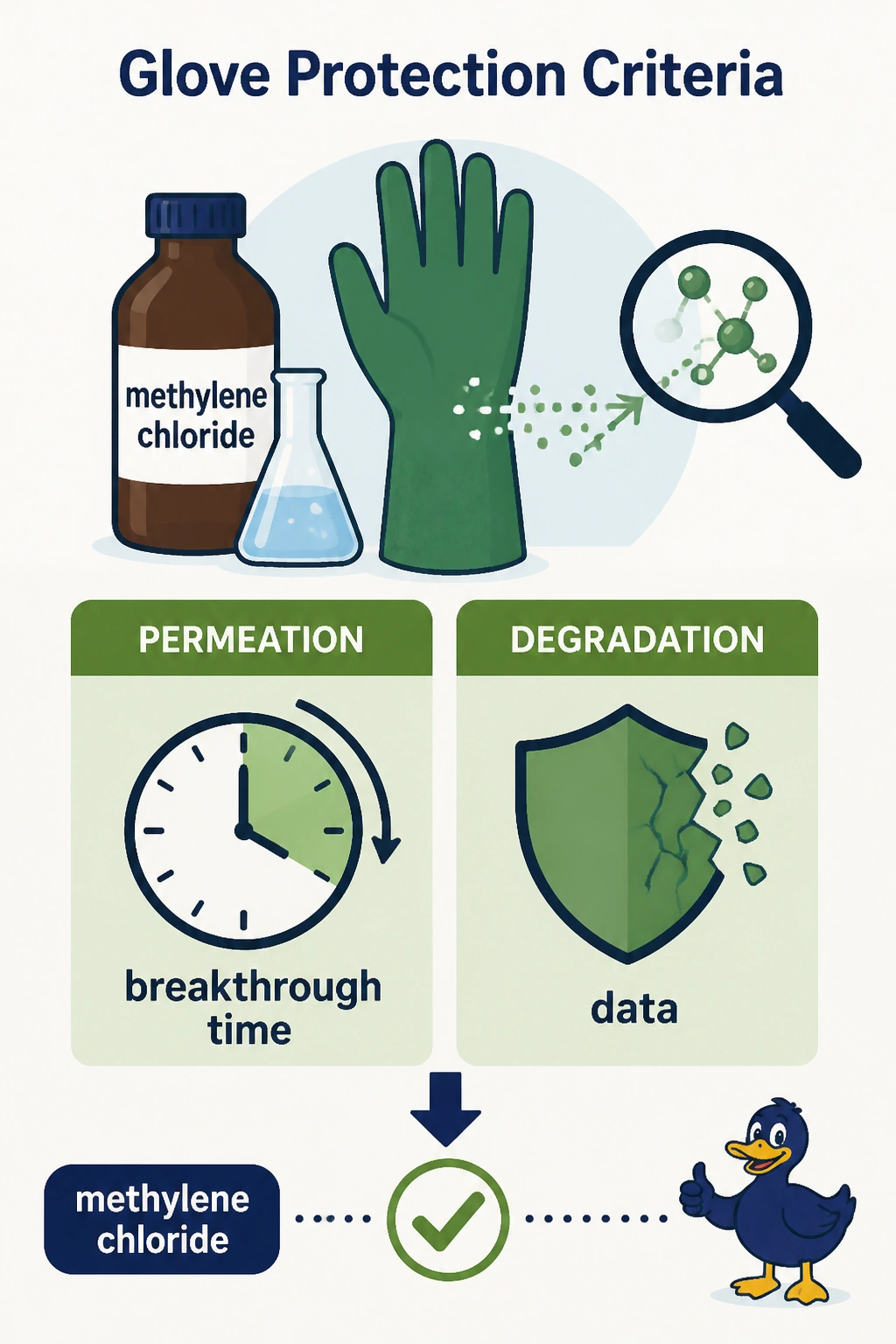
A glove that stops a cut can still let a solvent pass straight through at the molecular level without leaving a visible hole. You must check Chemical permeation breakthrough time and degradation data for the specific solvent because different elastomers fail rapidly against chlorinated solvents. The trap is picking gloves by thickness, color, or mechanical ratings.
Full Explanation
Selecting dermal protection for hazardous liquids requires matching the glove polymer to the exact chemical, which is why Chemical permeation breakthrough time and degradation data for the specific solvent is the primary criterion. Permeation measures how quickly a chemical diffuses through intact glove material at the molecular level, while degradation measures physical swelling, cracking, or softening; chlorinated solvents like methylene chloride rapidly penetrate common nitrile or latex gloves, requiring specialized polymers such as PVA or multilayer laminates. Standard cotton work-glove thickness measured in ounces provides zero liquid barrier and actually wicks solvent directly against the skin. Color-coding conventions used by the facility warehouse may help organize sizes or departments, but glove color is not standardized across manufacturers for chemical resistance. General abrasion resistance ratings for dry material handling evaluate mechanical wear against rough surfaces and give no indication of chemical breakthrough. Caveat: mixed solvent streams can permeate faster than single-component test data suggests, requiring conservative change-out schedules. As an operational check, consult the glove manufacturer's chemical resistance guide for the exact CAS number and post the approved glove type at the workstation.
Prefer to study offline? Printable PDF study book + test engine ($7.50, unofficial). These questions stay free here.