
During a soil and groundwater investigation, an environmental consultant collects a blind field duplicate groundwater sample from one monitoring well and submits it to the laboratory under a separate sample ID. What data quality indicator is the consultant evaluating with this field duplicate?
Select an answer to reveal the explanation.
Short Explanation
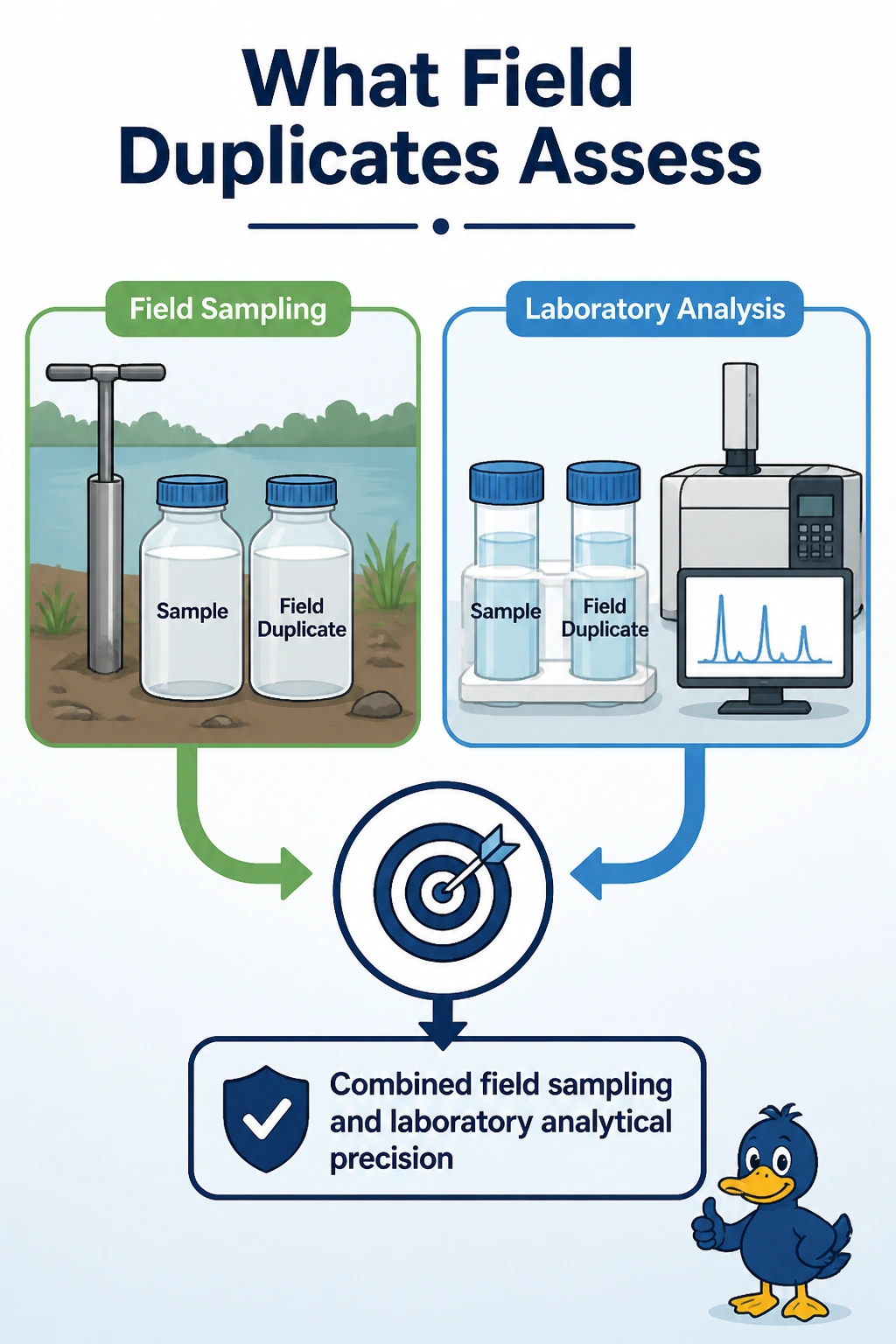
Splitting water from the same well into two differently numbered bottles checks whether the field crew and lab get the same answer twice. That blind field duplicate measures your combined sampling and analytical precision. The trap is confusing a field duplicate with a trip blank or an equipment rinsate blank.
Full Explanation
In environmental quality assurance programs, collecting a blind field duplicate involves taking two co-located samples from the same monitoring well under identical conditions and labeling one with a fictitious sample identifier so the laboratory cannot pair them. Comparing the two results evaluates Combined field sampling and laboratory analytical precision, typically expressed as relative percent difference. By contrast, Volatile organic cross-contamination occurring inside the shipping cooler is evaluated using an unopened laboratory-grade trip blank that travels with VOC vials from preparation to analysis. Assessing Analytical bias caused by chemical matrix interference in the aquifer requires matrix spike and matrix spike duplicate samples, in which known analyte concentrations are added to site water to measure percent recovery. Detecting Residual contamination remaining on reused bailers or pumps between wells is the purpose of an equipment rinsate blank collected by pouring analyte-free water over decontaminated sampling gear. As a caveat, high relative percent difference between field duplicates in turbid groundwater may reflect suspended sediment variability rather than laboratory error. For an operational check, calculate relative percent difference for all blind field duplicate pairs against the project Quality Assurance Project Plan acceptance criteria before finalizing data tables.
Prefer to study offline? Printable PDF study book + test engine ($7.50, unofficial). These questions stay free here.