
During a Phase II soil and groundwater investigation at a former metal-working plant, laboratory results show low levels of arsenic in downgradient monitoring wells. Before concluding that plant operations caused an arsenic release, which sampling comparison should the environmental specialist evaluate?
Select an answer to reveal the explanation.
Short Explanation
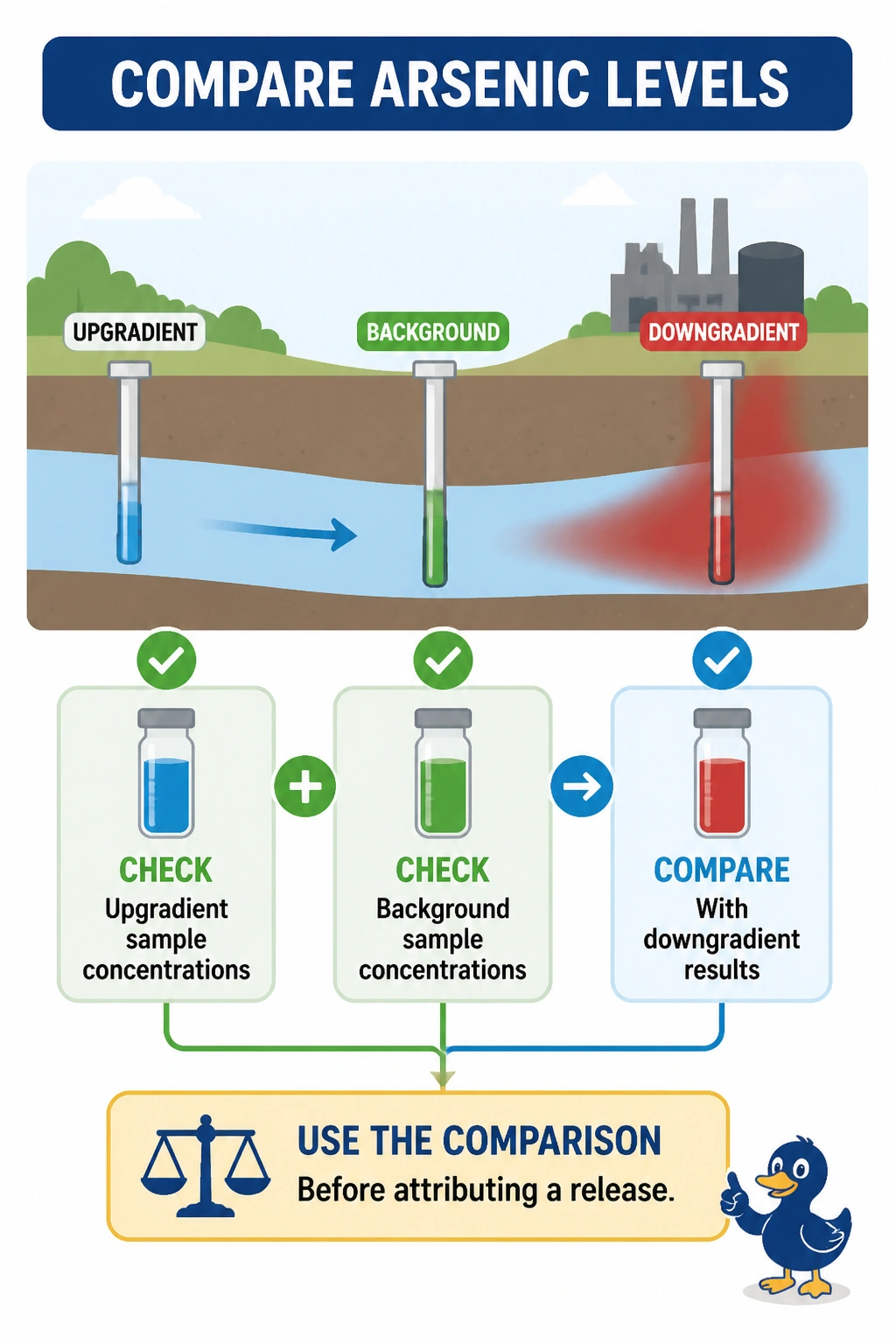
Finding naturally occurring arsenic in groundwater doesn’t automatically mean your site caused a release. Before you attribute it to plant operations, compare downgradient results with upgradient or background concentrations.
Full Explanation
Arsenic can occur naturally in soils and aquifers, and concentrations may vary with local geology. To assess whether plant operations contributed to groundwater impacts, compare downgradient results with concentrations in upgradient or background samples from hydrologically unimpacted areas in the same formation. A meaningful increase downgradient may indicate a site-related release, while similar concentrations can be consistent with natural background. Comparing monitoring well results exclusively with laboratory method blanks and trip blanks can identify certain laboratory or transport contamination, but those blanks do not characterize natural arsenic levels in groundwater. Reviewing chain-of-custody signatures without collecting additional field data can support sample integrity and documentation, but cannot establish whether arsenic is elevated relative to background or identify its source. Re-analyzing the same downgradient sample using a higher laboratory reporting limit would not provide the needed background comparison and could make low-level detections less useful. One caveat is that an upgradient well may not represent background if it is affected by an off-site plume or historical fill. As a practical check, compare groundwater-flow direction with upgradient and downgradient arsenic concentrations to confirm that the sampling locations and spatial pattern support the interpretation.
Prefer to study offline? Printable PDF study book + test engine ($7.50, unofficial). These questions stay free here.