
An environmental specialist is preparing to sample monitoring wells for volatile organic compounds during a Phase II site investigation so the data will withstand regulatory review. Which field sampling practice is essential to prevent analyte loss and ensure defensible laboratory results?
Select an answer to reveal the explanation.
Short Explanation
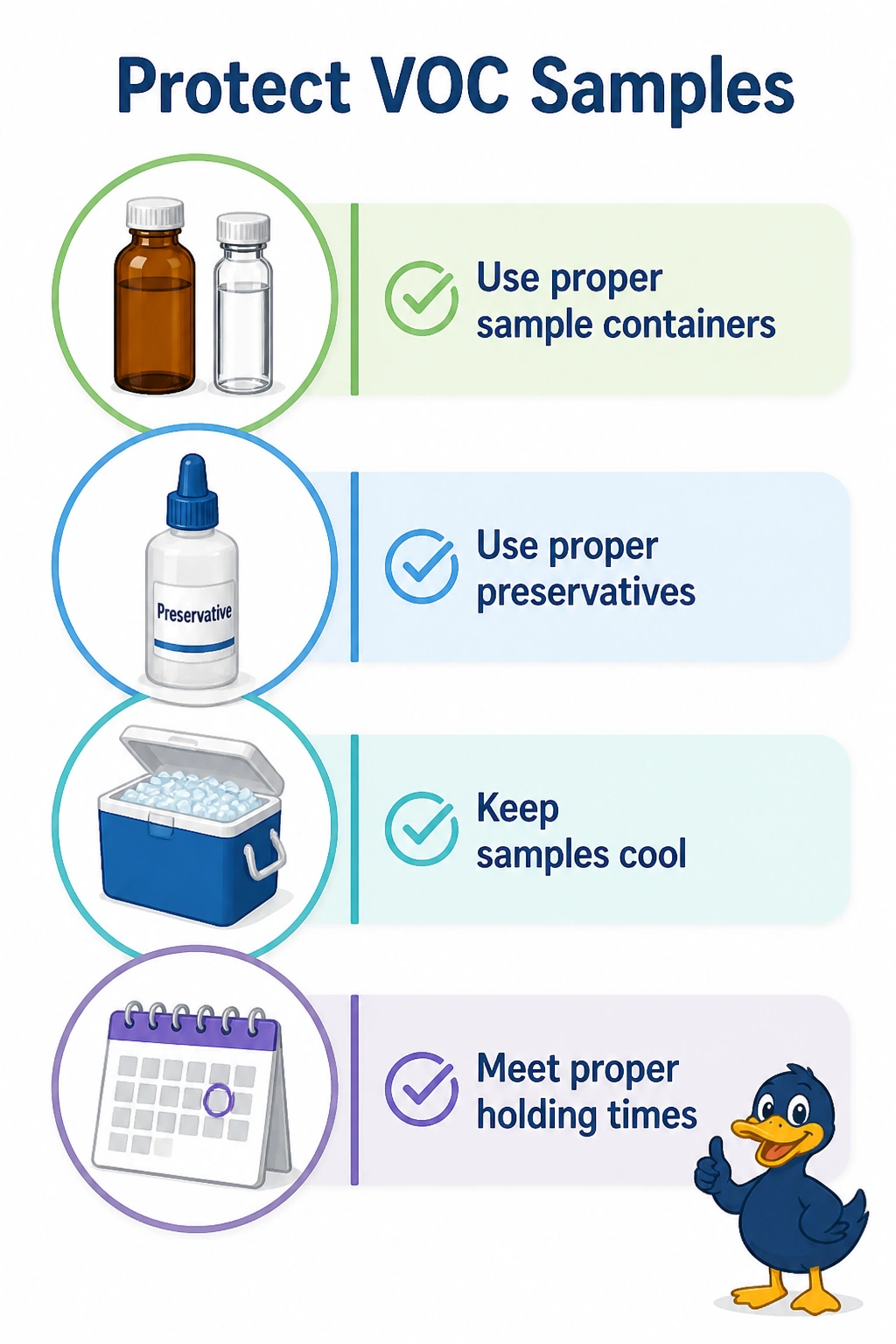
Think of volatile organic samples like carbonated soda—pour them through an open funnel or leave them warm, and the key evidence disappears before the lab ever sees it. The trap is assuming any bottle or room-temperature cooler is good enough once water reaches the surface. You must protect sample integrity using proper containers, preservatives, cooling, and holding times.
Full Explanation
Defensible environmental analytical data depend on strict adherence to EPA sampling methods, so the specialist must Use proper sample containers, preservatives, cooling, and holding times. For volatile organic compounds in groundwater, this typically means filling zero-headspace glass vials with appropriate chemical preservative, chilling samples promptly on ice, and shipping them so the laboratory completes analysis within the method holding time. Choosing to Collect volatile organic water samples in unpreserved plastic bottles with air space allows volatile compounds to partition into the headspace or sorb onto and diffuse through plastic walls. Choosing to Store all groundwater sample coolers at room temperature until the project finishes accelerates microbial degradation and volatilization, biasing results low. Choosing to Filter volatile organic groundwater samples through open funnels before bottling aerates the water and strips volatile compounds out of solution before the vial is even capped. As a caveat, sample preservation and holding times vary by analyte group—such as metals versus VOCs—so always confirm the laboratory bottle order against the Quality Assurance Project Plan. As an operational check, verify cooler temperatures upon lab receipt and inspect chain-of-custody logs for intact seals and receipt within holding times.
Prefer to study offline? Printable PDF study book + test engine ($7.50, unofficial). These questions stay free here.