
During a Phase I Environmental Site Assessment of a former manufacturing parcel, an environmental professional reviews state records showing that a leaking underground fuel tank was excavated twenty years ago and received a formal no-further-action closure letter meeting current unrestricted residential cleanup standards. Which classification applies to this past release?
Select an answer to reveal the explanation.
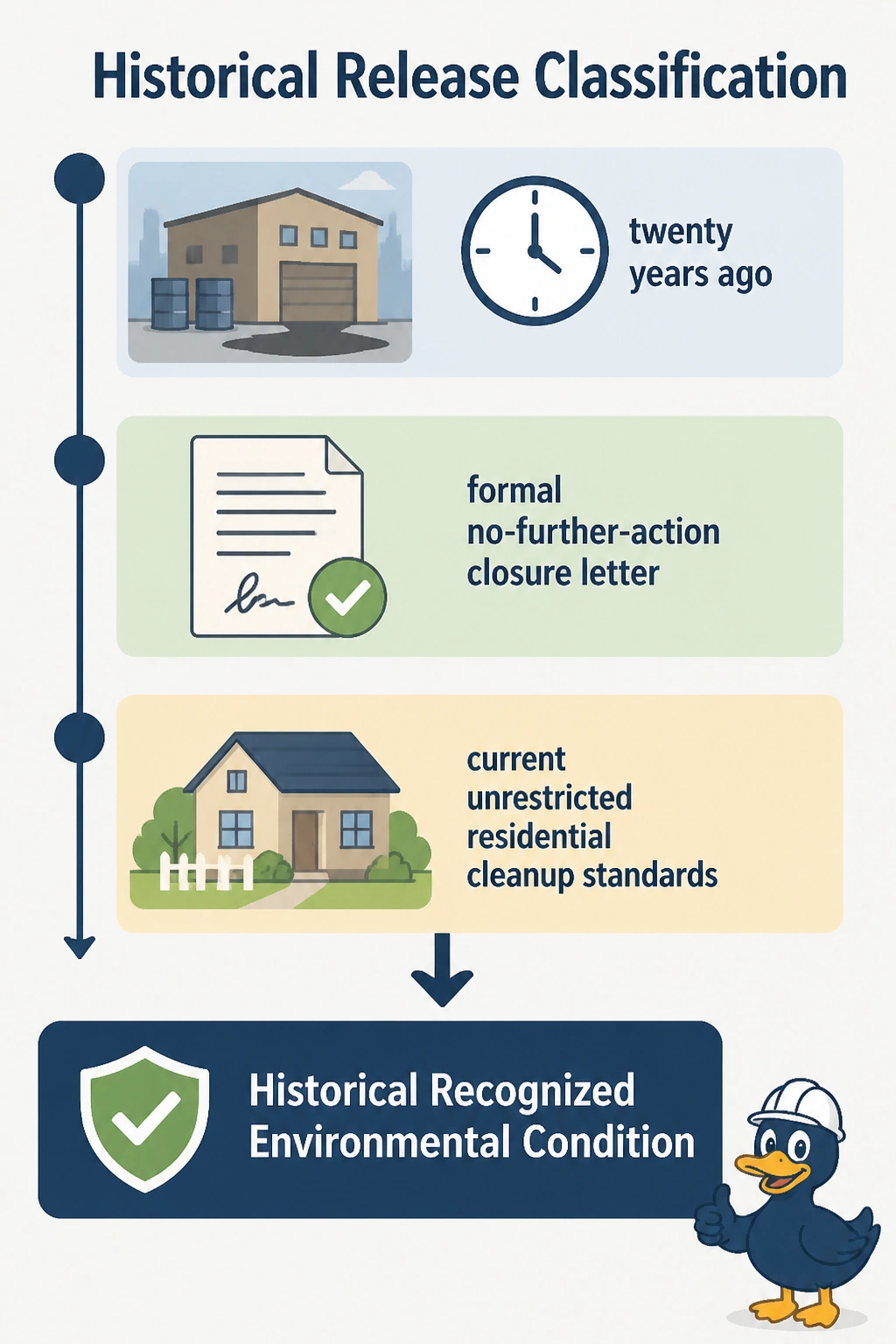
Short Explanation
When a past spill has been cleaned up to today's unrestricted standards, you can treat it like a closed chapter rather than an active emergency. The trap is confusing a Historical Recognized Environmental Condition with a Controlled one, which still requires ongoing land-use restrictions or physical barriers.
Full Explanation
ASTM E1527 distinguishes past releases by their current regulatory status and whether ongoing controls remain necessary. A Historical Recognized Environmental Condition addressed to current standards applies when a past release of hazardous substances or petroleum products has been remediated to the satisfaction of the applicable regulatory authority, meeting current unrestricted use criteria without continuing engineering or institutional controls. A de minimis condition requiring immediate Phase II soil boring confuses minor, non-threatening staining with a documented historical release that already achieved unrestricted closure. An active Recognized Environmental Condition requiring emergency remediation misstates the status because the tank was removed and regulatory closure was granted under current standards. A Controlled Recognized Environmental Condition requiring ongoing engineering barriers applies only when residual contamination remains in place subject to land-use restrictions, vapor barriers, or monitoring obligations. As an exam caveat, if cleanup standards became stricter after the closure letter was issued, the past release must be re-evaluated as an active Recognized Environmental Condition rather than a historical one. For an operational check, compare the contaminants and cleanup levels in the historical closure letter directly against current state unrestricted residential screening values.
Prefer to study offline? Printable PDF study book + test engine ($7.50, unofficial). These questions stay free here.