
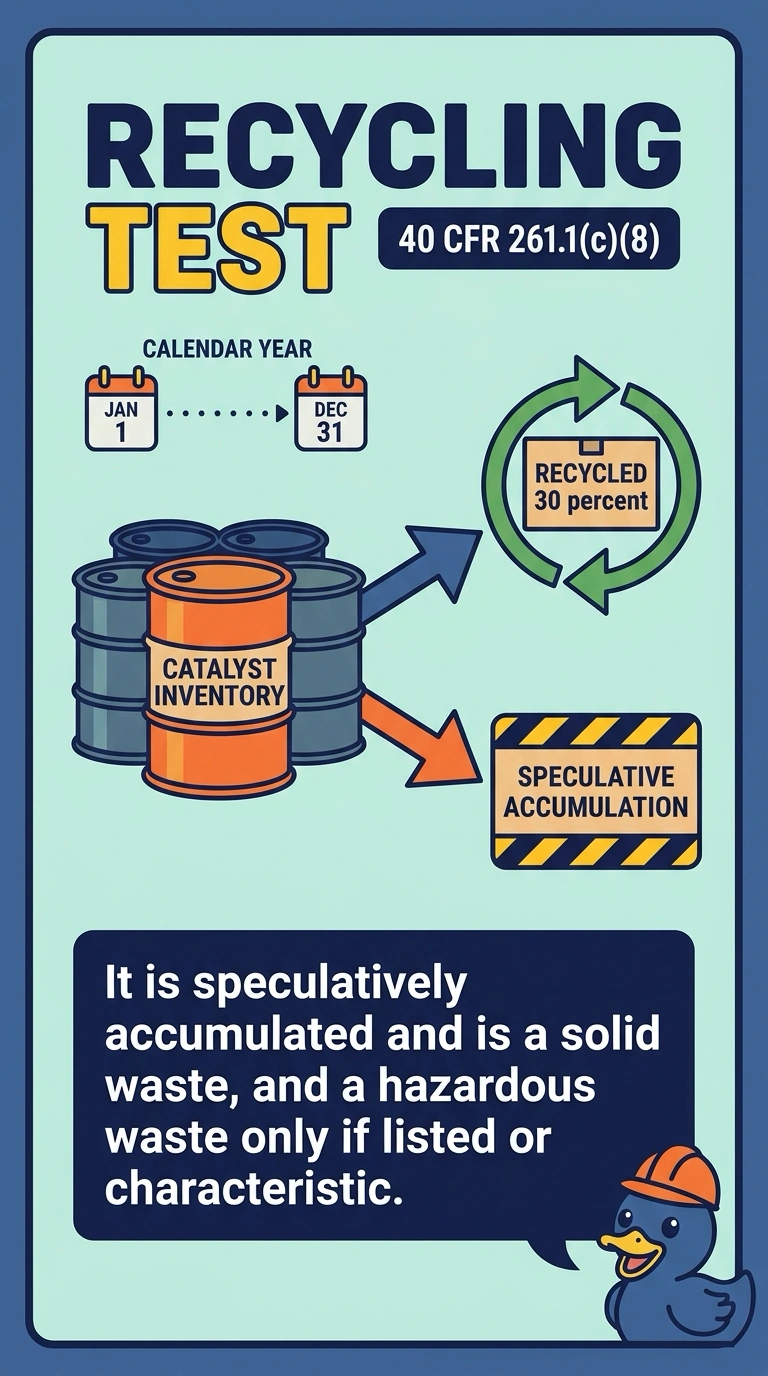
A metal-recycling facility stores drums of spent copper-bearing catalyst on-site starting January 1, claiming the material is exempt from hazardous waste rules because it will eventually be reclaimed. By December 31 of that year, only 30 percent of the accumulated inventory has been recycled or sent off-site for recycling, with no firm market contracts for the remainder. Under 40 CFR 261.1(c)(8), how is the remaining material classified?
Select an answer to reveal the explanation.
Short Explanation
Calling a drum 'recyclable' does not let you warehouse it forever—RCRA demands proof that at least 75 percent actually moves into recycling each calendar year. The trap is assuming good intentions alone keep reclaimed materials out of the hazardous waste system.
Full Explanation
Under 40 CFR 261.1, when a facility recycles or transfers less than 75 percent by weight or volume of a recyclable secondary material accumulated at the start of the calendar year, it is speculatively accumulated and is a solid waste, and a hazardous waste only if listed or characteristic. This rule prevents facilities from indefinitely stockpiling hazardous materials under the guise of future reclamation without active recycling throughput. Choosing It remains exempt indefinitely as long as the facility intends to recycle it fails because RCRA requires demonstrable, feasible recycling and documented 75-percent annual turnover rather than mere intent. Choosing It is automatically reclassified as non-hazardous Universal Waste on January 1 fails because spent industrial catalysts are not covered Universal Waste categories and Universal Waste remains a subset of hazardous waste. Choosing It qualifies for a five-year holding exclusion without any annual turnover is incorrect because federal RCRA provides no five-year speculative storage exemption. As a caveat, commercial chemical products being legitimately reclaimed are excluded from speculative accumulation under specific regulatory conditions, unlike spent materials. As an operational check, maintain dated inventory logs starting January 1 each year and calculate cumulative recycling percentages quarterly so shipments exceed 75 percent before year-end.
Prefer to study offline? Printable PDF study book + test engine ($7.50, unofficial). These questions stay free here.