
A precision aerospace machine shop uses reusable shop towels dampened with acetone to wipe metal parts before bonding and sends them to an industrial laundry. How must the shop manage these solvent-contaminated wipes to qualify for the federal RCRA solid waste exclusion under 40 CFR 261.4(a)(26)?
Select an answer to reveal the explanation.
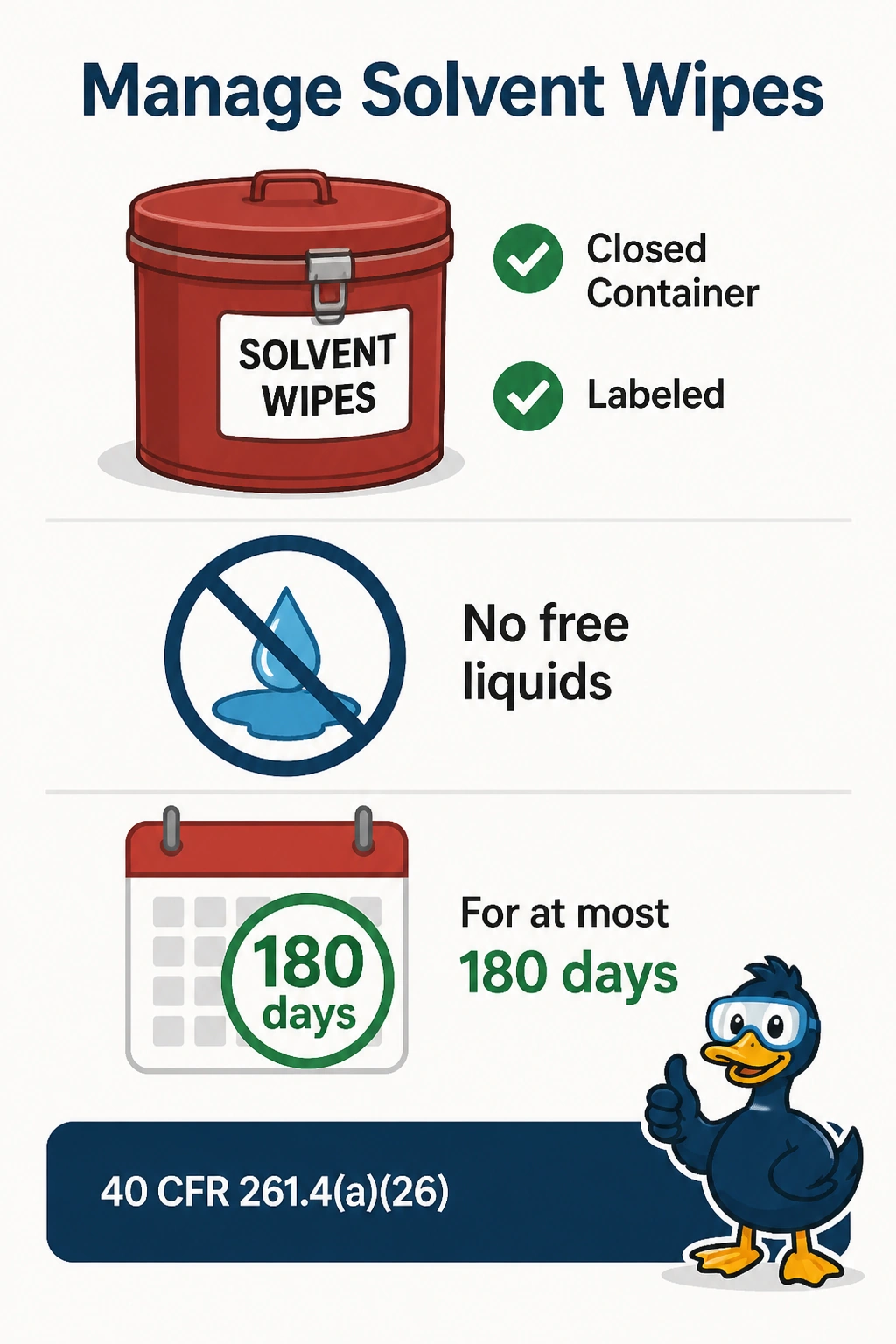
Short Explanation
Think of the RCRA wipe exclusion like a sealed thermos that keeps vapors in and drips out until laundry day. You must trap vapors in closed, labeled containers with no free liquids and ship them within 180 days. The classic trap is air-drying towels on open racks, which illegally vents volatile solvents and forfeits the exclusion.
Full Explanation
Under 40 CFR 261.4, reusable solvent-contaminated wipes sent to a regulated industrial laundry or dry cleaner are excluded from RCRA solid waste regulation only when specific management conditions are met. Choosing to Keep the wipes in closed, labeled containers with no free liquids for at most 180 days satisfies the federal rule by containing ignitable vapors, preventing liquid releases during transport, marking containers as Excluded Solvent-Contaminated Wipes, and limiting on-site accumulation time. By contrast, deciding to Air-dry the solvent-dampened towels on open racks before placing them in standard linen bags violates container-closure rules and causes uncontrolled volatile organic compound emissions. Choosing to Accumulate the towels in vented drums and ship them to the laundry on a Uniform Hazardous Waste Manifest fails the closed-container requirement and treats excluded wipes as manifested hazardous waste. Selecting to Mix the solvent-dampened towels with used shop oil in a closed tank for off-site energy recovery contaminates used oil with a listed or ignitable solvent and falls outside the laundry exclusion. As a caveat, disposable wipes containing trichloroethylene are ineligible for the separate disposable wipe exclusion under 40 CFR 261.4. For an operational check, inspect wipe containers weekly for closed lids, proper labels, accumulation start dates, and the absence of free liquids.
Prefer to study offline? Printable PDF study book + test engine ($7.50, unofficial). These questions stay free here.