
A large commercial warehouse replaces hundreds of spent fluorescent lamps containing mercury and wants to manage them under streamlined federal rules rather than full RCRA Subtitle C hazardous waste generator requirements. Which management practice is allowed under the RCRA Universal Waste Rule in 40 CFR Part 273?
Select an answer to reveal the explanation.
Short Explanation
The Universal Waste Rule gives you a welcome shortcut on paperwork, provided you keep those mercury lamps intact and properly contained. The common trap is assuming you can crush lamps on-site or leave boxes open indefinitely just because the manifest requirement is waived.
Full Explanation
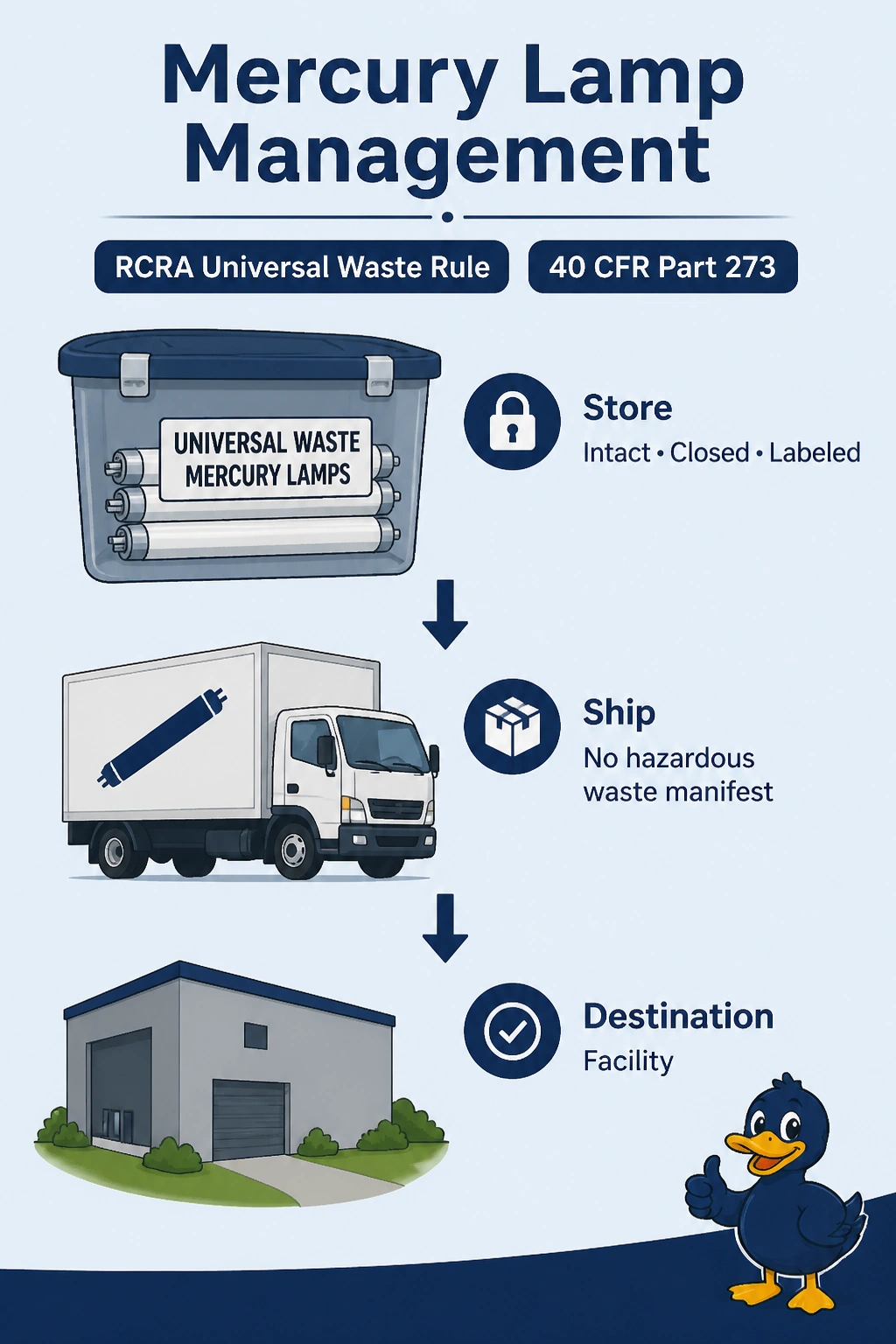
Under 40 CFR Part 273, Storing intact lamps in closed, labeled containers and shipping them to a destination facility without a hazardous waste manifest is the core streamlined pathway for universal waste handlers, keeping mercury safely enclosed while reducing administrative burden. Crushing intact lamps on-site in a drum-top crusher to reduce volume before shipping as universal waste is generally prohibited for federal universal waste handlers because crushing constitutes waste treatment and risks releasing mercury vapor. Accumulating the spent lamps indefinitely in open cardboard boxes until a full truckload is ready for recycling violates both the closed-container requirement to prevent breakage and the federal one-year accumulation limit. Disposing of the spent lamps in regular municipal solid waste after removing the metal end caps is illegal disposal of hazardous mercury-bearing waste and exposes workers to broken glass and vapor. Caveat: some states have stricter state-specific universal waste rules or conditional drum-top crusher bans, so always confirm state authorization. As an operational check, inspect lamp boxes weekly to verify lids are taped shut, dates are marked, and universal waste labels remain legible.
Prefer to study offline? Printable PDF study book + test engine ($7.50, unofficial). These questions stay free here.