
A fleet maintenance facility collects drained crankcase motor oil in a dedicated 250-gallon tank for off-site recycling under RCRA 40 CFR Part 279. A technician asks whether leftover chlorinated solvent degreaser classified as an F-listed hazardous waste can be poured into the same tank to consolidate liquids. How must the EHS coordinator respond under 40 CFR Part 279?
Select an answer to reveal the explanation.
Short Explanation
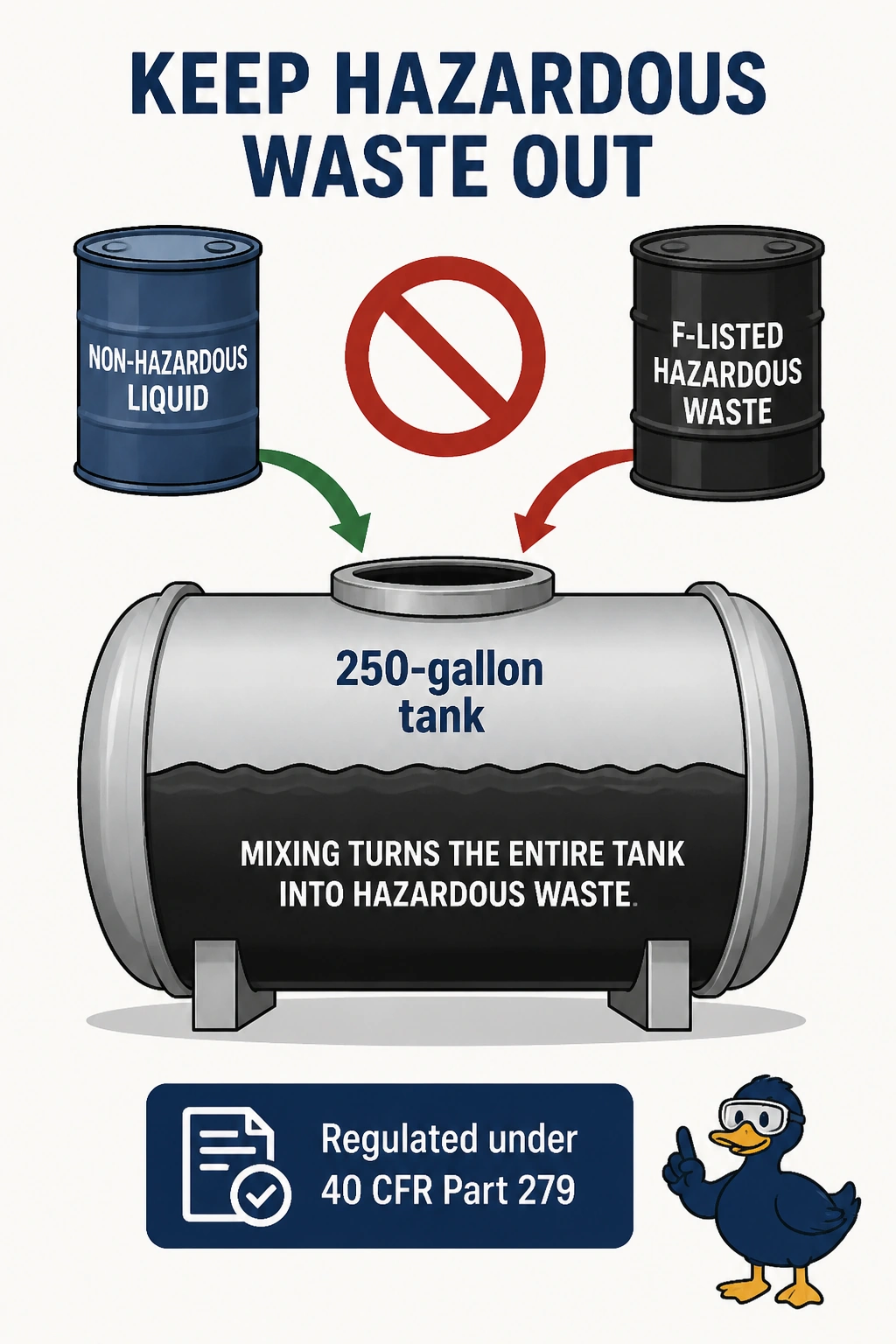
Pouring a little leftover solvent into a used oil tank is one of the fastest ways to turn a routine recycling stream into a costly hazardous waste headache. Under RCRA 40 CFR Part 279, you must keep listed hazardous waste out of used oil so the entire mixture does not become regulated as hazardous waste. Never fall for the myth that a small percentage or a willing recycler makes that mixing legal.
Full Explanation
Under RCRA 40 CFR 279.10, mixtures of used oil and listed hazardous waste are regulated as hazardous waste under 40 CFR Parts 261 through 268 rather than under the streamlined Used Oil Management Standards. Selecting Prohibit mixing because it turns the entire tank into hazardous waste is correct because adding an F-listed chlorinated solvent contaminates the whole batch, triggering full hazardous waste generator, manifesting, and treatment requirements. Choosing Allow mixing if the combined liquid stays below the flash point limit fails because a listed hazardous waste retains its listing regardless of whether the final mixture exhibits ignitability. Choosing Allow mixing as long as the recycler accepts used oil with high halogens fails because used oil recyclers are generally not permitted hazardous waste treatment facilities, and total halogen levels above regulatory thresholds trigger the rebuttable presumption of mixing. Choosing Permit mixing up to ten percent solvent by volume before manifest rules apply fails because RCRA provides no de minimis volume exemption for mixing listed hazardous waste into used oil. As a caveat, even characteristic hazardous wastes mixed with used oil remain regulated as hazardous waste if the resulting mixture still exhibits a hazardous characteristic. As an operational check, label the used oil tank clearly, lock or supervise fill ports, and place a dedicated satellite hazardous waste container at the parts-washing station.
Prefer to study offline? Printable PDF study book + test engine ($7.50, unofficial). These questions stay free here.