
A technology-focused hedge fund wants to use patent filings as a leading indicator of competitive positioning. An AI system is tasked with ingesting USPTO and EPO data to generate alpha signals. Which analytical framework most accurately converts patent data into actionable investment intelligence?
Select an answer to reveal the explanation.
Short Explanation
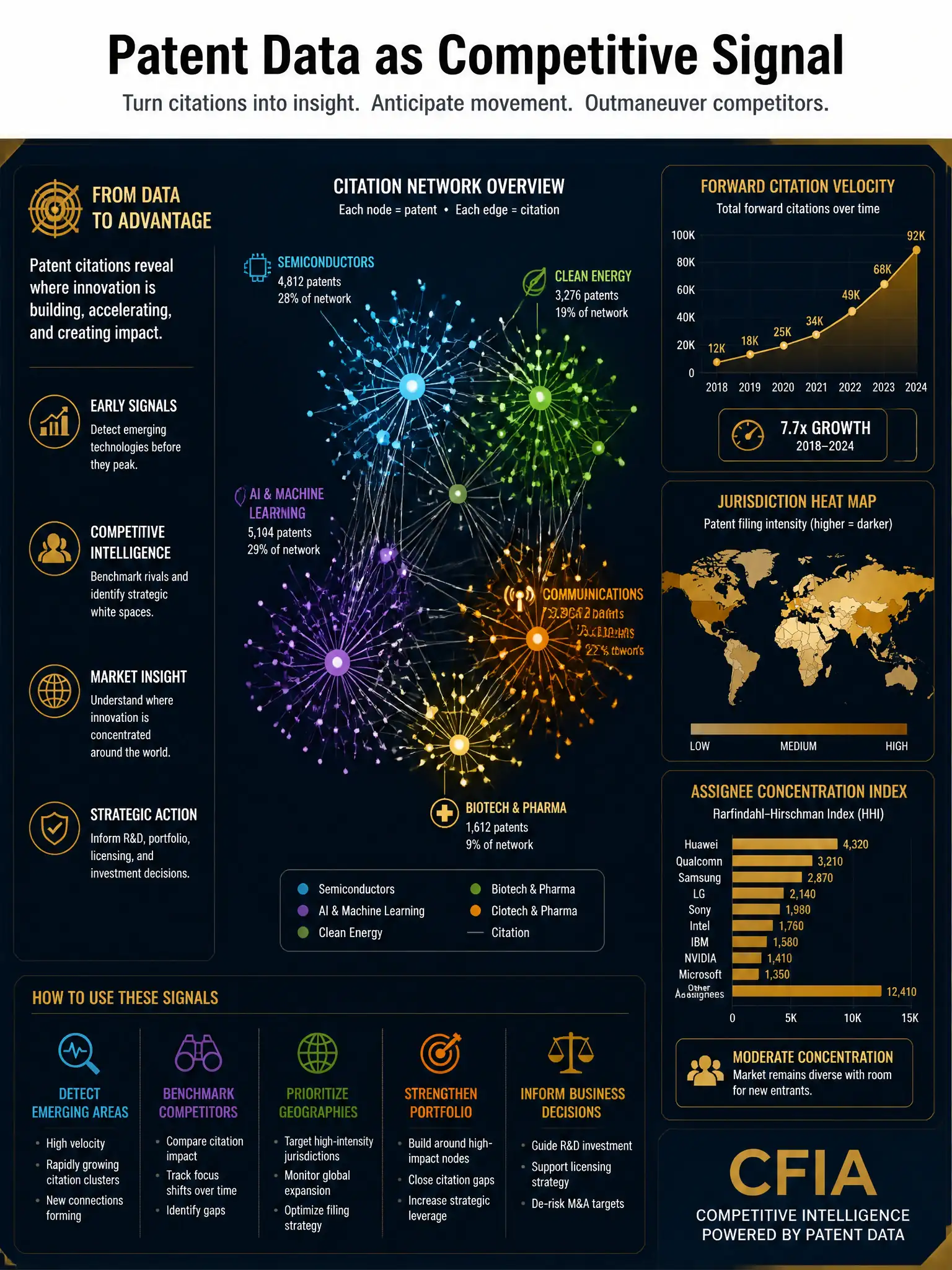
You don't win by counting filings; that's like judging a library by book count. You want citation velocity, assignee concentration, and filing jurisdictions because they show which innovations are becoming foundational and where a company is betting its future.
Full Explanation
Patent data is one of the richest alternative datasets available to investment analysts precisely because it captures R&D intent before it shows up in revenue or earnings. However, naive use of raw filing counts is misleading: a company may file defensively, offensively, or as part of a portfolio-bloating strategy with no commercial intent. The quality and interconnectedness of patents matters far more than volume.
The granted-patents-only approach creates a timing problem — the average patent takes 24 to 36 months to grant, meaning granted-only analysis lags the competitive signal by years. Sophisticated AI systems analyze applications as soon as they are published (typically 18 months after filing) to gain earlier visibility into R&D directions.
The citation-network approach correctly identifies the state-of-the-art approach: NLP-based citation network analysis treats the patent corpus as a knowledge graph. Forward citation velocity — how quickly a newly published patent accumulates citations from subsequent filings — distinguishes foundational technology from peripheral intellectual property. Assignee concentration analysis (are citations clustering around one company?) identifies potential monopoly formation. Jurisdiction mapping (filing in China, EU, and US simultaneously versus domestic only) signals whether a company believes its innovation has global commercial value, a key input for TAM estimation.
The litigation-defendant approach conflates legal risk with commercial success. While litigation targets are often commercially viable, becoming a patent defendant is expensive, distracting, and can result in injunctions that halt product sales — hardly a reliable bullish signal. Leading investment research firms including Morningstar and J.P. Morgan's quant teams have published work showing that citation-weighted patent metrics correlate with 3- to 5-year revenue growth at statistically significant levels, supporting the citation-network approach as best practice.