
Which outcome shows that policy, questionnaire, and workflow configuration has been done correctly?
Select an answer to reveal the explanation.
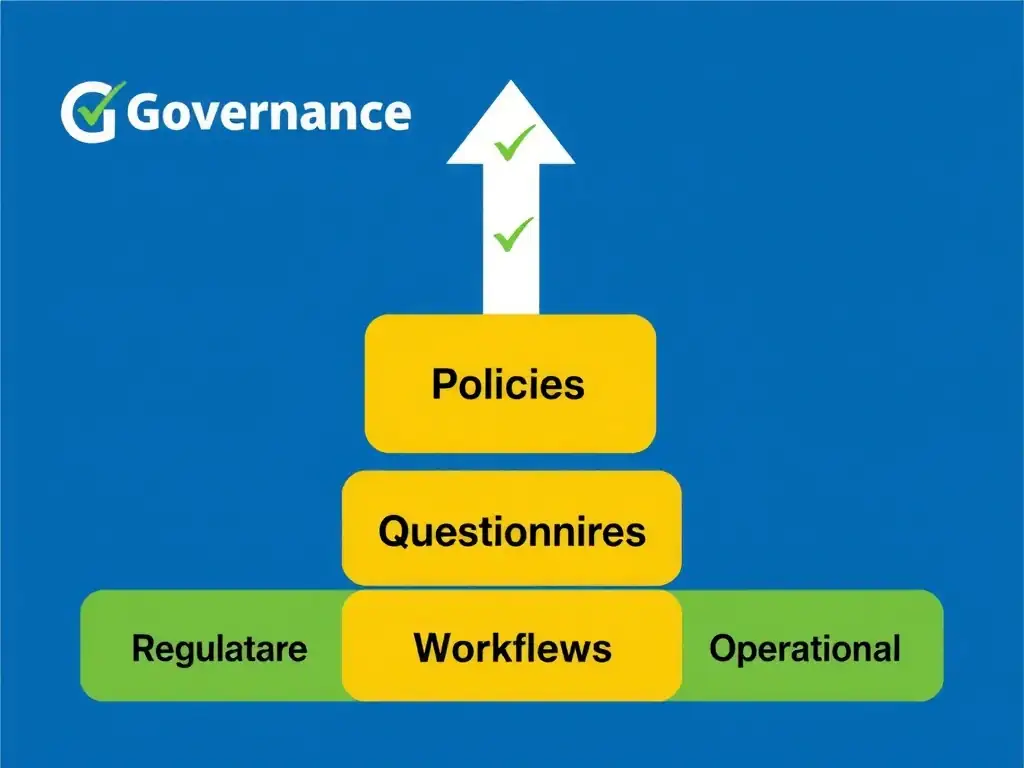
Short Explanation
You're checking whether each asset's setup matches the governance obligations that actually apply to it. Consistency and speed aren't proof by themselves, and neither is a setup that never changes.
Full Explanation
The correct outcome is the one where each asset's configuration reflects the specific governance obligations that apply to it, with evidence requirements and approval routing matched accordingly. Correct configuration is judged by whether it captures and enforces the obligations that actually apply to a given asset, not by any property of the configuration process itself. The outcome where every asset in the organisation shares an identical configuration is incorrect because identical configuration across genuinely different assets usually means obligations were ignored, not matched, since different assets rarely share identical obligations. The outcome where the configuration was completed quickly is incorrect because speed of setup says nothing about whether the resulting configuration is accurate; a fast but generic setup is still wrong. The outcome where the configuration has not needed to change since it was first set up is incorrect because an unchanged configuration over time is more often a sign it has gone stale than a sign it was done well, since obligations evolve. For the exam, judge configuration quality by fit to actual obligations, not by uniformity, speed, or stability alone.