
An administrator is asked to close out the lifecycle record for a pilot that is being decommissioned. What should happen to the earlier intake, development and monitoring entries once retirement is recorded?
Select an answer to reveal the explanation.
Short Explanation
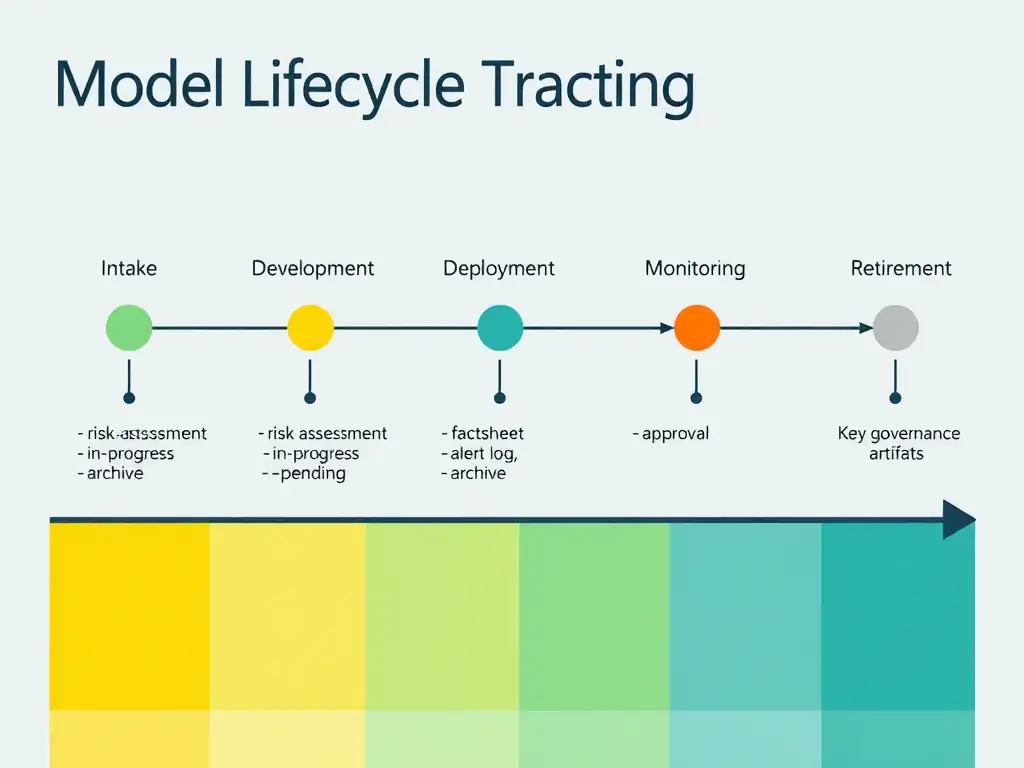
Retirement is the last chapter, not an eraser. The earlier chapters still explain how the asset got there. You keep the full trail so the record shows the asset's completed history.
Full Explanation
The correct answer is the option saying the earlier intake, development, and monitoring entries should be retained alongside the retirement entry, since the retired record is the completed history of the asset, not a fresh start. A lifecycle record's value is the full trail; retirement adds a final stage without invalidating prior stages, and audits may still need that history.
The option saying the entries should be deleted because the asset is inactive is incorrect because deleting records after approval or retirement creates exactly the gap lifecycle tracking exists to prevent.
The option saying the entries should be moved into a personal backup is incorrect because moving governance evidence outside the governance system defeats its purpose and breaks traceability.
The option saying the entries should be summarised into one line and detailed entries discarded is incorrect because summarising away detail removes evidence an auditor might need.
For the exam, treat retirement as an additional stage to record, never a reason to remove prior stages.