
How a retired model's records should be treated differently from an active model's records becomes the subject of debate. What is the key distinction?
Select an answer to reveal the explanation.
Short Explanation
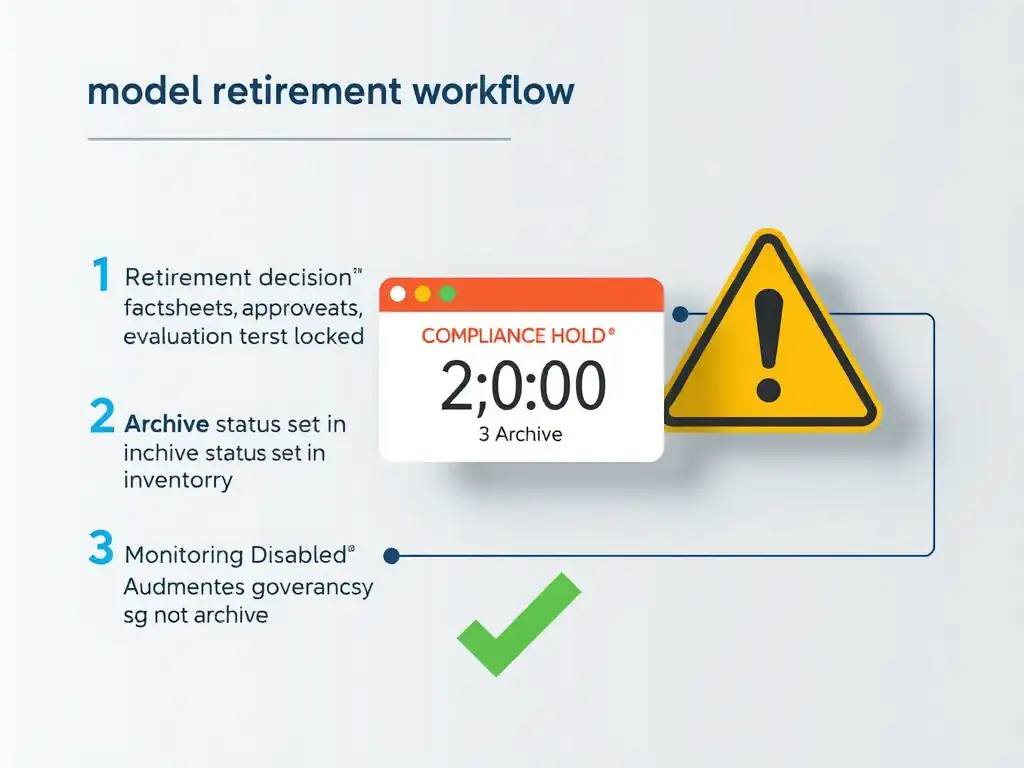
Active means the model's still running and still being watched. Retired means it's stopped, but you keep the paper trail as required evidence.
Full Explanation
The key distinction is that a retired model's records move to an archived state where required evidence is preserved, while the model itself is no longer treated as an active, in-use asset. The asset's operational status changes at retirement, from actively used and monitored to no longer in service, while the evidence obligations require that the records stay preserved rather than discarded. Treating retired and active models identically in every respect is incorrect because a retired model is no longer live and does not need the same ongoing monitoring an active model does. Deleting retired records immediately while keeping active records indefinitely is incorrect because it reverses the correct evidence-handling: retired records are the ones that must be preserved, not deleted. Moving retired records to active status to make room in the archive for newer models is incorrect because it inverts the states entirely; retired should not become active, and archive capacity is not a reason to reclassify a model's usage status. For the exam, keep the distinction straight: status changes at retirement, evidence preservation does not.