
A customer wants one scalable way to keep track of every model and generative AI asset it builds. What scope should a consultant recommend for that tracking?
Select an answer to reveal the explanation.
Short Explanation
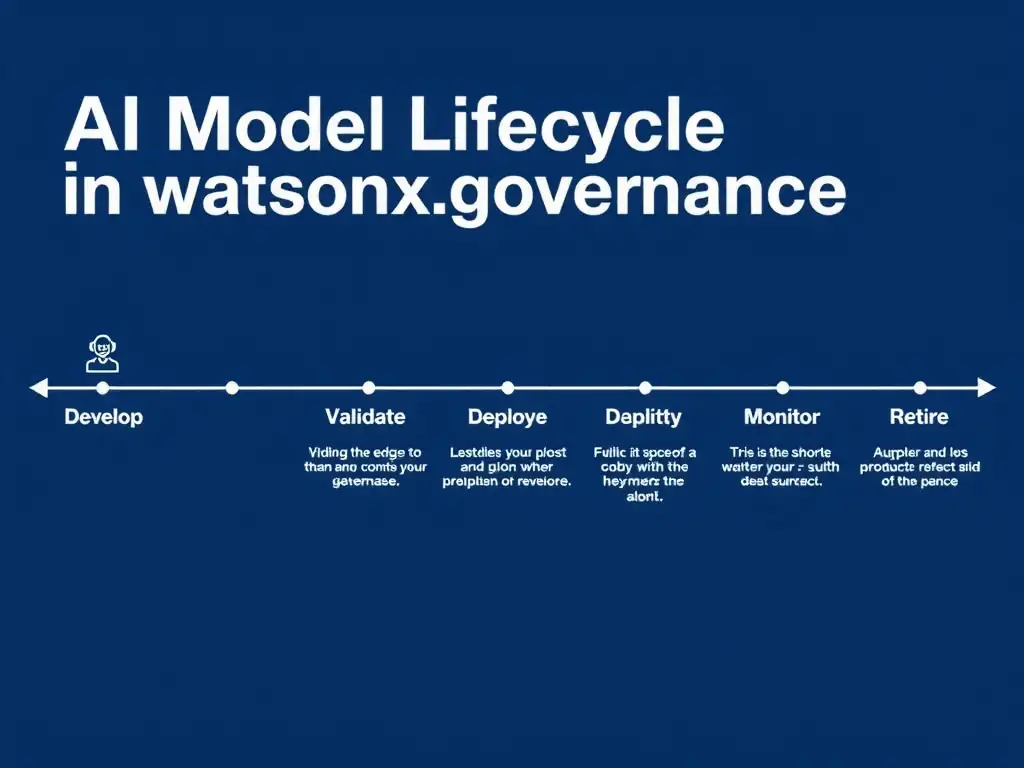
You need to track each asset continuously from intake through retirement, not just at one milestone. That gives you the complete record of what you have, where it is, and how it's performing. If you wait for production or close the record early, you'll miss the details that matter later.
Full Explanation
Track each asset continuously from intake through development, validation, deployment, monitoring, and retirement, not just at one milestone. Governance value comes from continuity: a record that starts at intake and follows the asset through validation, deployment, and monitoring lets an organization answer 'what do we have and where is it' at any point. Beginning tracking once the model reaches production, since pre-production work is internal to the data science team, is incorrect because pre-production decisions, such as what data trained the model, are exactly what later audits need and cannot be reconstructed after the fact. Tracking code repositories that hold model artifacts, while treating business use cases as separate concerns, is incorrect because a repository shows code, not the business use case, owner, or risk classification an asset was built for. Tracking each asset only while it is under active development, closing the record once it is approved, is incorrect because closing the record at approval discards deployment and monitoring history, which is where drift and incidents surface. For the exam, describe lifecycle tracking as spanning intake through retirement, not any single stage.