
No process exists for detecting when a deployed model's behaviour starts to change. What should the monitoring plan add to close that gap?
Select an answer to reveal the explanation.
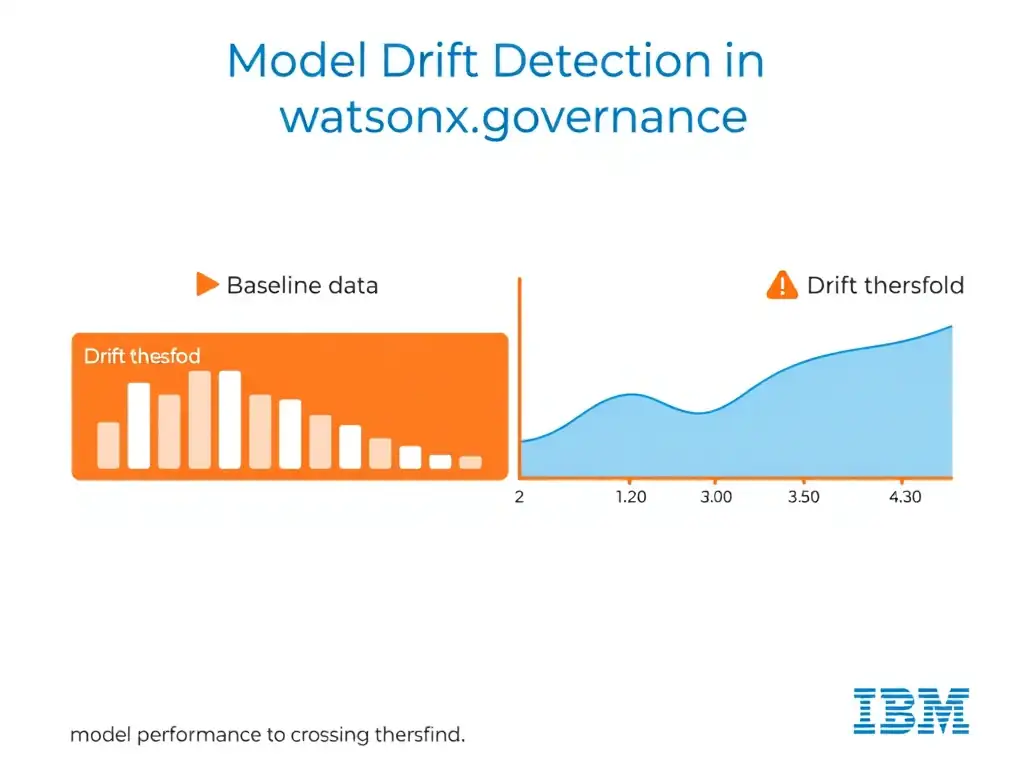
Short Explanation
Behaviour after deployment is a moving target, so you need ongoing monitoring for data and model drift. That alerts you when live behaviour diverges from what was validated.
Full Explanation
The correct choice is monitoring for data and model drift, because it compares current data and model behaviour against the validated baseline on an ongoing basis, which is the only way to catch a change that happens after deployment. A weekly manual re-read of the model's original design document is incorrect because a design document does not change, so re-reading it cannot reveal anything about live behaviour. A quarterly re-run of the model's unit tests against the original training set is incorrect because it only confirms the model still behaves as it did originally, not how it behaves against current live data. A one-time performance benchmark taken at the moment of deployment is incorrect because it is a snapshot, not ongoing monitoring, and tells the team nothing about later change. For the exam, pair 'behaviour changes after deployment' with drift monitoring, not a static or one-time check.