
A data engineering group needs to run heavy batch transformation jobs that write curated Iceberg tables, while analysts continue to run interactive SQL against those same tables. Which approach uses Infrastructure Manager correctly?
Select an answer to reveal the explanation.
Short Explanation
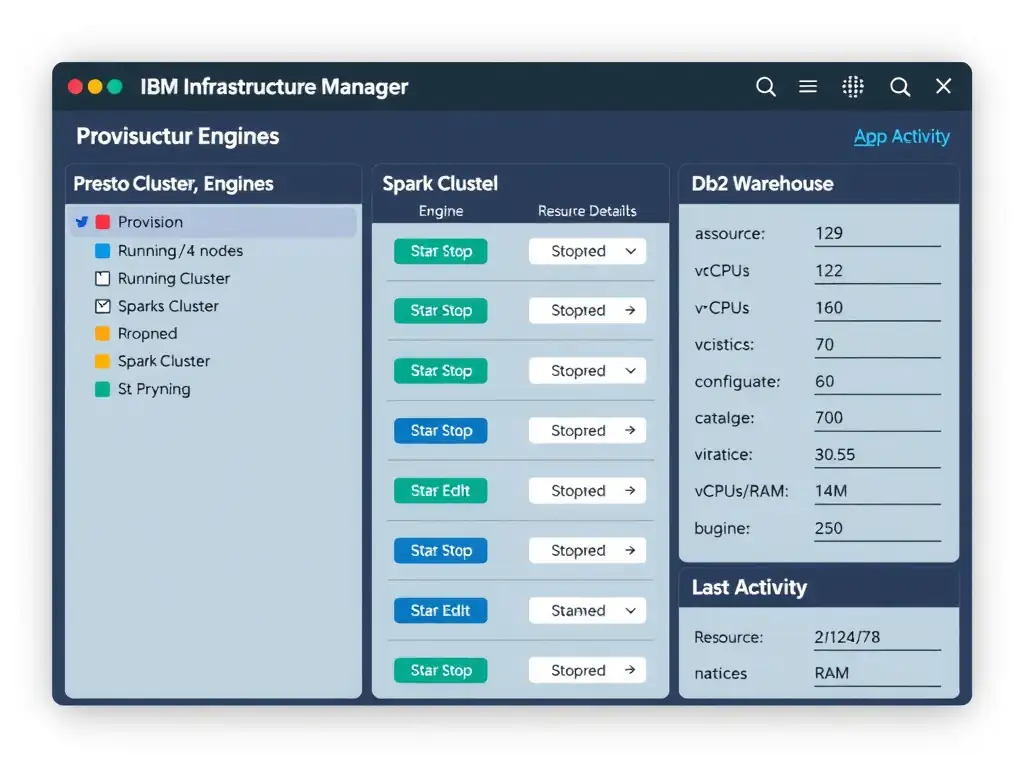
You want Spark doing the heavy batch writes and Presto doing the interactive reads, both pointed at the same governed catalog. That keeps analysts querying the same fresh tables instead of a stale copy. One engine for two very different workloads is how you get complaints every time a batch job runs.
Full Explanation
The correct approach is the multi-engine design: add a Spark engine for the heavy batch transformation jobs and keep the Presto engine serving interactive SQL, with both engines associated with the shared catalog. watsonx.data is deliberately multi-engine: different engines suit different workloads while sharing one governed copy of the data. Spark is the appropriate engine for heavy batch transformation, Presto for interactive SQL, and associating both with the same catalog means the tables Spark writes are immediately the tables analysts read. The approach that runs the batch jobs on the existing Presto engine so only one engine has to be managed is incorrect because it puts a long-running batch workload on the engine that analysts depend on for responsiveness. The two compete for the same workers, and the predictable result is interactive query latency that spikes whenever a batch job runs. The approach that creates a separate catalog and bucket for the batch output so the two workloads never share metadata is incorrect because it reintroduces the data-silo problem the lakehouse exists to solve. Two catalogs over two buckets means two copies, a synchronisation job between them, and analysts reading output that is as fresh as the last sync rather than as fresh as the pipeline. The approach that scales the Presto engine up during batch windows and back down afterwards is incorrect because it manages the symptom rather than the design. Scaling for the batch window is expensive, still leaves both workloads contending on one engine, and requires someone to remember to scale back down. For the exam, associate workload fit with engine choice, and shared governance with a shared catalog.