
Data quality problems in a governed table are consistently discovered by business users reading reports. What does this indicate about the ingestion design?
Select an answer to reveal the explanation.
Short Explanation
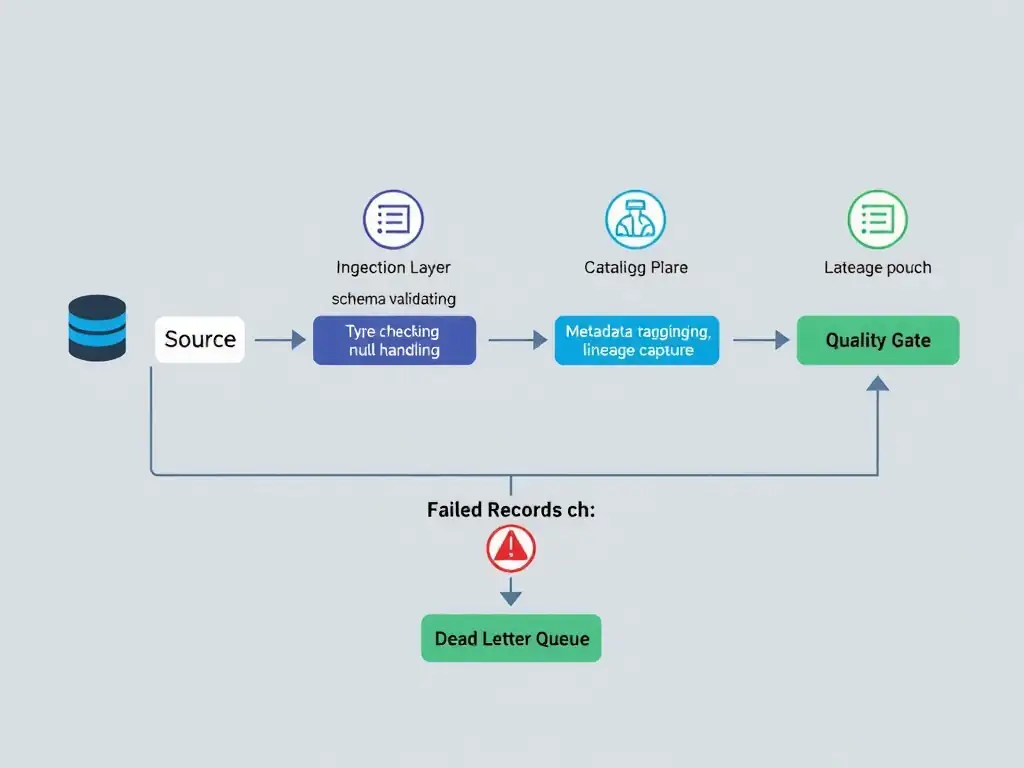
If business users keep finding your data problems, your ingestion design isn't checking at the boundary. Put validation and quality handling where the data arrives, so bad records get caught before reports see them.
Full Explanation
The correct answer is the option stating that validation and quality handling are absent or too weak at load time, so problems propagate to consumers instead of being caught at the boundary. Consistent late discovery is a design signal: nothing is checking at the point of entry, so bad data flows into tables and is found by whoever eventually notices a wrong figure - expensively, and with the damage already distributed.
The option about reports querying the wrong engine for the data volume involved is incorrect because engine choice affects performance, not correctness of the underlying data.
The option about the table's storage tier being too slow, causing partial reads, is incorrect because storage tiering affects access speed and cost; it does not cause partial reads of committed data.
The option about query history retention being too short to catch problems earlier is incorrect because query history records executions, not data quality, and lengthening retention would not detect anything.
For the exam, place quality checks at the ingestion boundary so failures are caught before consumers see them.