
When older partitions of a table are moved to a lower-cost tier, what happens to queries that reference them?
Select an answer to reveal the explanation.
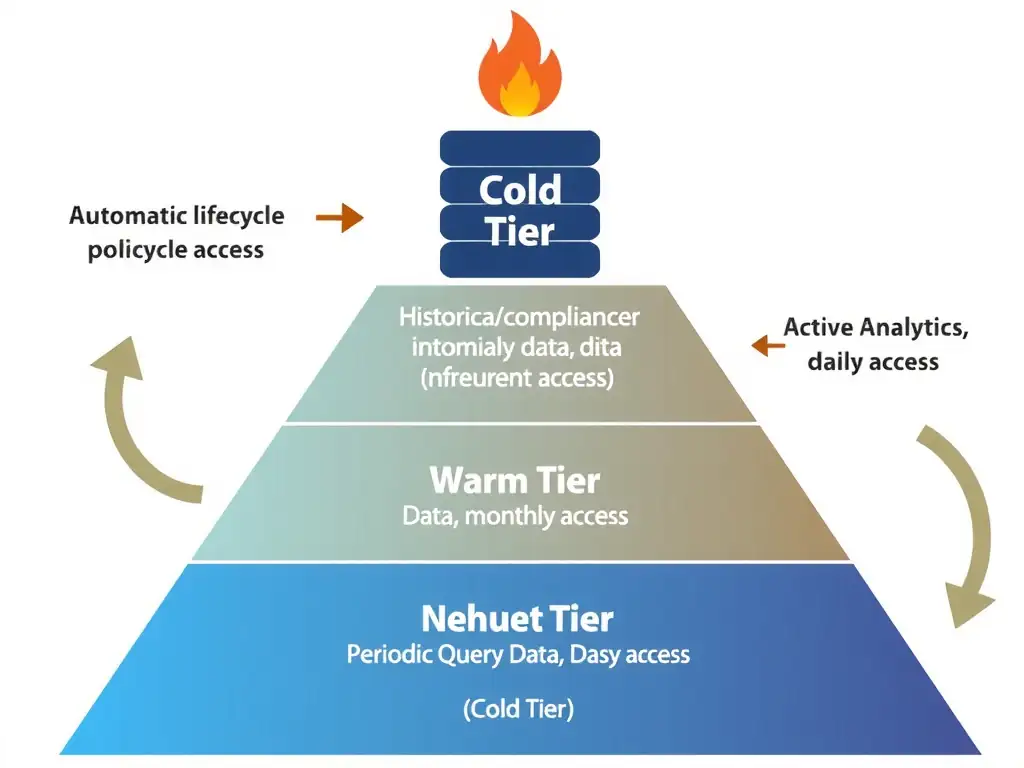
Short Explanation
You still get correct results because tiering moves data physically, not out of the table. The catalog still resolves those partitions, so queries work; you just pay slower access or retrieval cost.
Full Explanation
The correct answer is that queries still resolve through the catalog and return correct results, though access to the tiered data may be slower or incur retrieval cost. Tiering changes physical placement, not table membership. The catalog still describes the partitions, queries still include them, and the user experiences access latency and possibly retrieval charges.
The option saying queries fail because tiered data is removed from the table definition is incorrect because moving data between tiers does not remove it from the table.
The option saying queries return only the partitions remaining on the performance tier, silently omitting the rest, is incorrect and would be a serious correctness defect; silently partial results are far worse than slow ones.
The option saying queries require an administrator to restore the partitions before running is incorrect because no manual restore step is required for a query to include tiered data.
For the exam, state that tiering affects cost and access characteristics while leaving query results correct.