
Why should metadata be captured as part of ingestion rather than added once the pipeline reaches production?
Select an answer to reveal the explanation.
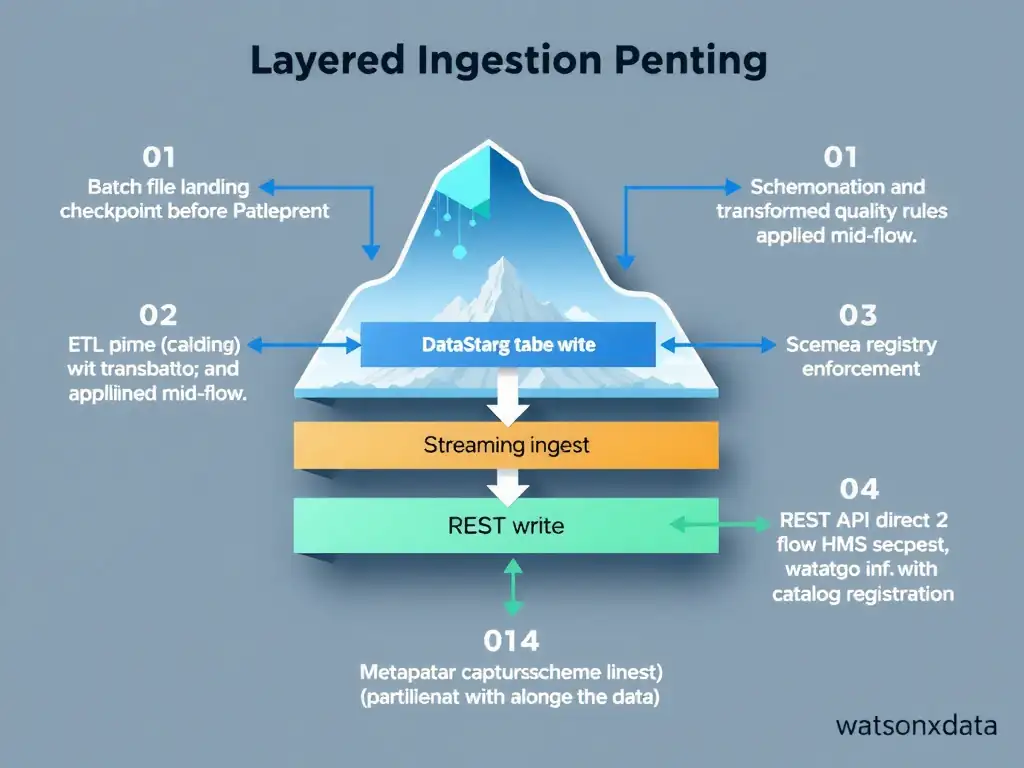
Short Explanation
You capture metadata during ingestion because that's when you actually know the source, timing, and processing for each batch. If you wait, you're reconstructing it from logs and memory, and the early loads never get a provenance record.
Full Explanation
The correct answer is the option stating that metadata captured at load time is accurate and complete for every batch, while adding it later requires reconstruction and leaves earlier data without a provenance record. Provenance is observed, not inferred. Capturing source, timing, and processing at load time yields an accurate record for every batch; doing it afterwards means reconstructing details from logs and recollection, and the batches loaded before capture began have no record at all - which is exactly the gap an audit finds.
The option claiming metadata cannot be added to a table after it has been created is incorrect because metadata can be added later; the objection is accuracy and completeness, not possibility. The option claiming the platform charges more for metadata registered after production is incorrect because no such pricing distinction exists. The option claiming late metadata capture prevents queries from running against the table is incorrect because missing metadata does not block queries - it makes them harder to trust, which is the subtler problem.
For the exam, treat metadata and lineage capture as part of the pipeline, not a follow-up task.