
A team proposes giving each engine its own private copy of the data so engines never interfere. What is wrong with this?
Select an answer to reveal the explanation.
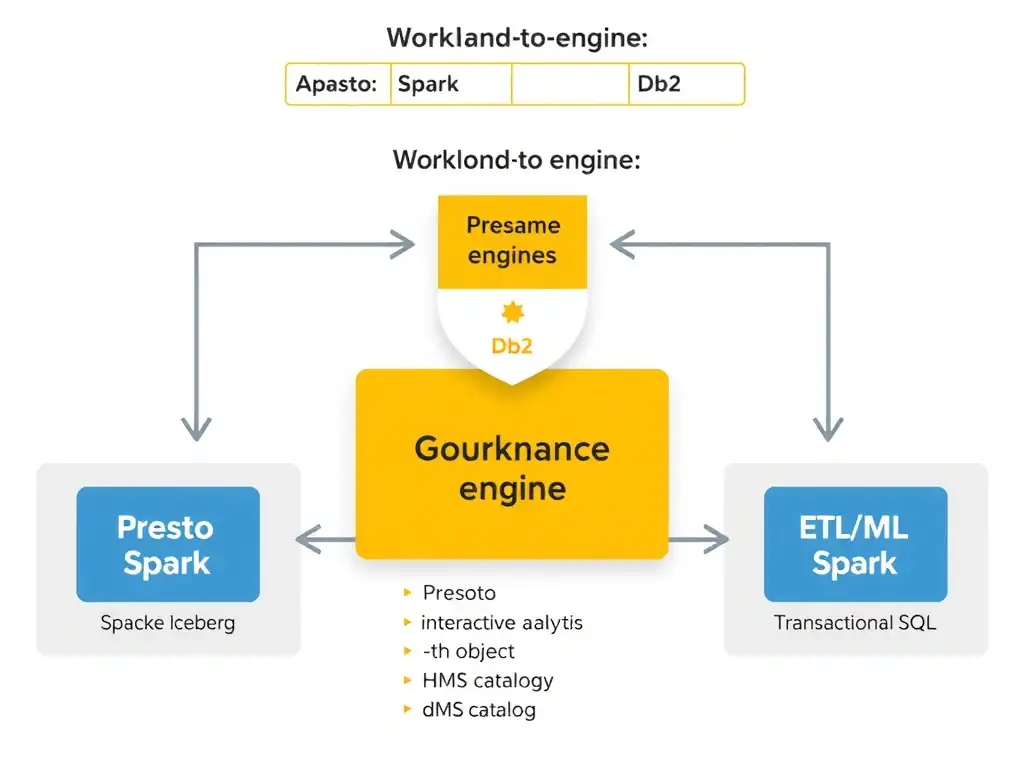
Short Explanation
You'll multiply storage and pipeline cost, watch the copies drift apart, and end up maintaining governance separately for each one. That's the fragmented-estate problem the lakehouse was meant to remove. Three months later nobody can tell you which copy is right.
Full Explanation
Per-engine copies reintroduce the fragmented-estate problem: more storage, more pipelines to build and monitor, divergence between copies as loads succeed or fail unevenly, and governance that must be applied and audited for each copy instead of once. The claim that engines are technically incapable of reading a copied dataset is wrong because engines can certainly read copies; the objection is architectural, not technical capability. The claim that copies cannot be stored in the same object storage account is wrong because storage location is irrelevant to the problem. The claim that it reduces query performance because copies are always slower to read is wrong because a copy is not inherently slower to read; the costs are duplication, drift, and governance overhead. For the exam, remember that shared governed data with separate engines is the pattern; per-engine copies are the anti-pattern it replaces.