
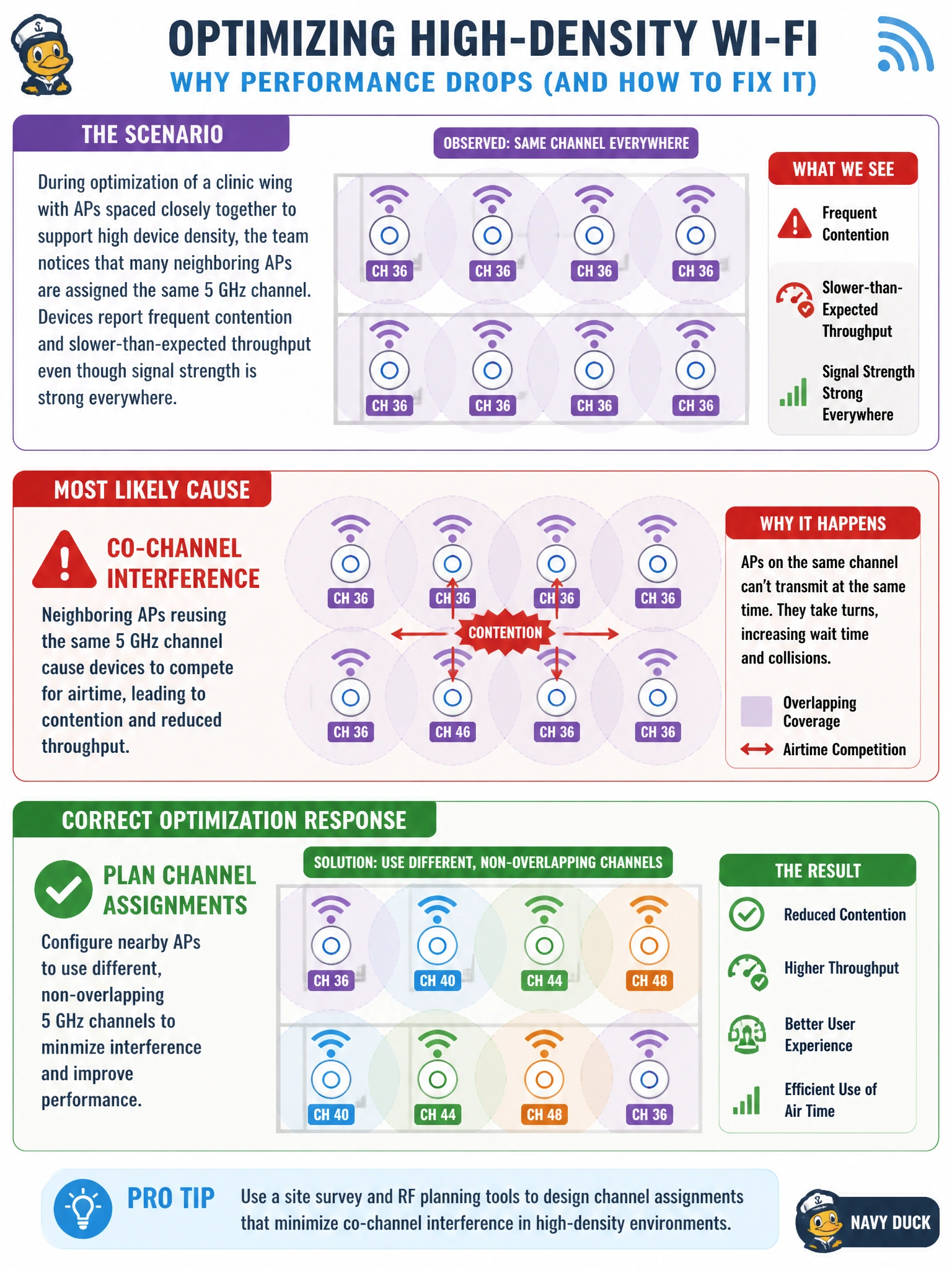
During optimization of a clinic wing with APs spaced closely together to support high device density, the team notices that many neighboring APs are assigned the same 5 GHz channel. Devices report frequent contention and slower-than-expected throughput even though signal strength is strong everywhere. What is the most likely cause, and the correct optimization response?
Select an answer to reveal the explanation.
Short Explanation
Same channel, next door to each other — that's like two people on the same walkie-talkie frequency both trying to talk at once, so everyone waits their turn even though the signal itself is loud and clear. That waiting is co-channel interference, and the fix isn't more power, it's spreading nearby APs across different channels so they're not competing for the same slice of airtime.
Full Explanation
Co-channel interference occurs when access points close enough to hear each other are assigned the same channel, so their radios must take turns transmitting even though each individual signal is strong. In a high-density clinic wing with tightly spaced APs, this shows up exactly as described: good signal strength everywhere, but contention and lower-than-expected throughput because multiple APs are effectively sharing one channel's airtime rather than truly operating independently. The fix is a channel reuse plan that assigns non-overlapping channels to adjacent APs so their coverage cells don't compete on the same frequency. Increasing transmit power would make the problem worse, not better, since it extends how far each same-channel AP can be heard by its neighbors, widening the contention domain. Renaming the SSID has no effect on channel assignment or contention; it's a cosmetic client-facing label, not an RF parameter. And the symptom described — strong signal but slow throughput in a wireless-dense area — points to airtime contention on the RF side, not the wired uplink, so touching switch port speed doesn't address the actual bottleneck. A concrete check: pull a channel plan report across the wing's APs and confirm no two APs that can hear each other at meaningful signal strength share the same channel.