
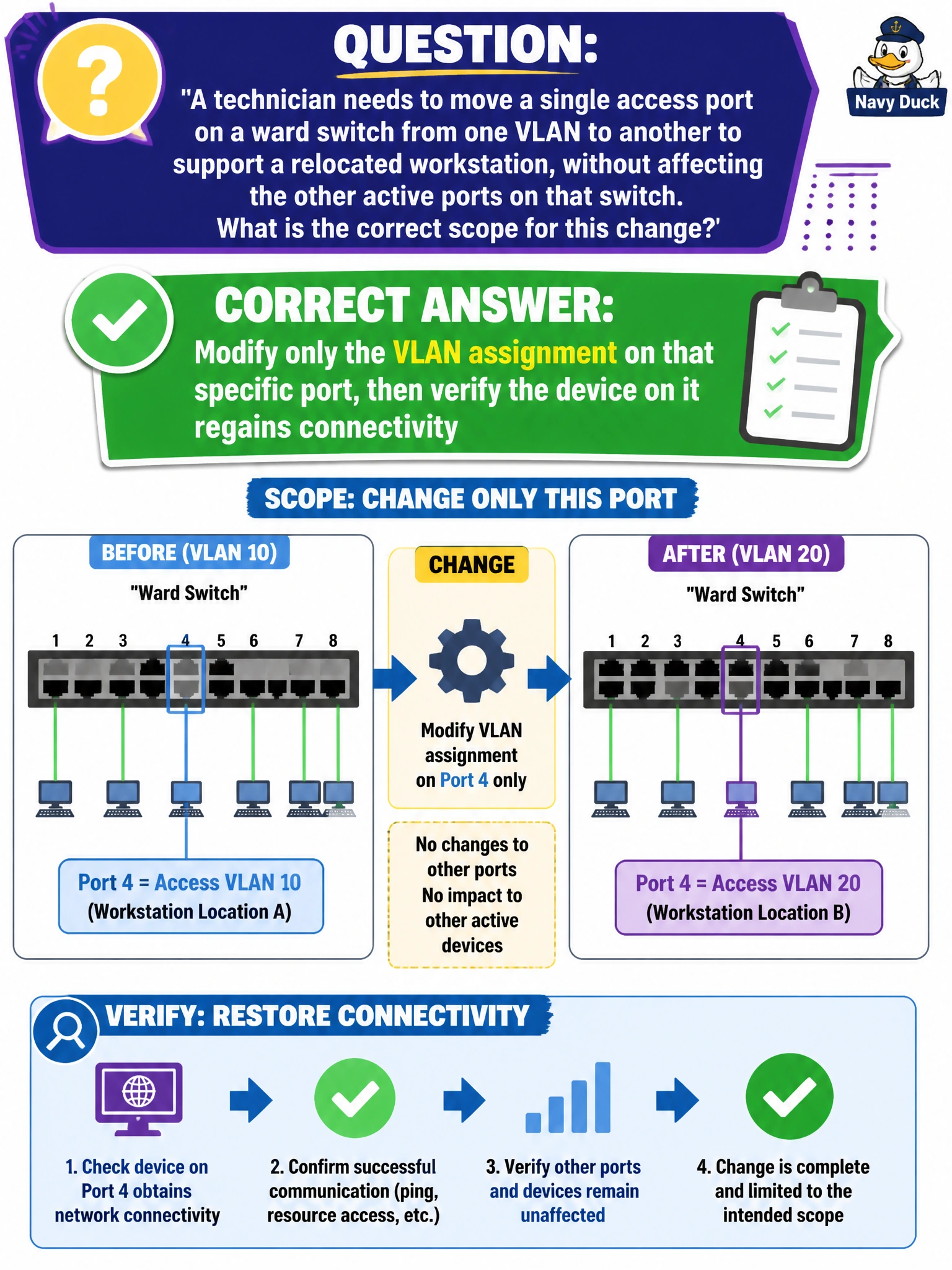
A technician needs to move a single access port on a ward switch from one VLAN to another to support a relocated workstation, without affecting the other active ports on that switch. What is the correct scope for this change?
Select an answer to reveal the explanation.
Short Explanation
Moving one device to a new VLAN should be a scalpel move, not a sledgehammer one. Touching only that one port's VLAN assignment gets the relocated workstation where it needs to be without disturbing every other device plugged into that switch. Verifying just that port afterward confirms the change worked without you having to check the whole switch.
Full Explanation
A port's VLAN membership is an individual, per-port setting, so changing it in isolation affects only the traffic egressing and ingressing that specific port, leaving every other access port's VLAN membership untouched and their connected devices unaffected. This matches the actual scope of the task — one relocated workstation needing one port reassigned — and keeping the change narrow makes it easy to verify and easy to reverse if something's wrong. Changing every port's VLAN on the switch would move far more devices than the one workstation that actually needs it, disrupting everything else plugged into that switch for no reason tied to the task. Taking the entire switch offline to change a single port's VLAN membership is unnecessary — VLAN reassignment on one port doesn't require interrupting the whole switch's operation, and doing so would needlessly drop every device connected to it. Modifying the uplink trunk configuration addresses which VLANs are carried between switches, not which VLAN a specific access port belongs to; that's the wrong layer for this task and wouldn't accomplish moving one workstation to a different VLAN. A caveat: confirm the target VLAN already exists and is carried on the switch's uplink trunk before reassigning the port, or the relocated device will have no path off the switch. As an operational check, verify the workstation obtains the correct IP addressing and reaches expected resources after the port's VLAN change.