
IT needs to change the passphrase on a WLAN SSID that biomedical devices like infusion pumps and patient monitors use to connect. What approach minimizes disruption to those devices?
Select an answer to reveal the explanation.
Short Explanation
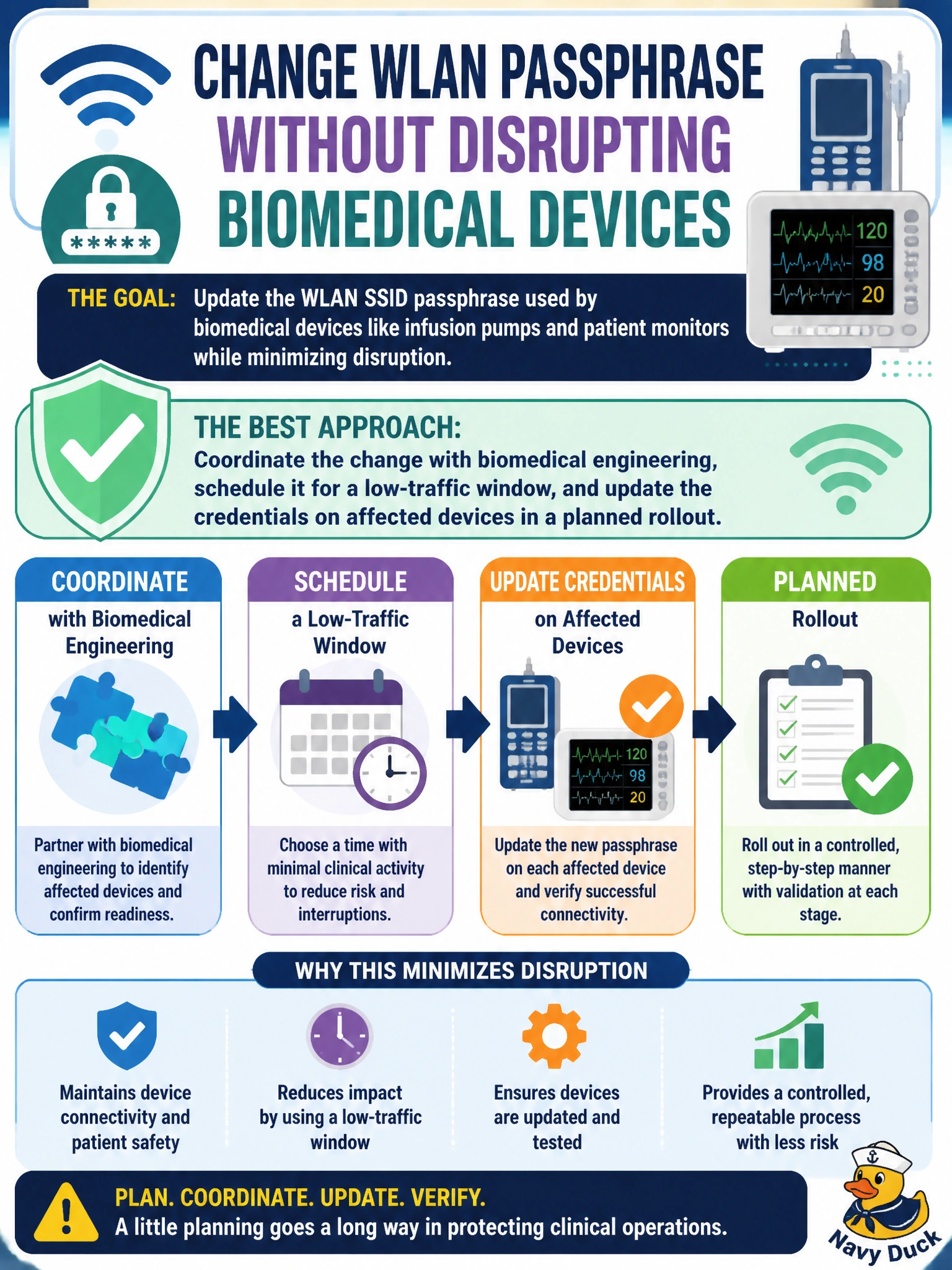
Changing a shared password that dozens of medical devices depend on isn't something you just flip — it's more like re-keying every lock in a building at once. Coordinating with the team that owns those devices and picking a quiet window means nobody's infusion pump or monitor drops mid-shift. A planned rollout means every device gets updated in step, instead of some working and some silently falling off the network.
Full Explanation
Because devices like infusion pumps and patient monitors authenticate to the SSID using the current passphrase, changing it disconnects every device still configured with the old value until each one is manually or automatically updated — so coordinating with biomedical engineering and scheduling the change for a low-traffic window, then rolling out the new credential to affected devices in a planned sequence, keeps disconnections brief and expected rather than surprising during active patient care. Changing the passphrase without notice during peak hours maximizes the chance that a critical device drops connectivity at the worst possible moment, with no one prepared to respond. Deleting and later recreating the SSID is a much more disruptive action than simply changing a passphrase, and it introduces additional risk around device reassociation and configuration drift for no added benefit. Leaving some access points on the old passphrase and others on the new one splits the WLAN into an inconsistent state where device behavior becomes unpredictable depending on which AP they associate with, which is worse than either a coordinated cutover or no change at all. A caveat: some legacy biomedical devices may require manual reconfiguration rather than supporting an over-the-air credential push, so the rollout plan should account for devices that need hands-on attention. As an operational check, confirm biomedical devices reassociate successfully with the new passphrase before considering the change complete.