
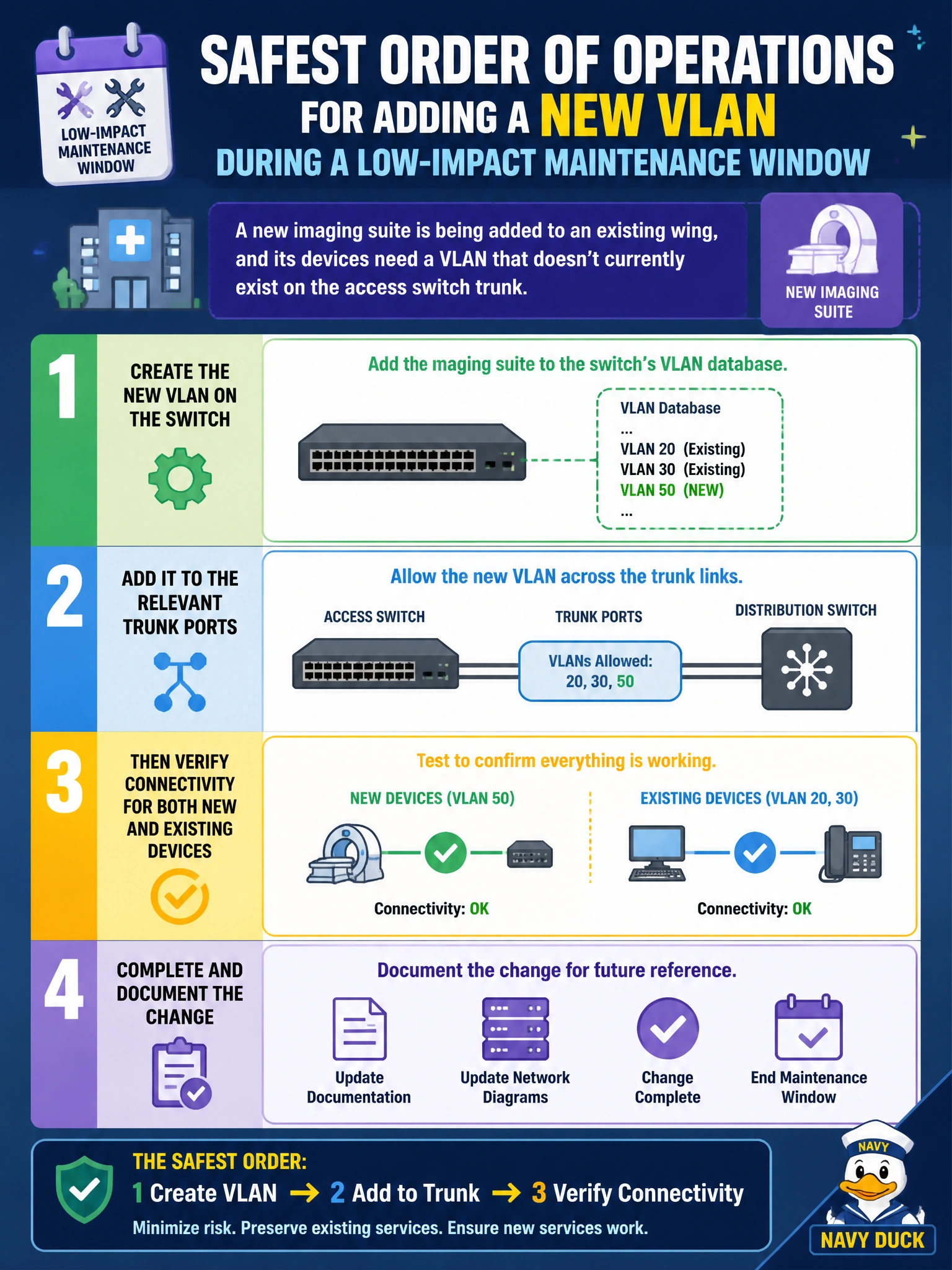
A new imaging suite is being added to an existing wing, and its devices need a VLAN that doesn't currently exist on the access switch trunk. What is the safest order of operations for adding it during a low-impact maintenance window?
Select an answer to reveal the explanation.
Short Explanation
Adding a VLAN is a lot like adding a new mailbox to an apartment building: you build the box before you start delivering mail to it. Creating the VLAN first, then tagging it onto the right trunk ports, keeps every step meaningful and easy to check off. Verifying afterward confirms the new imaging devices connect without disturbing anything already working on that trunk.
Full Explanation
Creating the VLAN definition before adding it to trunk ports ensures the switch actually has something valid to reference when the trunk configuration is updated, and doing the steps in that order — create, then tag, then verify — lets each step be confirmed before moving to the next, catching a typo or omission early rather than after multiple changes have stacked up. Verifying connectivity for both the new devices and the pre-existing ones on that trunk confirms the change achieved its goal without introducing a regression for traffic that was already working. Removing an entire trunk configuration to rebuild it is a far larger, riskier change than the task requires, and it needlessly interrupts every VLAN already riding that trunk, not just the one being added. Tagging a VLAN onto trunk ports before it's created is backwards — the switch has nothing defined to reference, so the change is incomplete and its effect is unpredictable until the VLAN actually exists. Changing the native VLAN across an entire building is a large-blast-radius action unrelated to adding one new VLAN for one imaging suite, and it risks disrupting untagged traffic on every other port in that building. A caveat: on a trunk carrying multiple VLANs already, double-check that the new VLAN ID doesn't collide with one already in use elsewhere on the campus. As an operational check, confirm the imaging suite's devices can reach their expected destinations after the change, alongside a quick check that unrelated existing traffic on that trunk is unaffected.