
After upgrading a ward access switch to a new firmware version, several nurse-station devices report intermittent drops that never happened before the upgrade, and the technician confirms the issue tracks with the new firmware itself rather than any configuration change. What is the fastest, safest way to return the switch to stable behavior?
Select an answer to reveal the explanation.
Short Explanation
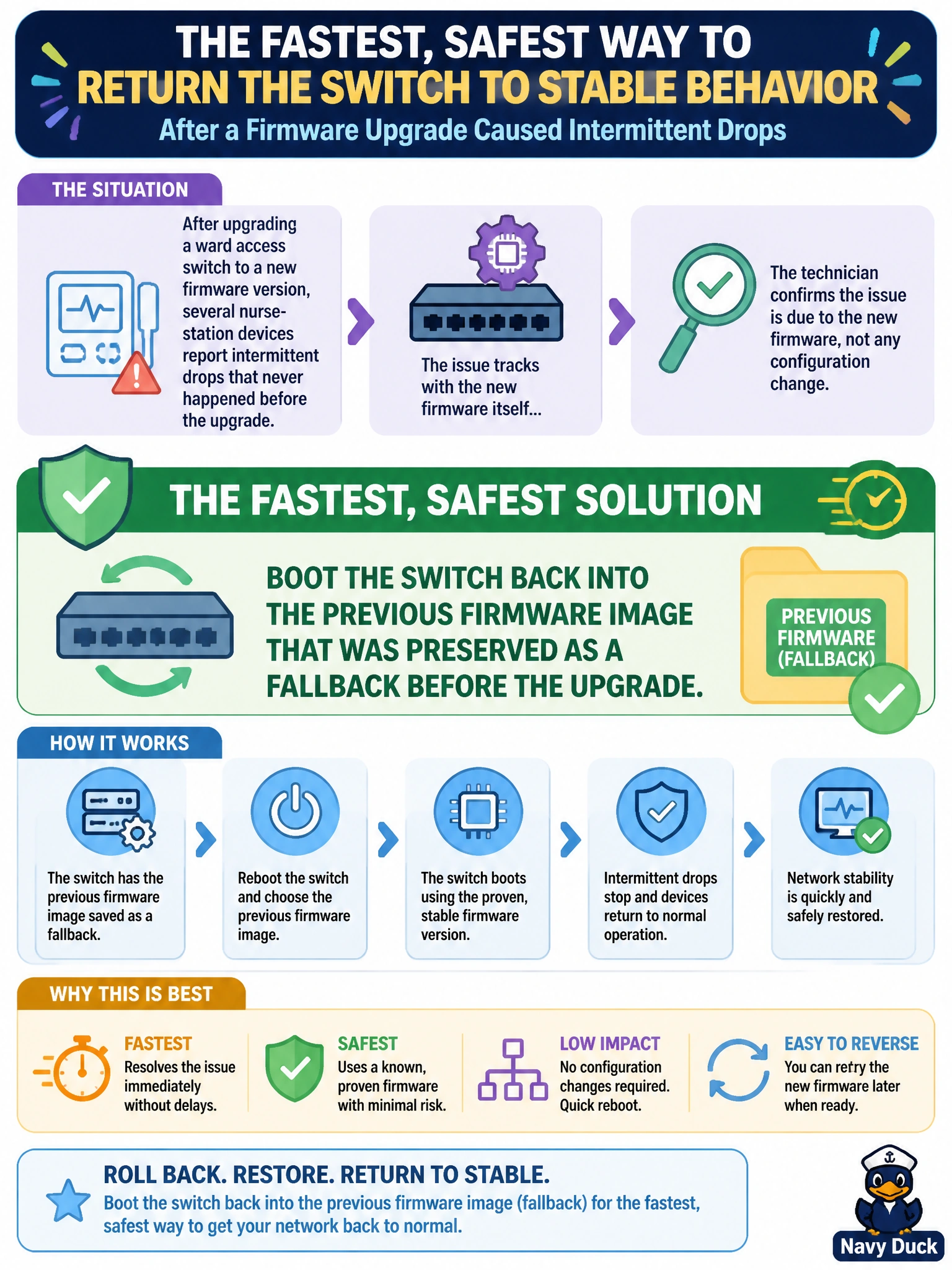
When the firmware itself is the problem, the fastest fix isn't hunting for the one setting to disable — it's going back to the version you already know worked. AOS-CX switches keep a previous image around specifically so a bad upgrade can be undone in minutes, not days.
Full Explanation
AOS-CX switches retain the prior firmware image as a fallback specifically for this situation, so once the new version is confirmed to be the cause rather than a configuration issue, booting back into that known-good previous image restores stable behavior immediately without needing to guess which specific feature in the new release is misbehaving. Re-downloading the identical new image assumes file corruption, but the technician has already established the problem tracks with the new firmware's behavior, not a bad or incomplete transfer, so repeating the same download would simply reproduce the same fault. Disabling features one at a time to isolate the cause might eventually work, but it is slow, disruptive to test methodically on a production ward switch, and unnecessary when a known-stable fallback image is already sitting on the device ready to boot. Leaving the faulty firmware in place and waiting on a vendor hotfix accepts ongoing instability for nurse-station connectivity with no defined timeline, when a same-day rollback path already exists. Caveat: if the new firmware also updated the running configuration format, confirm the fallback image still loads a compatible configuration rather than assuming a clean rollback. A concrete check is verifying the switch reports the previous firmware version after reboot and that the intermittent drops stop under normal ward traffic.