
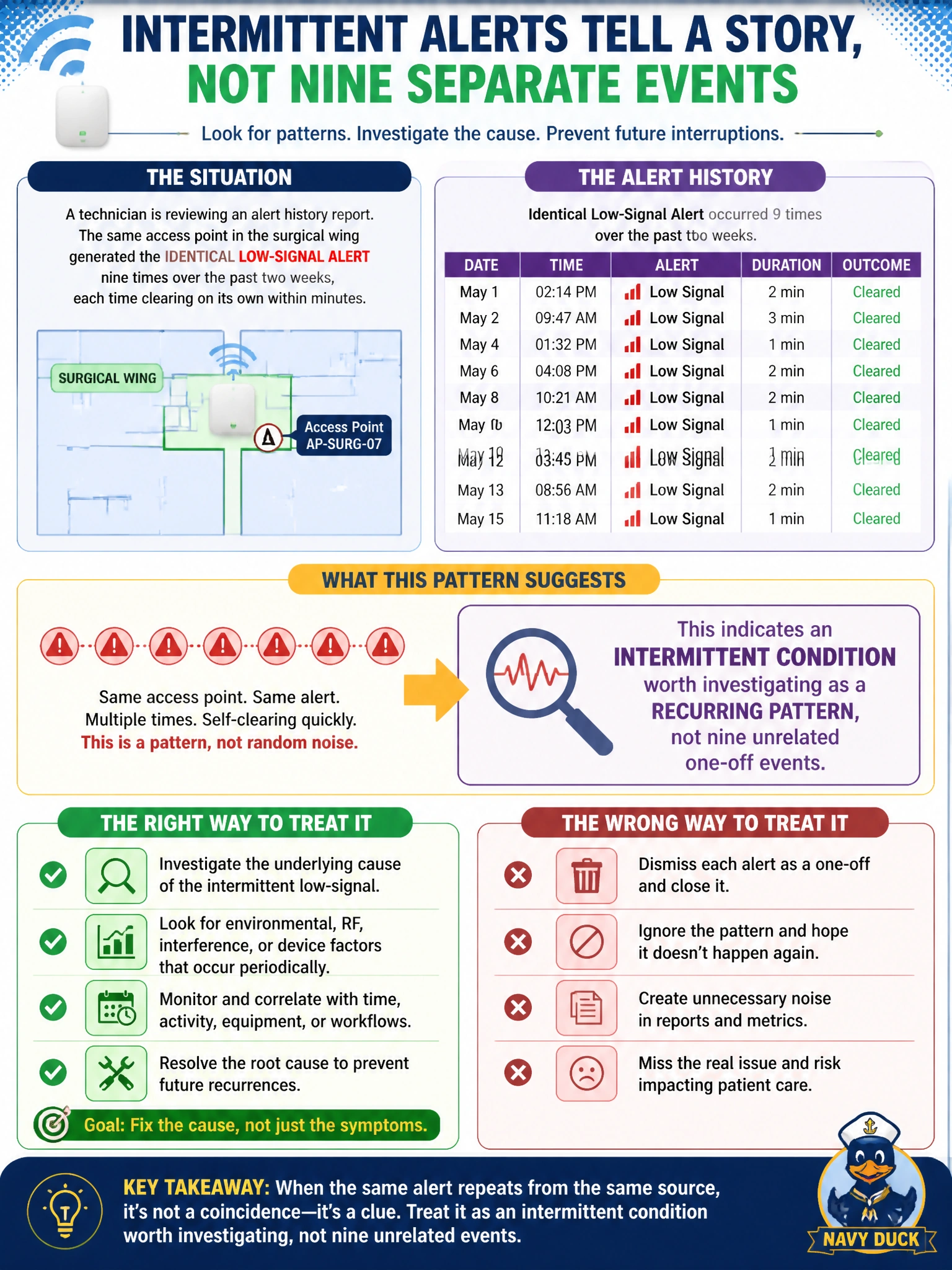
A technician is reviewing an alert history report and notices the same access point in the surgical wing generated the identical low-signal alert nine times over the past two weeks, each time clearing on its own within minutes. What does this recurring pattern suggest is the right way to treat the alert going forward?
Select an answer to reveal the explanation.
Short Explanation
Nine short self-clearing alerts on the same access point isn't nine coincidences — it's a pattern. Think of it like a smoke detector that keeps chirping and stopping: annoying enough to ignore, but the recurrence itself is the actual clue something needs a look.
Full Explanation
When an alert history report shows the identical condition recurring repeatedly on the same device, the recurrence itself becomes the meaningful signal, so the right interpretation is to treat it as one intermittent, ongoing condition worth investigating as a pattern rather than nine isolated, unrelated events, since a truly one-off event would not be expected to repeat identically nine times on the same access point. Treating each occurrence as entirely separate ignores the correlation an alert-history view is specifically designed to surface, which is exactly why reviewing alert history over time, rather than one alert at a time, matters for this domain. Concluding the threshold itself is broken and should simply be disabled removes the visibility into a real, recurring symptom without addressing the underlying cause, and disabling an alert is a configuration action outside the observe-and-report scope of this kind of review in any case. Dismissing the pattern because each event resolved quickly on its own mistakes brief duration for insignificance; an intermittent issue that clears itself can still point to a developing RF or hardware problem, particularly notable in a surgical wing where connectivity reliability carries extra weight. The habit worth building here is scanning alert history for repeat offenders, not just reacting to each alert individually as it fires. The concrete step for the report is to log the recurrence count and timestamps for this specific access point so the pattern is visible to whoever picks up the deeper investigation next.