
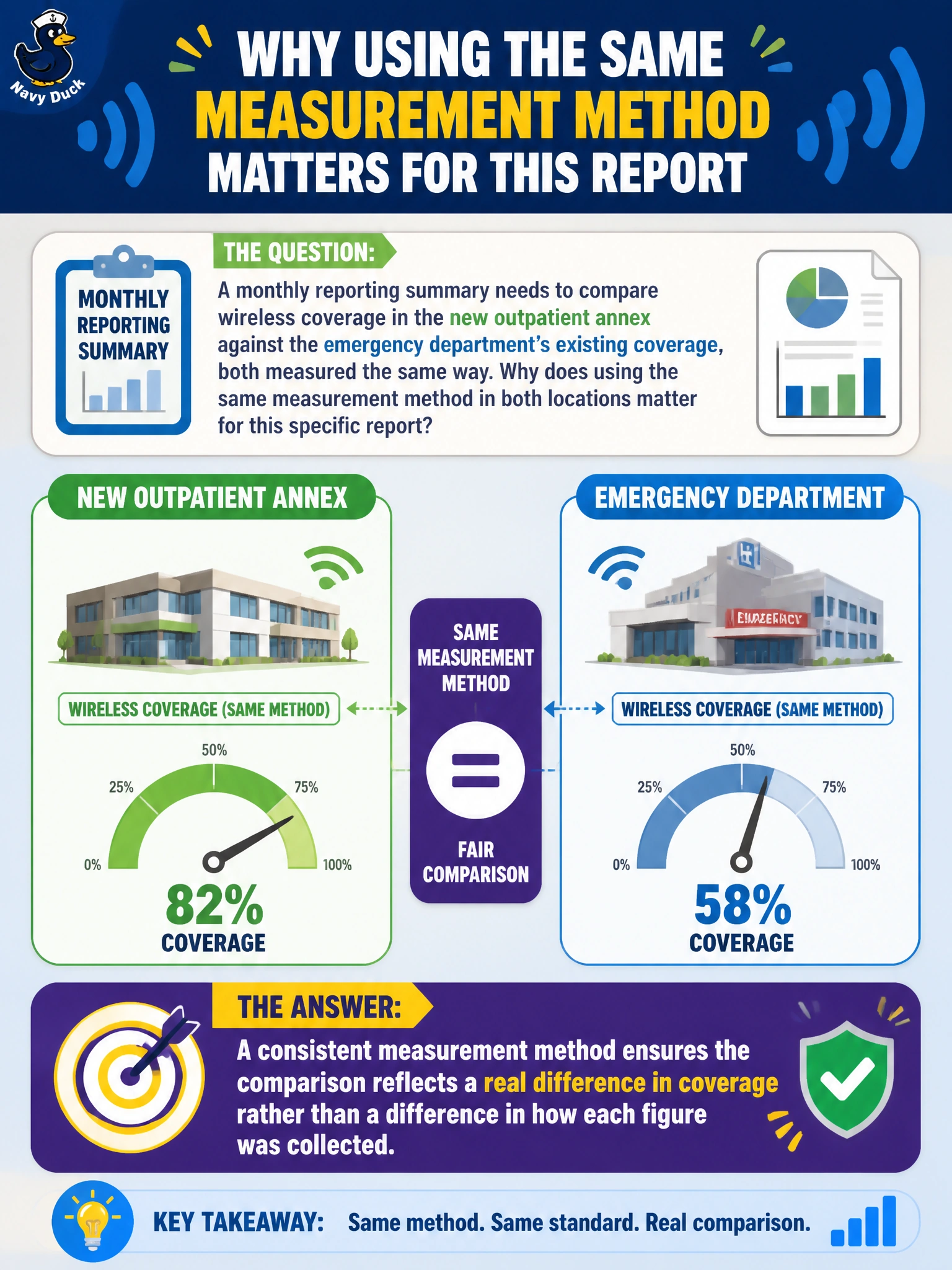
A monthly reporting summary needs to compare wireless coverage in the new outpatient annex against the emergency department's existing coverage, both measured the same way. Why does using the same measurement method in both locations matter for this specific report?
Select an answer to reveal the explanation.
Short Explanation
Comparing two numbers only makes sense if they were measured the same way, otherwise you're comparing apples to oranges dressed up as one chart. If one figure came from a full site survey and the other from a rough estimate, any "difference" you see might just be measurement noise, not reality.
Full Explanation
A comparison across two locations is only meaningful when the underlying measurement method is held constant, because otherwise any apparent difference in the reported coverage figures could simply reflect different measurement techniques, thresholds, or tools rather than an actual difference in real-world RF coverage, which would make the monthly summary misleading rather than informative. Assuming any two coverage figures can always be compared regardless of method ignores that measurement methodology is itself a variable that affects the number produced, not just the location being measured. Limiting the concern to cases involving different hardware generations misses the point; even identical hardware can produce inconsistent figures if one site was measured with a full walk survey and the other with a coarse estimate or a different threshold setting. Restricting this concern to wired switch reporting is incorrect too, since measurement consistency matters for any comparative report, wired or wireless, whenever two figures are being placed side by side to draw a conclusion. The broader principle for reporting is that a fair comparison requires controlling for as many variables as possible other than the one actually being compared, which here is the physical coverage itself. A concrete check before publishing this report is to confirm both the annex and the emergency department readings used the same survey tool, the same signal-strength threshold, and were taken under similar conditions.