
On the weekly report for the biomedical engineering team, an access point in the infusion-pump storage room shows a client health score that has been steadily dropping for three days without a single client complaint being logged. How should the NOC technician interpret that trend for the report?
Select an answer to reveal the explanation.
Short Explanation
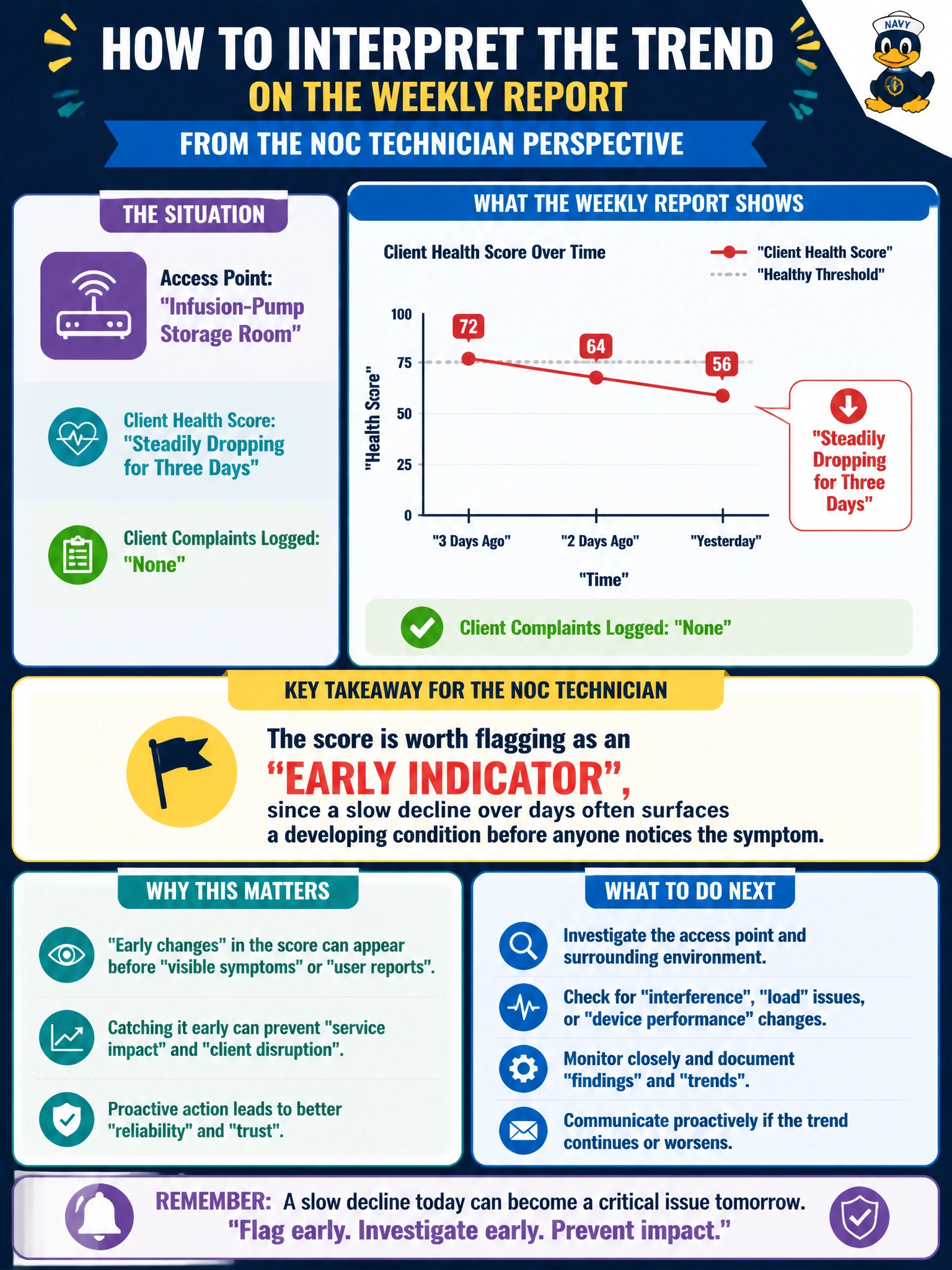
Health scores are early-warning signals, not complaint counters. Think of it like a slow leak in a tire: nobody's stranded yet, but the pressure gauge already tells you something's changing. A three-day slide is exactly the kind of thing worth writing up before it becomes a call to the help desk.
Full Explanation
A client health score aggregates signal quality, retry rates, throughput, and similar indicators over time, so a gradual multi-day decline is a legitimate early-warning trend even in the complete absence of a user-reported symptom, and the correct move for a monitoring report is to flag it rather than wait for a complaint to justify writing it down. Waiting for a complaint before treating the score as meaningful gets the purpose of proactive monitoring backwards: the entire value of a health metric is catching a developing condition before staff notice it, which matters even more in a room storing infusion pumps where connectivity issues could eventually affect patient-care equipment. Reducing the score to a pure uptime measurement is inaccurate; health scores fold in more than reboot events, so a radio that never restarted can still show a declining score if RF conditions or client behavior are worsening. Dismissing a gradual multi-day trend as a reporting glitch ignores that health scores are specifically designed to move smoothly as conditions change, unlike a hard alert which fires on a threshold breach. This slice is about observing and reporting, not remediating, so the correct operational check here is simply to note the trend, its start date, and the affected access point in the weekly report for follow-up, not to change any configuration.